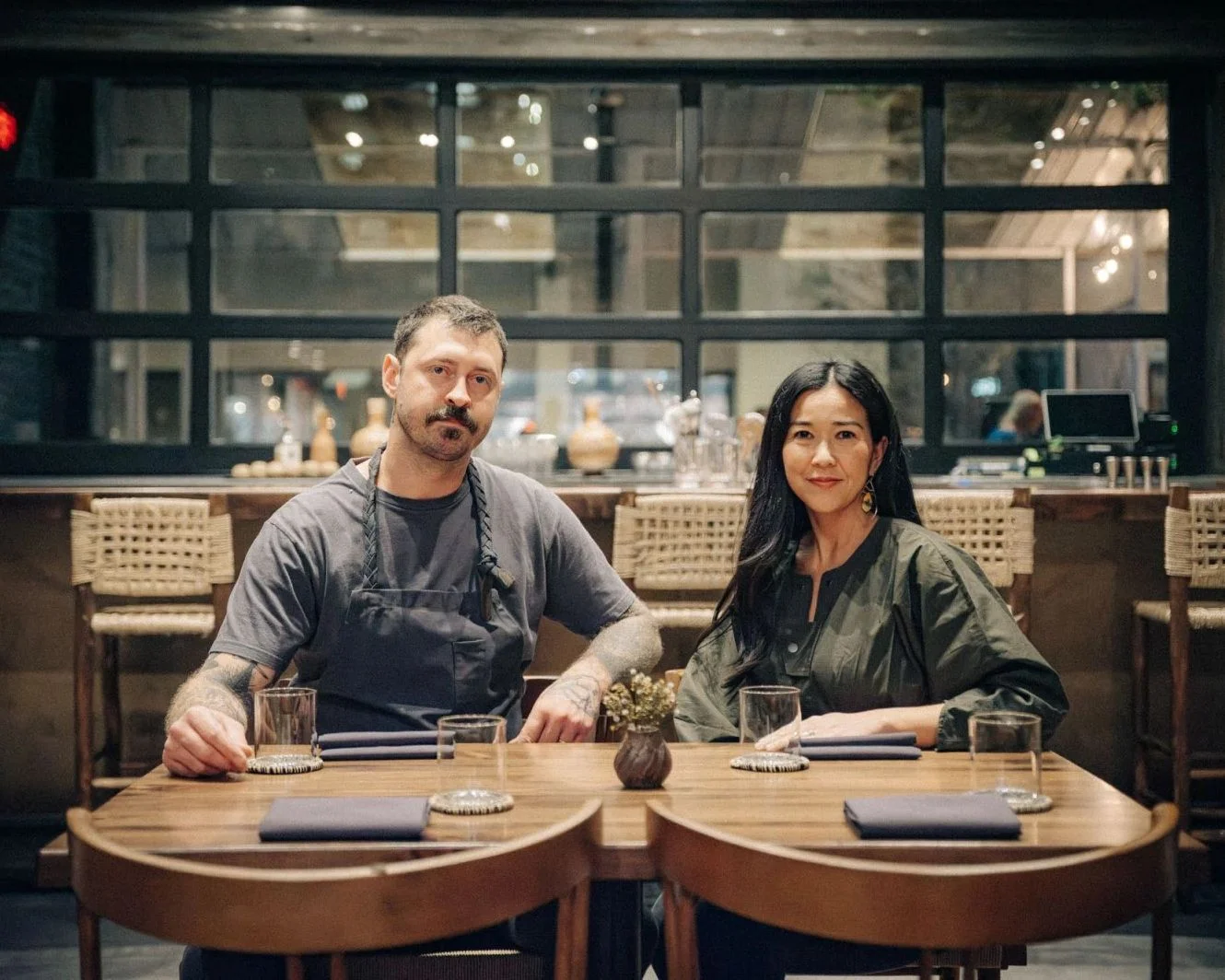
Hike through Tucson Mountain Park and most people won't see dinner. Burs, barbs and spines send a clear message. Aaron Lopez and June Chee look at the same dusty scrub and see a pantry, and their restaurant Ursa is built on proving that read is right.
Brittlebush, the gray, tangled shrub that Tucsonans pass almost daily, can be pressure-cooked, caramelized until nearly black and baked into cake. Dried saltbush turns intensely umami and faintly aquatic, close to seaweed. Palo verde buds, sweet and an unlikely shade of green, go briny like olives after a soak in lye.
Cactus is where Lopez really gets going. Ursa sources from local grower Toadlet Farm and harvests on his own throughout the year. The kitchen works young and mature paddles, fruit and seeds, buds and flowers. Those end up grilled, poached, cold-smoked, juiced, dehydrated, nixtamalized, or preserved into jam, wine and vinegar. The Sonoran Desert has hundreds of edible plants. Ursa's 10-course tasting menu is its argument that the list deserves a closer read.
A Homecoming With a Pop-Up Past
Ursa started as a pop-up in El Centro, California, in 2023. This October, Lopez and Chee reopened in a historic brick building in downtown Tucson. It's a homecoming of sorts for two people from the Sonoran Desert borderlands. They met in Hawaii, where Chee worked in clean energy and transportation. Lopez spent roughly 18 years cooking in fine dining and modern progressive kitchens, including Redbird and Orsa & Winston in Los Angeles and Pai Honolulu. He kept longing for the desert anyway.
After helping a friend open a restaurant and running a few popups in Austin, the couple bought a desert foraging guide, loaded up their two dogs and drove the Southwest. Tucson made sense. UNESCO named it a Creative City of Gastronomy in 2015, citing a continuous 4,000-year agricultural history and deeply rooted Sonoran Desert food traditions.
“That’s a unique thing about being here, the connection from seed to plant to restaurant that we hadn’t been able to grasp before,” Chee says.
Menus Built Around Constraints
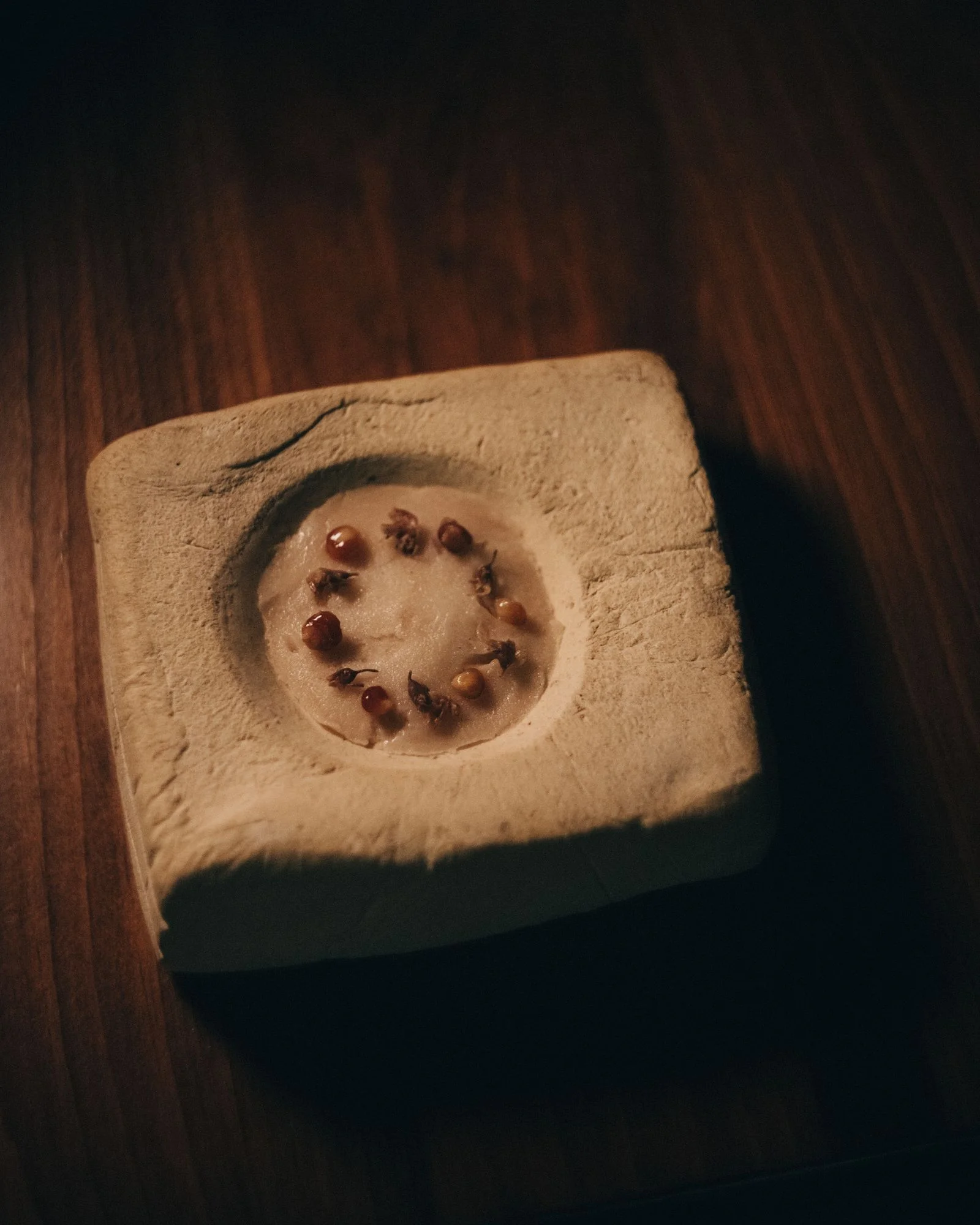
Take the recent tepary bean course. The ancient, nutty bean gets refried and topped with h:al squash that’s been lactofermented. The squash leaves ferment into a Japanese-style kosho, and the flowers get pickled, dried, crushed with saltbush and tossed with barrel cactus seeds for a desert furikake. Grilled coins of chorizo, made from Lopez’s great-grandmother’s recipe, come alongside housemade flour tortillas. Everything gets washed down with an amazake made from fermented wheat and goat fat. Don’t get attached to any of it. Ingredient availability forces riffs almost daily.
Strict Limits, Looser Menus
Sourcing everything from within roughly eight to 10 miles comes with hard rules. The only wheat is pima club, an ancient soft white variety grown for centuries by the Akimel O’odham (Pima) people. Ursa doesn’t use cucumbers, radishes or citrus. That's not a gimmick. Lopez refuses to chase substitutes.
“We’re not trying to substitute anything, like, ‘How do we achieve cucumber? Let’s grab a cactus,’” Lopez says. “We have to throw everything out, really strip it down. Sometimes we have to let the ingredients be bitter or spicy. We have to put our egos aside and let the ingredient be the star.”
The learning curve is steep for staff who didn’t grow up cooking here. Still, the plants have a way of landing familiar. “We have these really cool moments in the restaurant where people are like, Oh! I have lamb’s quarter just growing in my yard!” Chee says of the spinach-like green that turns up all over the menu.
A Cheaper Way In
Ursa's philosophy can be a lot to take in over ten courses. So this fall, the restaurant added a four-course, family-style Lineage menu for $75, alongside the 10-course Harvest menu at $150. The Lineage menu includes a pozole course inspired by the family's springtime tradition of roasting goat in agave leaves, barbacoa-style, then shredding it into soup. It also has a red masa tamal with glazed quail and yucca blossoms in mole, made with burnt mesquite bread, a technique Lopez remembers from childhood.
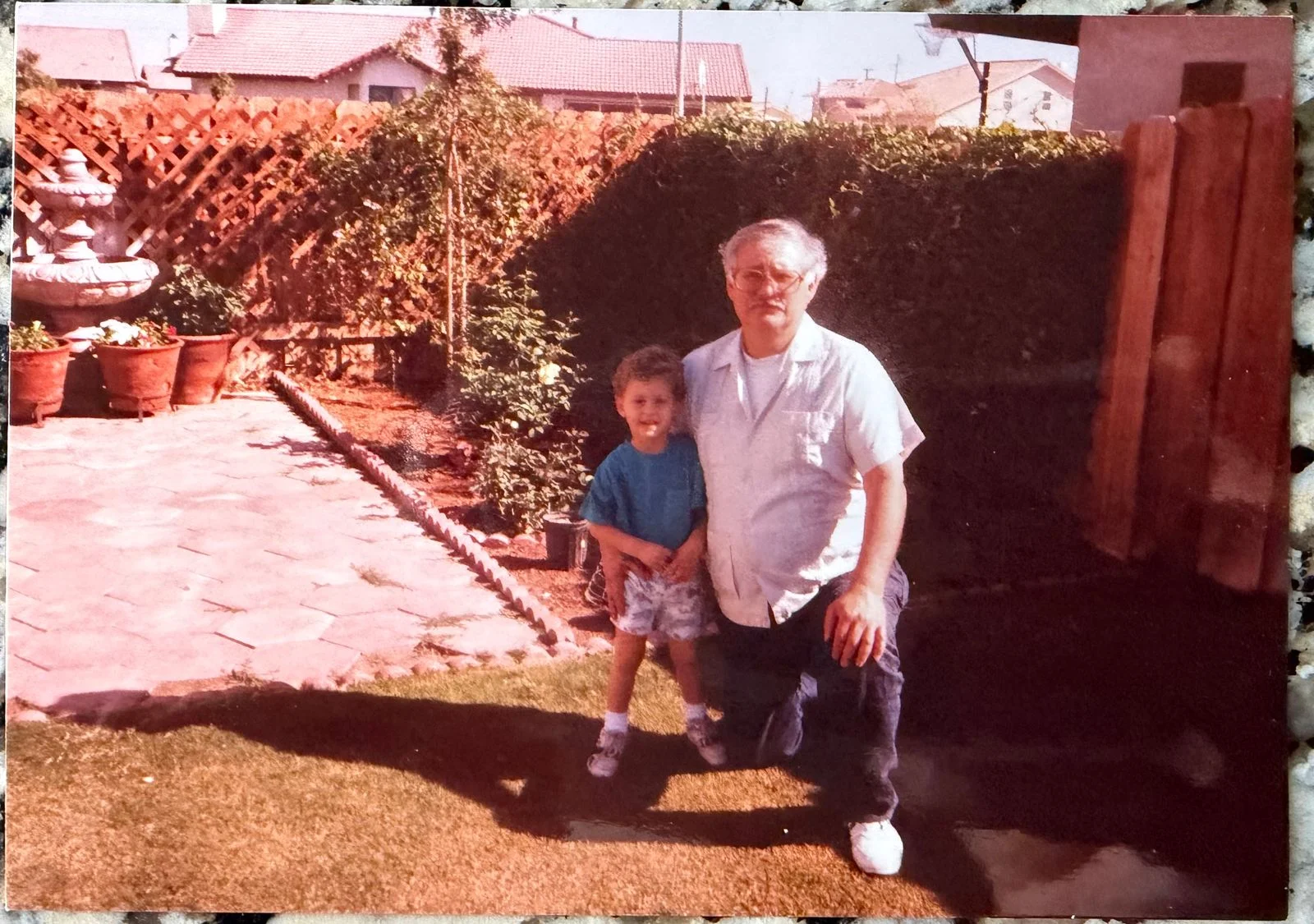
The idea took shape over Ursa's extended summer break. Lopez was recovering from foot surgery and thinking about his late grandfather, Hector Lopez, who died in the spring. Hector was the family's keeper of traditions, and the menu is partly a tribute to him. The restaurant's founding idea was partly his too. “He was the first person I ever heard say they’re proud to be from the desert,” the chef said.
“I feel so much closer to my ancestors and the land; we want Ursa to be less esoteric and more soulful,” he says. “The story of Ursa is partly of the desert, partly my family. Now we’ve advanced to the point where they’re symbiotic, and I can't tell them apart.”
My read is that the cheaper menu matters more than it looks. A four-course family-style meal gives people who'd never book a 10-course tasting a way into the desert pantry. If that door keeps opening, Ursa's real achievement may be turning the mountain park's thorns into a conversation about who gets to call the desert home.


