Drip coffee has caught up
Coffee drinkers have spent years chasing café-style drinks at home. The result is a crowded appliance aisle: single-serve and pod machines, gadgets that froth milk, and machines promising “instant” cold brew. But the quieter shift is that a good cup no longer requires a complicated setup. A drip machine can still do the job—and modern models are much better than their old reputation suggests. Even inexpensive coffee makers have improved. Brands including Breville, Fellow, Oxo, and Ratio now compete with drip pioneer Technivorm, with machines designed to control water temperature, flow rate, and bloom time. Some can produce coffee close to what you’d get from a kettle and a pour-over setup. If you need several cups with little effort, that’s a meaningful change: drip coffee has become a real option for people who care about the brew, not just convenience.Our top picks
- Best drip coffee maker overall: Fellow Aiden
- Best simple drip coffee maker: Ratio Six
- Best plastic-free coffee maker: Caraway
- Best large drip coffee maker for families and guests: Oxo 12-Cup Coffee Maker
- Best budget drip coffee maker: Braun BrewSense
- Cheap but quality budget drip coffee maker: Zojirushi Zutto 5-Cup Coffee Maker
The best drip coffee maker overall: Fellow Aiden
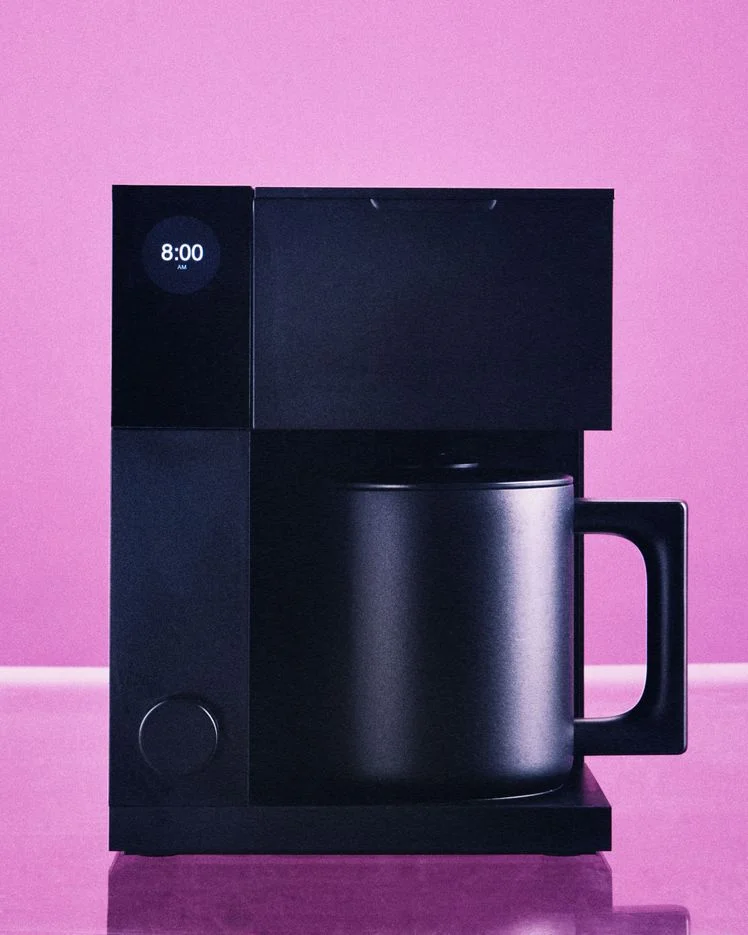
Photo by Travis Rainey, Prop Styling by Erica Lutz
Fellow Aiden Precision Coffee Maker
The Fellow Aiden’s strongest case is straightforward: it made the best tasting coffee of the machines tested, while still working well as a simple drip brewer. That combination matters more than the long list of settings. You can fine tune nearly every part of the brew, but you don’t have to. For light, medium, and dark roasts, the Aiden offers different temperature and timing profiles. Its instructions also spell out the coffee dose in both grams and tablespoons. In a side by side tasting against pour over coffee, senior editor Noah Kaufman found both brews brought out fruity and caramel notes, with plenty of depth.Control when you want it, simplicity when you don’t
The controls give you room to experiment: water temperature can be set from 122°F to 210°F, and you can adjust the number and timing of water pulses—the separate pours used in pour over brewing. You can also set the bloom time, when water releases gases from the grounds that can contribute sour flavors. That’s a lot of control for a machine you can also operate with one button. The dial, LCD screen, and clear instructions keep the menus approachable; Instant Brew uses the water in the tank and follows the Specialty Coffee Association’s Golden Cup standards for brew temperature and coffee to water ratio. Fellow’s founder described the goal as serving both coffee enthusiasts and complete beginners. The machine’s default settings make that ambition credible. The Aiden can also make cold brew by slowly dripping water over several hours. That’s a more convincing approach than machines that promise cold brew in minutes, which often fall short of that claim. Some of its best design choices are less flashy. There are two filter baskets, sized for three cups or fewer and for larger batches; spring loaded seals help prevent drips when you take them out to dump the grounds. The thermal carafe kept coffee hot for about two hours on the table, so a warming plate isn’t needed. And the removable water tank sits on the side, where it’s easier to fill than a fixed tank or one tucked behind the machine.Specialty beans make the settings count
Fellow’s Drops program offers rare and small batch beans from its roasting partners, ordered on demand by text. It isn’t a conventional coffee subscription. The Aiden comes with settings for recent Drops coffees, including tailored temperatures and pulse cycles beyond its standard roast profiles. In testing, using those settings instead of the usual profiles made a real difference. It’s one of the more plausible ways to get a café style pour over experience at home. Read a detailed look at the Fellow Aiden. The clear drawback is price. It costs more than the drip machines you’ll find at most big box stores, though its price is in line with other higher end brewers intended for daily use. You’re paying for unusually good coffee and a wide range of controls; whether that trade makes sense depends on how much you’ll use them.Long term use and maintenance
Noah used the Aiden about five times a week for more than two years. The coffee stayed consistently good, the interface caused no problems, and the side mounted tank remained a useful design choice. Maintenance proved more consequential. After months without descaling, the machine began making a loud noise that suggested a pump problem. Noah contacted Fellow as an ordinary customer and heard back within two days. The company recommended descaling; after he sent a video, it offered to replace the machine. Fellow advised descaling monthly—a schedule that may feel frequent, though its instructions were clear.At a glance
**Pros:** Flexible settings; easy to use with default options; best tasting coffee among the tested machines; sleek design. **Con:** Expensive. **Specs:** 10 cup capacity; thermal carafe; 8.9 × 8.9 × 12 inches; 9.6 pounds; adjustable water ratio, temperature, flavor profile, and 24 hour timer; Wi Fi; cold brew capable; SCA Golden Cup capabilities; three year warranty.Ratio Six (Series 2): excellent coffee, little fuss
The Ratio Six’s appeal is its restraint. The Fellow Aiden offers plenty to adjust; the Ratio is for people who want to add coffee, press a button and get on with their morning. Despite the name, it brews eight cups.
That simplicity doesn’t mean settling for basic drip coffee. The machine blooms the grounds, then brews with a slower flow designed to improve extraction. The result is pour-over-style coffee with almost no input from you. Its thermal carafe kept coffee hot for more than two hours in testing, with the Fellow Aiden close behind.
Reliable, with a few daily annoyances
Here’s the trade-off: the water tank is fixed at the back, so filling it can be awkward if the machine sits beneath a cabinet. You may need to pull it out or turn it sideways. The brew basket rests on top of the carafe rather than attaching to the machine, which makes it easy to empty but takes a little care to position. Cleaning the carafe also takes a brush because its opening is narrow.
Those irritations don’t seem to worsen with time. After more than a year of use, the Ratio was still making coffee at the same quality as on day one. Its five-year warranty is unusually long for a coffee maker; Technivorm’s Moccamaster is another model that offers one that long. That combination of steady performance and a lengthy warranty makes the Six a strong candidate for years of daily use.
Ratio has also been working to reduce plastic across its lineup. The Six can be paired with a stainless steel dripper, which keeps hot water and coffee from touching plastic during brewing.
Specs: Eight-cup capacity; thermal carafe; 13 × 6.5 × 14.25 inches; 8 pounds; coffee-blooming function and SCA Golden Cup capabilities; five-year warranty.
If you want a drip machine that handles the brewing without a menu of settings, the Ratio Six makes a persuasive case. Its fixed tank and fussy-to-clean carafe are real design flaws, but the coffee, thermal performance and long-term reliability carry more weight. For a small appliance, it comes unusually close to a buy-it-for-life pick.
The Ratio was one of a small handful of machines we could really see working in the process.


