A soda maker earns its counter space faster than you'd expect. If you go through a La Croix habit, you already know the recycling bin fills up with bottles, cans, and cardboard, and a carbonator cuts most of that out. It also saves money over time. One standard-size CO2 canister, which should cost about $15, carbonates roughly 60 liters of water. A 2-liter bottle of Canada Dry runs around $3, so homemade fizz gives you about three times as much soda water per dollar.
Our top picks
After years of testing these machines, the models that stand out make fizzy drinks quickly, and with a single button press. That includes juice, wine, and cocktails, not just plain water. Here's where I landed:
- Best sparkling water maker overall: Drinkmate Omnifizz
- A splurge-worthy upgrade that can carbonate wine: Breville Infizz Fusion
- Best portable sparkling water maker: Drinkmate Spritzer
A note on availability: I tested two Drinkmate machines for this update. The Drinkmate Spritzer was discontinued, then brought back. The Drinkmate Lux was discontinued during my testing and replaced by the new Sparkleup. If you're shopping for a specific model, check that it's still in production before you buy.
Drinkmate Omnifizz: the one to buy
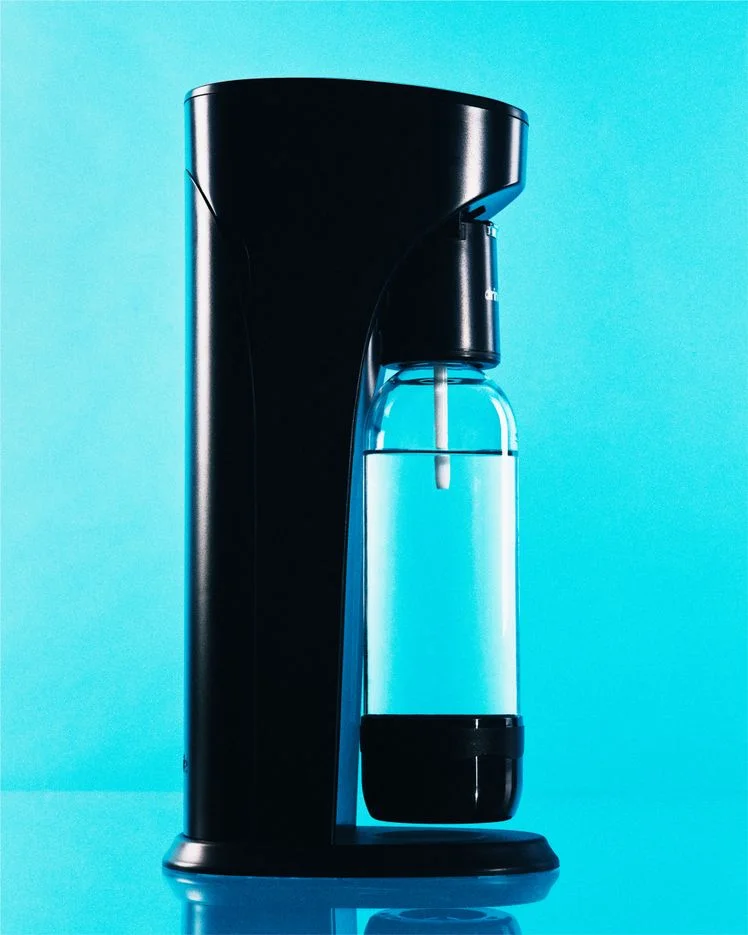
Photo by Travis Rainey, Prop Styling by Erica Lutz
Nothing I've tested beats the Drinkmate Omnifizz for the combination of versatility and price. It's the most affordable sparkling water maker I've found that also handles wine, cocktails, tea, and pulp-free fruit juice. That range is what separates it from the cheaper machines that only do water well.
The siphon is the reason it works so well. It detaches, and it has separate fast and slow pressure release tabs. It produces sharp, maximum fizz in about two seconds. Syrups and sugars foam up far more than plain water does, so that slower release option matters when you're carbonating wine or a cocktail. The siphon also seals more securely than designs where you pop or twist a bottle into the base. That lowers the odds of a sudden soda geyser, which, if you've used one of these, you know happens to everyone eventually.
The downsides are real, though. The looks are underwhelming, especially now that so many brands are putting real design effort into their machines. Everything is plastic, so it doesn't feel as durable as some competitors I've handled. It's also loud. It screams when it's finished carbonating. And whether it ships with a CO2 cylinder depends on where you buy it, so read the listing before you check out.
Pricing varies by retailer. On Amazon, the listed price is $133, reduced to $100 in the bundle that includes a 60-L CO2 tank and an extra bottle. Home Depot lists it at $140, reduced to $113 with a 60-L CO2 tank.
Specs:
- Height: 16.14"
- Machine material: Plastic
- Bottle material: Plastic
- Starter CO2 tank: Included, size varies by retailer
- Requires proprietary CO2 tank: No
- Warranty: 2 years
Where the InFizz Fusion earns its splurge
Breville already has a strong reputation in countertop appliances. Its ovens, induction burners, toasters, and immersion blenders all rank near the top of their categories. Its sparkling water maker, added in 2024, is a different kind of bet. The question is whether a brand known for premium kitchen gear can make a carbonator that feels like more than a gadget. 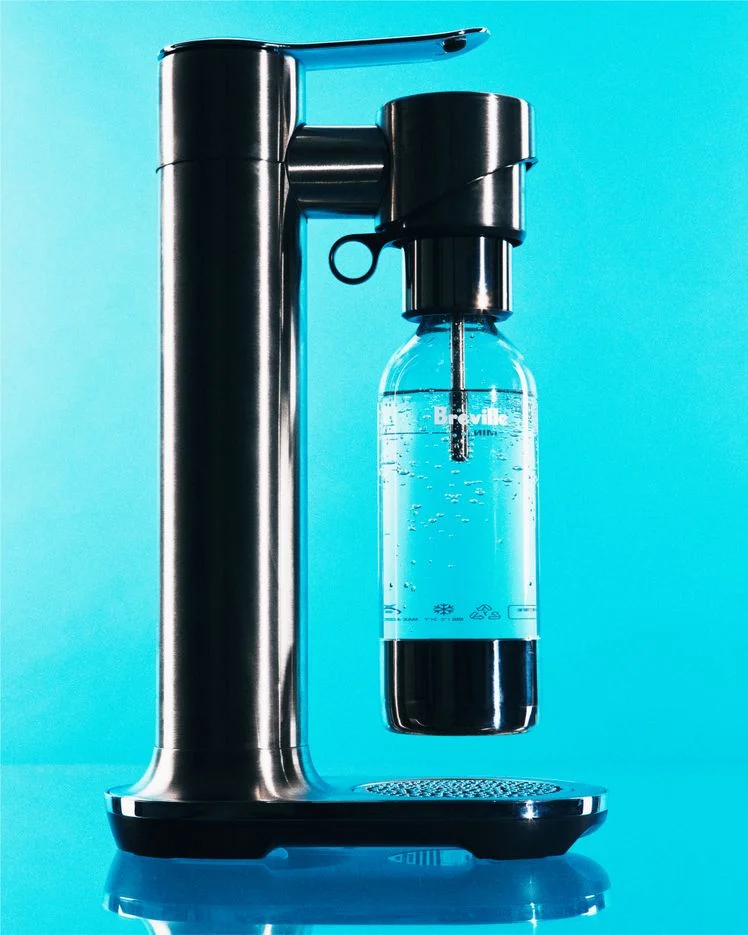 *Photo by Travis Rainey, Prop Styling by Erica Lutz* Mostly, it can. The InFizz Fusion is sleek and versatile, and like the Drinkmate Ominifizz, it carbonates a lot more than plain water. The key is the cap. Its default setting releases pressure slowly, which is what lets you carbonate fruit juice, wine, cocktails, and even creamy drinks without the mess you'd get from forcing it. Need fizzy water right now? Release the pressure manually and move on. That slow-release default is the feature that separates this machine from a basic soda maker. Most of the $100 to $150 models I've liked have all-plastic parts. The InFizz Fusion uses durable, high-quality stainless steel for much of its build, and you can feel the difference in your hand. The finish you get depends on the retailer, so don't assume the one in the photo is the one you'll be offered. **Where the price gets awkward** The splurge label becomes real when you look at the offers. Listings run from $200 to $280. Amazon is the cheapest at $200, Breville's own site and Bloomingdale's sit at $250, and Williams-Sonoma and Crate & Barrel both list it at $280 with CO2 included. That bundle distinction matters. The starter CO2 tank comes only if you buy the bundle, so the sticker price on a bare machine doesn't tell you the whole cost of getting started. The cylinder is the real catch. The machine doesn't require a proprietary tank, which is a point in its favor, since you aren't locked into one brand's refills. But it uses an uncommon canister size, and that can mean hunting for refills when you run out. That's a small annoyance on paper and a bigger one if you're carbonating every day. **What's in the box, and what isn't** Breville includes a juice filter and a silicone bottle brush. Both matter here. The juice filter helps when you're carbonating anything with pulp, and the brush makes cleaning the bottle less of a chore. The bottle itself is plastic, though, while the machine body is stainless steel, so you're getting a mix of materials rather than a fully premium build. The spec sheet is short but useful. It stands 16.9 inches tall, has a stainless steel body, and carries a two-year warranty. The brand's pros list calls the machine "cheaper" and "portable," and it calls it "fun," which is fair enough. But "cheaper" than what? At $200 to $280, that claim needs context, and the product materials don't supply it.Breville's machine is the one I'd have the most reservations about, and the reason isn't performance. It's the operation. Next to the Drinkmate, it's slightly fussier to use. The gap is small, but I still prefer the Drinkmate's quick click to Breville's twist-and-lock mechanism. Every extra step is one more thing to fumble when you're trying to get fizz into a glass.
Countertop soda makers are simple machines at heart, which makes Breville's price hard to ignore. This is one of the most expensive you can buy. If you're paying for build quality, a design you'd actually leave out on the counter, and the satisfaction of pouring sparkling wine from a bottle of bad rosé for guests who won't suspect a thing, you'll probably be happy with it. Just know the Drinkmate can rescue that rosé too. It simply won't look as good doing it.
Then there's the box itself. The base model costs $249 at the time of publishing, and it doesn't include a CO2 tank. That means you either buy a tank separately or pay about $30 more for the version that comes with one. Read the listing carefully before you assume you can carbonate out of the box, because the headline price doesn't include the one part you can't run without.
Drinkmate Spritzer: the portable pick
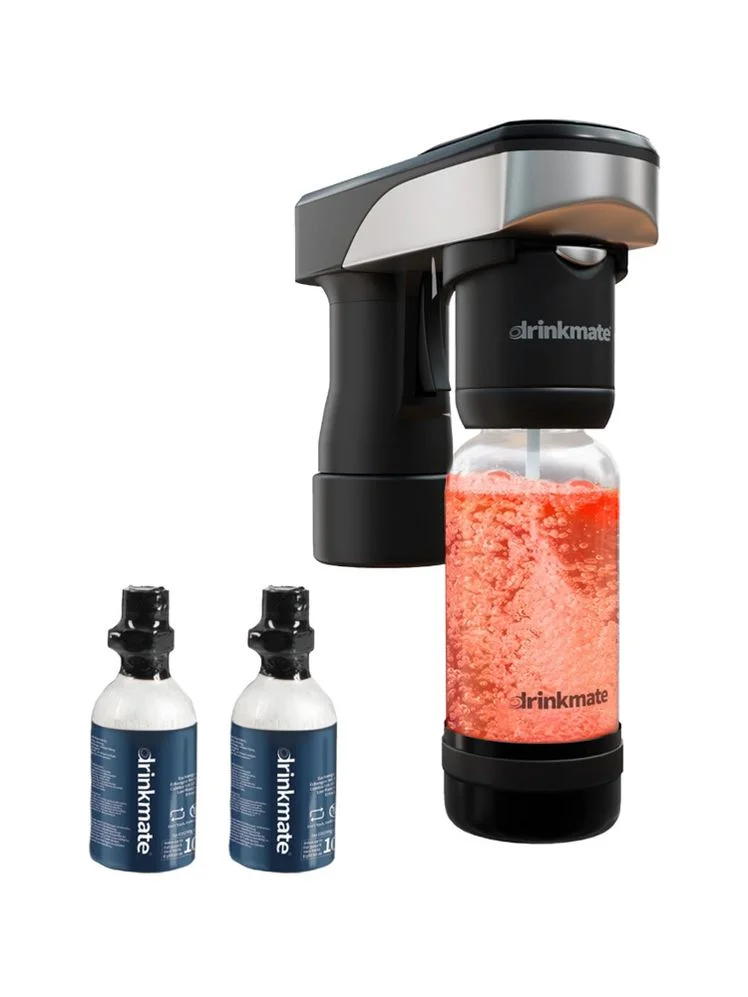
If you want carbonation somewhere other than your kitchen counter, the Drinkmate Spritzer is the one to look at. It's a portable sparkling water maker, and it's sold through Amazon at $80, though the listing shows it reduced to $60. That makes the price gap with Breville look a lot less like a gap, which is the real argument for it.
It's not perfect, though. Here's where it lands:
Pros:
- Carbonates more than water
Cons:
- Expensive
- Slightly more fidgety than the Drinkmate Omnifizz
Here's the thing: the Spritzer is the sensible buy if you want bubbles without committing to a premium kitchen appliance. You give up some polish and a little ease of use, and in exchange you get a machine that does the job without asking you to rebuild your counter around it. For most people, that trade is the whole point.


