Is traditional nonstick toxic?
Traditional nonstick is usually coated in polytetrafluoroethylene, or PTFE. "Nontoxic" branding positions new cookware as the safer alternative to that coating, and it works. But the reputation of old nonstick pans has a history behind it. PTFE was discovered by accident in 1938. DuPont trademarked it as Teflon in the early 1960s, and in the second half of the 20th century it upended home cooking. A surface that released food without oil was a genuine novelty. By the turn of the century, Teflon was everywhere in American kitchens, on skillets, muffin tins, and baking dishes alike. PTFE is only one member of the PFAS family, which contains thousands of compounds. Around 1951, DuPont began using another one, PFOA (perfluorooctanoic acid), in its Teflon manufacturing process. Over time, researchers found that PFOA could reach the human body through gaseous fumes or flaking coatings. The consequences, according to health agencies, include increased risk of certain cancers, birth defects, ulcerative colitis, and thyroid disease. Under sustained pressure from public health and environmental groups, manufacturers phased PFOA out by 2013. That's the origin of the "toxic" label. Here's the twist, though: today's traditional nonstick is generally made with PFOA-free PTFE, and it's typically free of PFOS, another harmful PFAS. Brands such as T-fal and Dura-Slide sell these pans, and PTFE itself is considered less harmful than other PFAS. Still, the broader concern hasn't gone away. Thousands of PFAS compounds remain unregulated, and research into the class as a whole is ongoing. A "PFOA- and PFOS-free" label tells you two chemicals are absent. It doesn't tell you the pan is free of every questionable PFAS.What "nontoxic cookware" actually means
The term predates its current popularity, but it went mainstream when GreenPan released the first PFAS-free ceramic nonstick frying pans in 2007. Since then, "nontoxic" has largely become shorthand for "PFAS-free nonstick." That shorthand isn't wrong, exactly. It's just narrow. Nontoxic is a marketing word, not a regulatory standard, and it tends to carry more reassurance than the label has earned. If you're shopping, read past the headline and check what the pan is actually coated with.The best nontoxic cookware
Here's what we'd buy, by category: - **Best ceramic nonstick pan:** GreenPan Valencia Pro - **Best "not-Teflon-or-ceramic" nonstick pan:** Misen Carbon Nonstick Frying Pan - **Best stainless-steel cookware:** All-Clad D3 Stainless Steel Skillet - **Best nontoxic cookware set:** All-Clad D3 Stainless-Steel 7-Piece Cookware Set - **Best cast-iron skillet:** Lancaster Cast Iron Skillet - **Best enameled cast-iron Dutch oven:** Staub Cocotte - **Best carbon steel skillet:** De Buyer Blue Carbon Steel If you're working through this list, start with the question that matters most to you. If you want easy release without oil, a ceramic or carbon nonstick pan will get you there. If you'd rather skip nonstick coatings entirely, stainless, cast iron, and carbon steel are the options that don't rely on a coating at all."Nontoxic" gets applied loosely. Most people use it to mean ceramic nonstick, a coating made from silica through the sol-gel process. But any pan made without harmful chemicals like PFAS qualifies. That's a wider club than the marketing suggests, and it already includes the pans most experienced cooks own: stainless steel, cast iron, and carbon steel.
Ceramic nonstick comes closest to the slick release of traditional Teflon, and that's its appeal. It's also its weakness. Like every coating, it degrades over time and can chip. That's why we'd rather you get comfortable with bare stainless, cast iron, and carbon steel. A bit of technique keeps food from sticking to them, and they'll outlast any coated pan you buy.
Ceramic nonstick: the best of the coated bunch
Full disclosure: I've sworn off coated nonstick for good. Whatever you buy will start to fail within a few years, and then it's time to replace it. Still, I get the appeal. If you're set on a coated pan, ceramic is the one to pick. Most ceramic pans have a stainless steel or aluminum body lined with a silica-based coating that's slick, at least for a while. The formulation varies from brand to brand, which is why we've spent years testing ceramic nonstick pans to see which ones actually deliver.
The best ceramic nonstick pan: GreenPan Valencia Pro
GreenPan released the first ceramic nonstick pans in 2007, and its products keep landing at the top of our nonstick testing. The Valencia Pro is our pick for a few concrete reasons. It has enough heft to feel sturdy, yet it's light enough to maneuver without strain. It's cheap enough that replacing it in a few years won't sting. And it resists scratches better than earlier GreenPan models we've tried. It also works on induction.
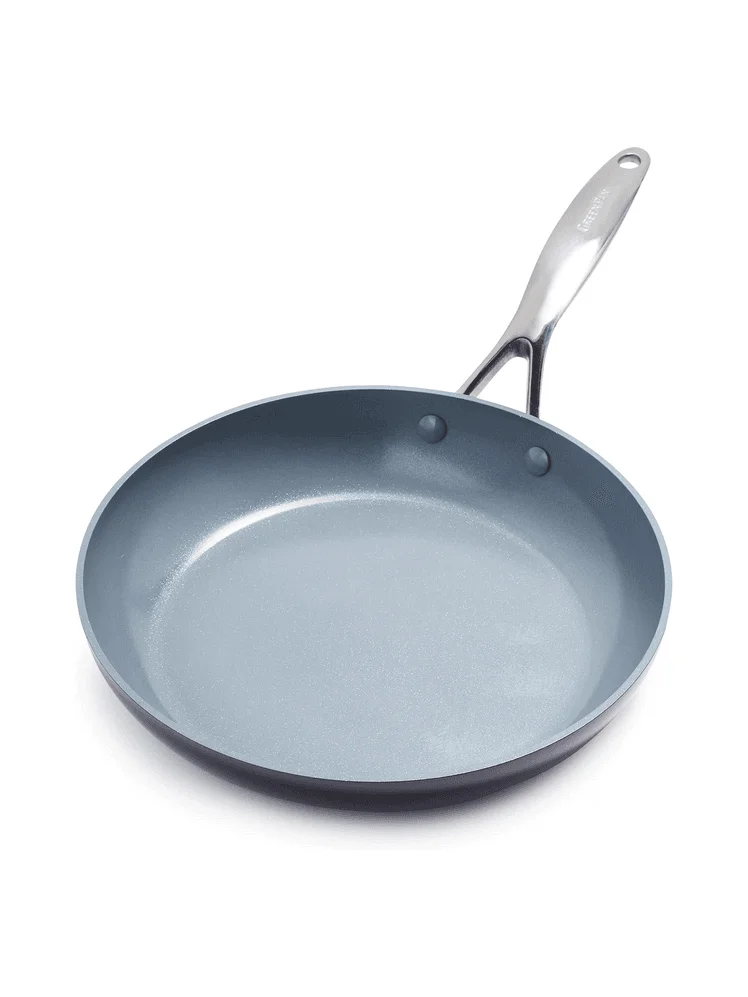
The strengths are easy to list: it's rated for high heat, has a comfortable handle, conducts heat well, and goes in the oven. The catch is the one that applies to every nonstick pan. The coating wears down after a few years, regardless of price or coating type. Expect the Valencia to age like the rest, just on a reasonable budget.
- Available sizes: 8", 10", 12"
- Induction compatible: Yes
- Dishwasher-safe: Yes, but hand-washing is recommended
- Metal-utensil-safe: Theoretically, but wood or silicone is recommended
- Oven-safe: Up to 600ºF
- Warranty: 1 year
The 12-inch version sells for $100 on Amazon.
If you don't cook on induction: GreenPan's Paris Pro line is the cheaper route. It performed about the same as the Valencia in our testing, so the induction compatibility is the only real reason to pay more.
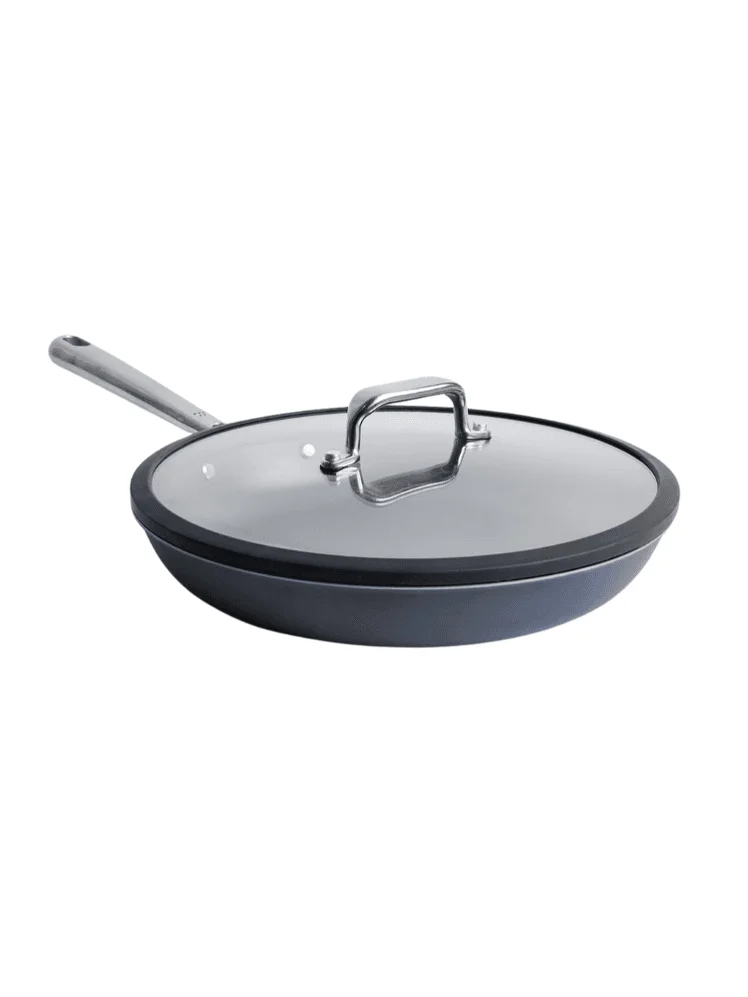
An “I-can’t-believe-it’s-not-Teflon-or-ceramic” nonstick pan: Misen Carbon Nonstick Frying Pan
What carbon nonstick actually is
Carbon nonstick pans skip the coating. They cook like a Teflon-style pan, but the cooking surface is bare carbon steel that's been nitrided, a process that infuses nitrogen into the metal. The result is a tougher, slicker surface that resists rust and corrosion and can handle high heat, metal utensils, and years of use. If you're tired of replacing scratched nonstick every couple of years, that pitch is hard to ignore.