Japanese knives have moved from enthusiast obsession to everyday kitchen staple, and performance explains most of it. Many of them beat their Western counterparts in kitchen tests. The catch is that they're specialists, and that specialization makes shopping harder than it should be.
Western knives are the multitools of the kitchen. Not long ago, cooks in busy restaurants would use the heavy bolster near the heel of the blade to crack open a can of tomatoes mid-service. Japanese knives, whether made in Japan or by makers elsewhere who follow the same design logic, work differently. They're built for precision and usually for one job. That's a real advantage on the cutting board, but it means you need to know what you'll actually cut before you buy.
Here are the Japanese-style knives covered below:
- Gyuto
- Santoku
- Nakiri
- Deba
- Petty
- Funayuki
- Kiritsuke
- Honesuki
Plenty of other styles exist beyond this list. These eight have been tested hands-on, not just compared on spec sheets, which is why we can say something concrete about how each one performs. Before getting into the individual styles, though, it helps to understand what separates Japanese knives from the Western ones most people grew up with.
What sets Japanese knives apart
Blade shape. The design philosophy shows up first in the edge. Japanese knives are generally built for push cuts or pull-through slicing, not the rocking chop that a heavy Western chef's knife relies on. Their edges run straighter. That makes them a bit less efficient at blasting through a pile of herbs, but each cut is more precise. Most also have a sheep's-foot tip, where the spine curves down to the point, giving you finer control for detailed work.
Steel. Japanese knives typically use harder steel than Western knives. Harder steel holds an edge longer, which lets makers sharpen at steeper angles and produce a finer edge. In practice, that means more delicate slicing. The trade-off is brittleness. That same hardness makes the edge more likely to chip when you cut into something like ice or bone, so the knife that feels sharpest on tomatoes may not be the one you want for butchering.
Bevel. This is where things get fiddly. Traditional Japanese knives are sharpened on one side only, which produces a much finer edge than the 50/50 bevel on Western knives, which is sharpened on both sides. Some modern Japanese makers have moved to 50/50 because it's easier to sharpen. You'll still see plenty of 70/30 knives, though, where the inside edge (the left edge on a right-handed knife) is ground at a steeper angle. A 70/30 bevel is easier to maintain than a single bevel and sharper than a 50/50, which makes it a sensible middle ground for most cooks.
Handle. Many traditional Japanese knives use a wa-style handle, an octagonal wooden grip that wraps around a hidden tang, the part of the blade that runs into the handle. That construction keeps the knife light and agile. Western knives usually use full-tang construction, where the steel runs the full length of the handle, which adds weight and heft. Modern Japanese makers have started mixing the two, pairing full-tang handles with Japanese blade shapes. The result is a hybrid that's durable and good at slicing. Whether you want lightness or heft is mostly a matter of preference, and it's worth deciding that before you buy.
The types of Japanese knives
With the design basics covered, the next step is matching a knife style to the work you actually do in the kitchen.
The gyuto has a history that explains its shape. It emerged in Japan in the early 1900s, when French cooking was gaining popularity in a country that was modernizing fast. Japanese makers took the French chef's knife as a starting point and combined it with their own blade-making traditions. The result was a knife built mainly for slicing meat, with a gently curved edge that also handles herbs well. Put one next to a Western chef's knife and the differences show up fast. The gyuto has a straighter blade and a drop-point tip that sits lower to the board. That's deliberate. You set the tip down and draw the blade through the food, using the thin, sharp edge for precise cuts. It's a different motion from the rocking cut most Western cooks learned first, and it takes some adjusting. Here's the thing, though: slicing meat is only part of the appeal. The gyuto's overall shape makes it a sensible anchor for a knife collection, and plenty of home cooks use one as their daily driver instead of a traditional Western chef's knife. If you're buying only one good knife, that versatility matters more than any single task it does best.Our go-to picks
We've been fans of the gyuto here for a long time. MAC's [Professional Hollow Ground Chef's Knife](https://www.macknife.com/products/professional-series-8-chefs-knife-with-dimples-mth-80) has topped our chef's knife review for years. It lists at $195 and currently sells for $175, which makes it one of the more accessible entries in this category.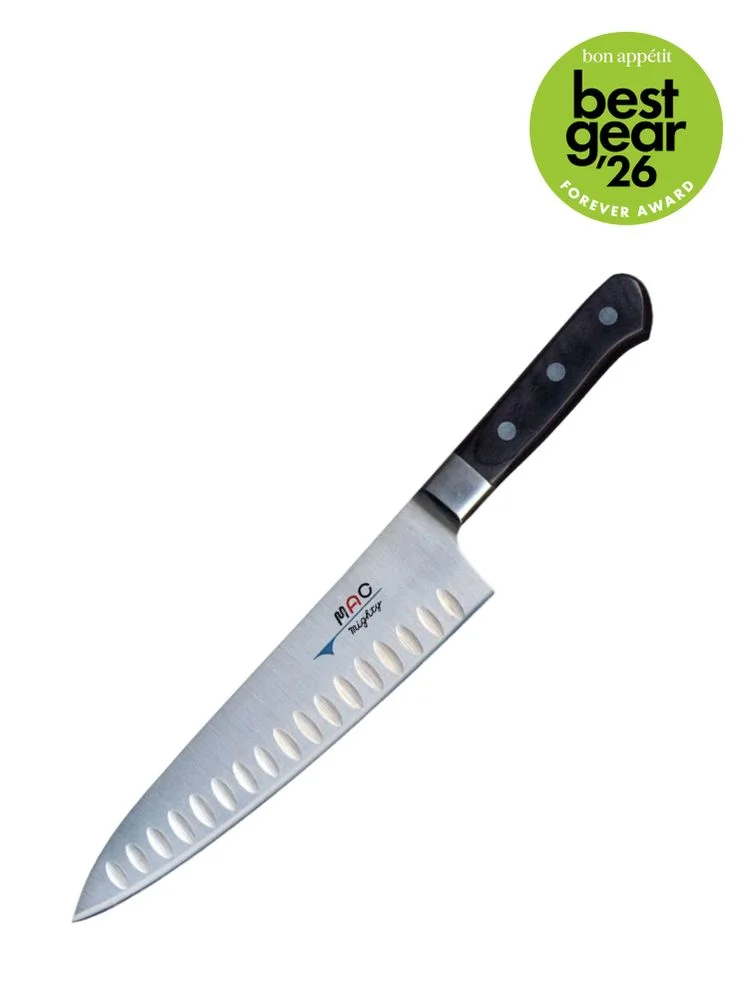 If you want something sharper and more traditional, the Kazan Arare by Shibata gyuto is the one we'd point you toward. It impressed us enough that we gave it a full review of its own. It's priced at $240 at both Shop and Chubo, so you won't have to hunt for a better deal on it.
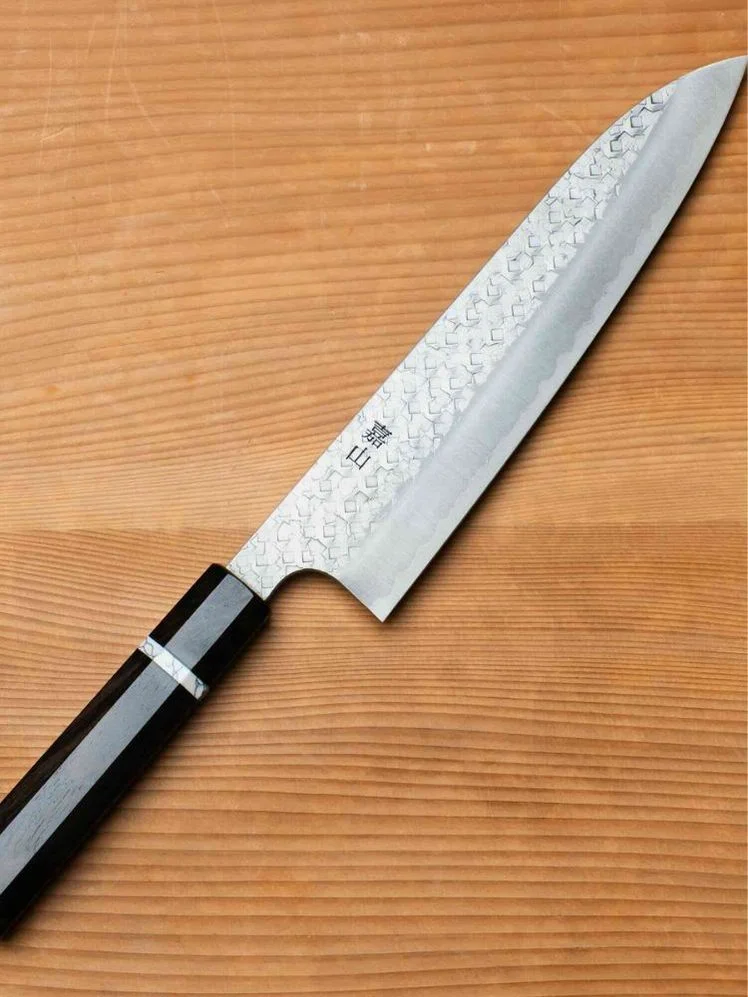 The price gap between these two is real, roughly $45 to $65 depending on whether the MAC is on sale. That's the trade-off you're weighing: the MAC is the forgiving, everyday workhorse, while the Kazan Arare asks more of you and rewards that effort with a blade that's noticeably sharper out of the box.
The three-virtues knife
Santoku knives now show up in more brand knife sets than you'd expect from a shape that only took hold around the 1940s. The nickname "three virtues" knife tells you the design brief: it borrows from the gyuto, the nakiri, and the deba, and aims to do the work of all three. The result is a utility blade for meat, fish, and vegetables that you won't need to swap out mid-prep.Why the shape works
Look at the profile and the choices make sense. A steep sheep's-foot tip gives you precision for detail work. A tall heel handles push cuts. A slight curve along the edge supports pull-through slicing and rock-chopping. None of these features is exotic on its own. Together, they make a knife that handles a lot of small, varied jobs without fuss. That's the everyday stuff, and it's where a santoku earns its keep. Think cheese and an apple for a snack, slicing leftover roast chicken for a sandwich, or dicing an onion for a curry. You're not reaching for a specialty tool for any of it.
Size matters more than you'd think
Most of the time, a santoku between six and seven inches is the sweet spot. That's deliberately shorter than a gyuto, which makes it feel like a different tool rather than a smaller copy of the same one. If you already own a long chef's knife, a santoku in this range fills the gap for everything you don't want to wield the big blade for.Two picks worth your money
Our overall favorite is the MAC Professional Series Santoku. It's sharp, well made, and good value at $140 on Amazon. The complaint is that the handle feels a little clunky, which is the kind of thing you notice on day one and then stop thinking about. Or you don't, and it bugs you for years. Only you can say which.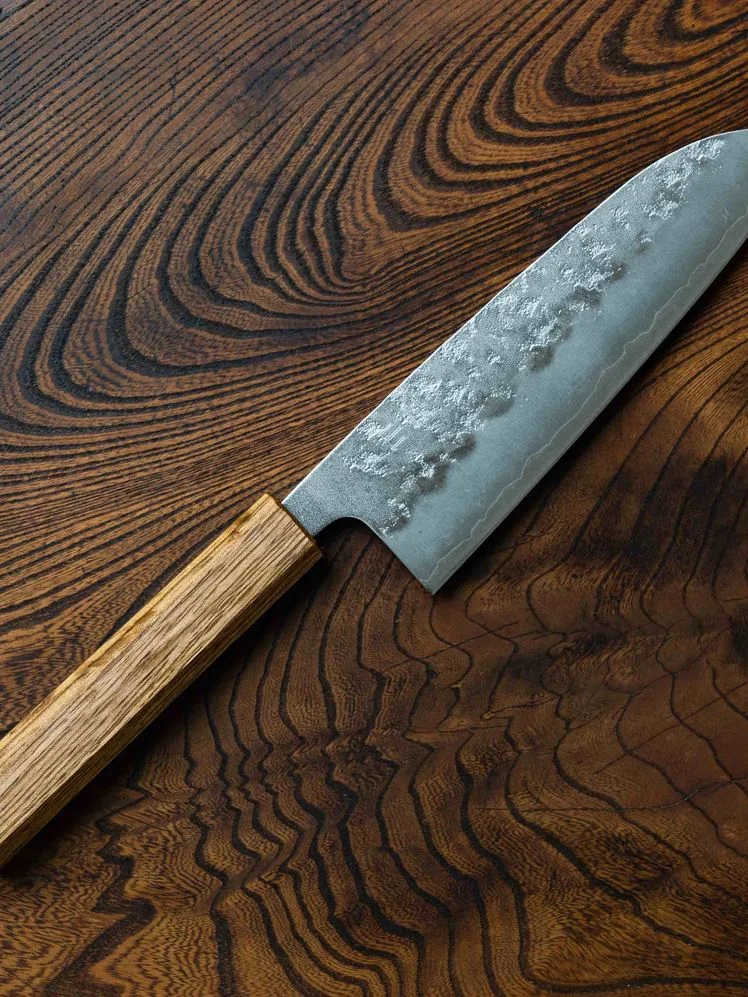 If you want something sharper and more refined, the Kazan Ginsan Nashiji Santoku is the one to look at. It has a traditional wa-style handle, a razor-sharp edge, and hand-finished details that feel considered rather than decorative. It's nimble but sturdy, which is a combination you don't see often. The price is the catch: at $180 from Chubo Knives, it costs noticeably more, and that's the trade you're making.