Photographs by Jesse Kornbluth
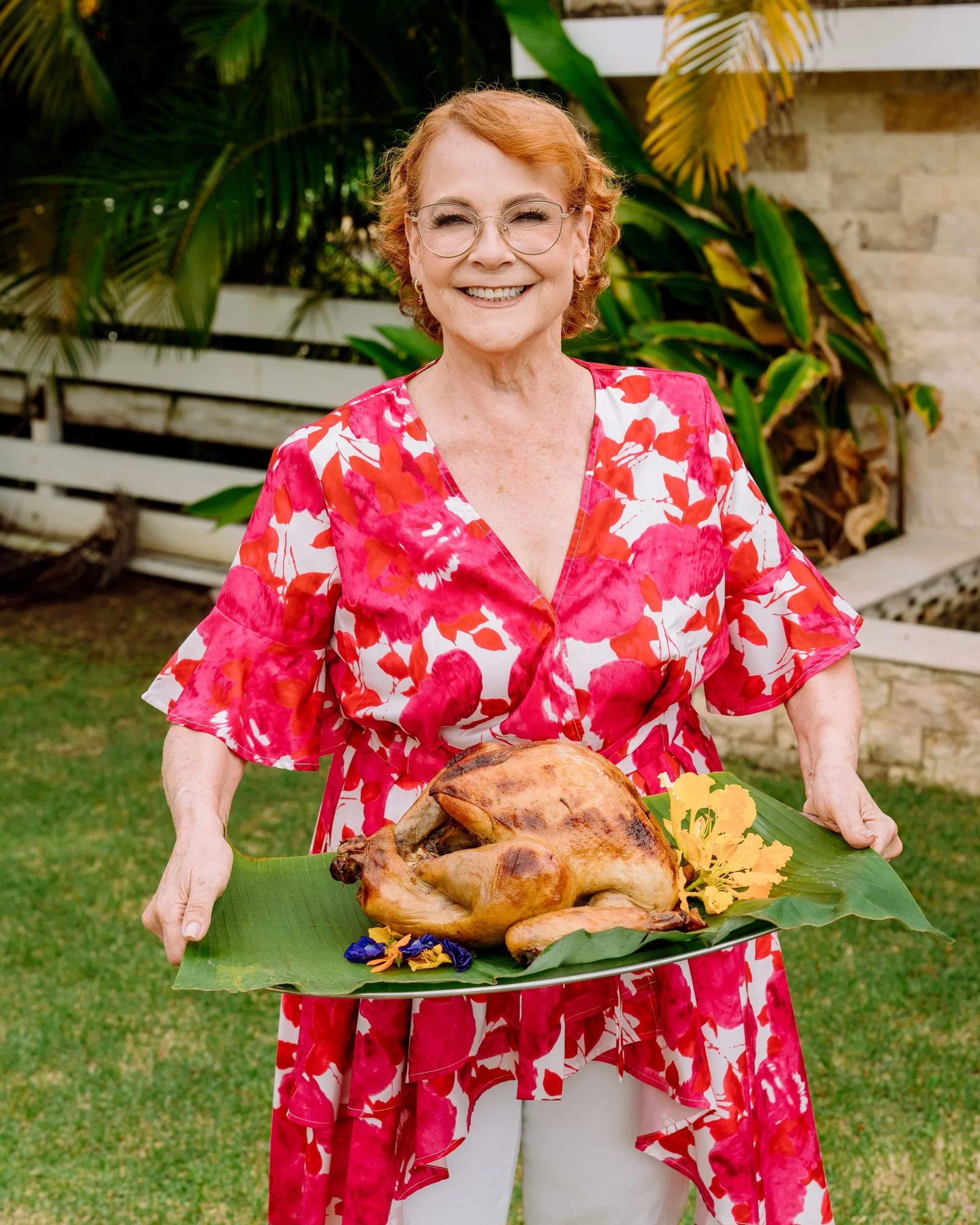
Puerto Rican Thanksgiving makes a persuasive case for rewriting the holiday menu. The turkey gets a marinade of garlic, lime, and oregano, then a filling of fried green plantains and chicharrón mofongo. Guava can take the place of giblet gravy; flan handles dessert. Calabaza, the island’s winter squash, gets the spotlight usually reserved for pumpkin, while coconut water sipped straight from a coco replaces hot apple cider. This is more than a regional twist on familiar dishes: it’s a holiday shaped by Puerto Rico’s own ingredients and history.
Thanksgiving has been celebrated on the island since the early 20th century, not long after the United States invaded Puerto Rico in 1898. It opens a lively holiday season and holds a place in the calendar much like it does on the mainland. Few people know its food traditions better than Giovanna Huyke, a chef and restaurateur who has spent more than four decades cooking and teaching Puerto Rican cuisine.
I meet Huyke at SatoFino, a neon-colored, woman-owned restaurant in San Juan, on a sweltering summer day. The regulars know her: her bright red hair is hard to miss, and the bartender soon sets down her usual stiff Manhattan. We talk through the Thanksgiving meal we’ll cook together. Huyke is accustomed to a packed schedule. In the days before our meeting, she had traveled to Atlanta to cook for Ser Familia, a nonprofit supporting Hispanic families, then returned to Caguas, 20 miles south of San Juan, to feed guests at the Miss Universe Puerto Rico pageant. After that, she crossed the island to teach traditional cooking in San Germán, Puerto Rico’s second-oldest city. Now she’s ready to walk me through the feast.
A cuisine built from many histories
“We have a rich and resilient food history—it came from necessity, lack, and a bounty from the land,” Huyke says. Puerto Rican cooking draws on the island’s agricultural past and its present dependence on imported and shelf-stable foods. The result carries centuries of change in every dish. “Our food comes from Spain, Indigenous Taíno people, and [enslaved] West Africans,” she says. “But it grew from our land and from our history, mixing every influence in our pilónes and our cauldrons.”
That history has a personal place at my family’s table. Huyke, a television personality, newspaper columnist, and cookbook writer since the late 1980s, taught generations of Puerto Rican home cooks. My grandmother Sara—Tata to me—was one of them. Like many Puerto Rican families living away from the island, we returned for the holidays, alternating between Thanksgiving and Christmas. We left Atlanta’s Hartsfield-Jackson airport in heavy coats and stepped off at San Juan’s Luis Muñoz Marín in shorts and tank tops.
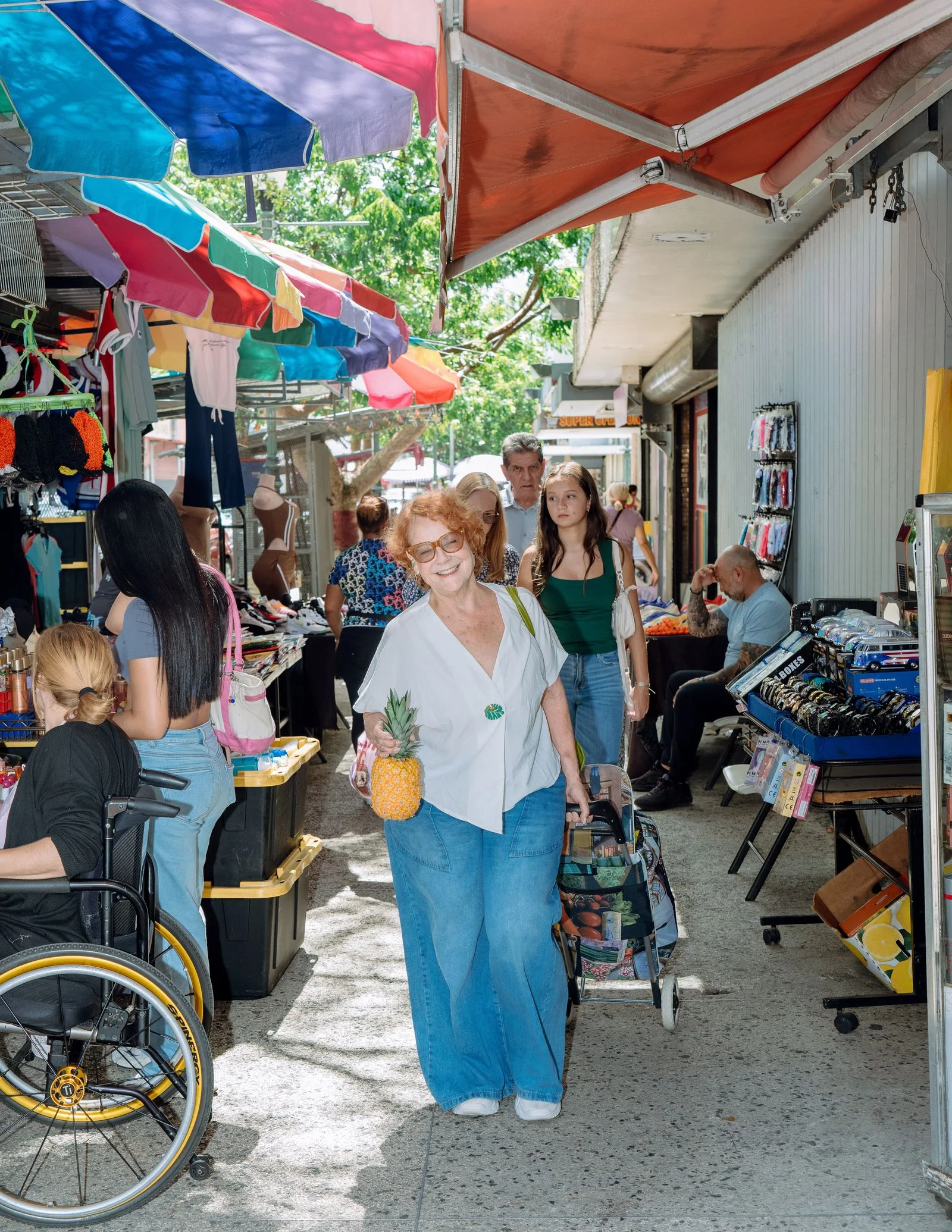
Tata’s turkey came with stuffing that began with Pepperidge Farm mix but quickly went its own way: picadillo, ground beef cooked with sofrito, pimiento-stuffed Manzanilla olives, and sazón. Sofrito—a fragrant mix of garlic, onions, peppers, and culantro—anchors the Puerto Rican palate. After Tata died, I inherited a worn copy of Huyke’s 2004 recipe booklet, Celebraciones. Its recipes echoed the dishes I remembered from my grandmother’s Thanksgiving. Huyke had been shaping my family’s holiday long before I knew her name.
Puerto Ricans call the holiday El Día de Acción de Gracias, but the name often gets shortened or remade. Sanguiving is a playful nod to the Roman Catholicism that remains the island’s predominant religion; El Día del Pavo means “Turkey Day,” and some say Sangiving, spelled as it sounds. That impulse has a name, too: Puertorriqueñizar, or making something Puerto Rican.
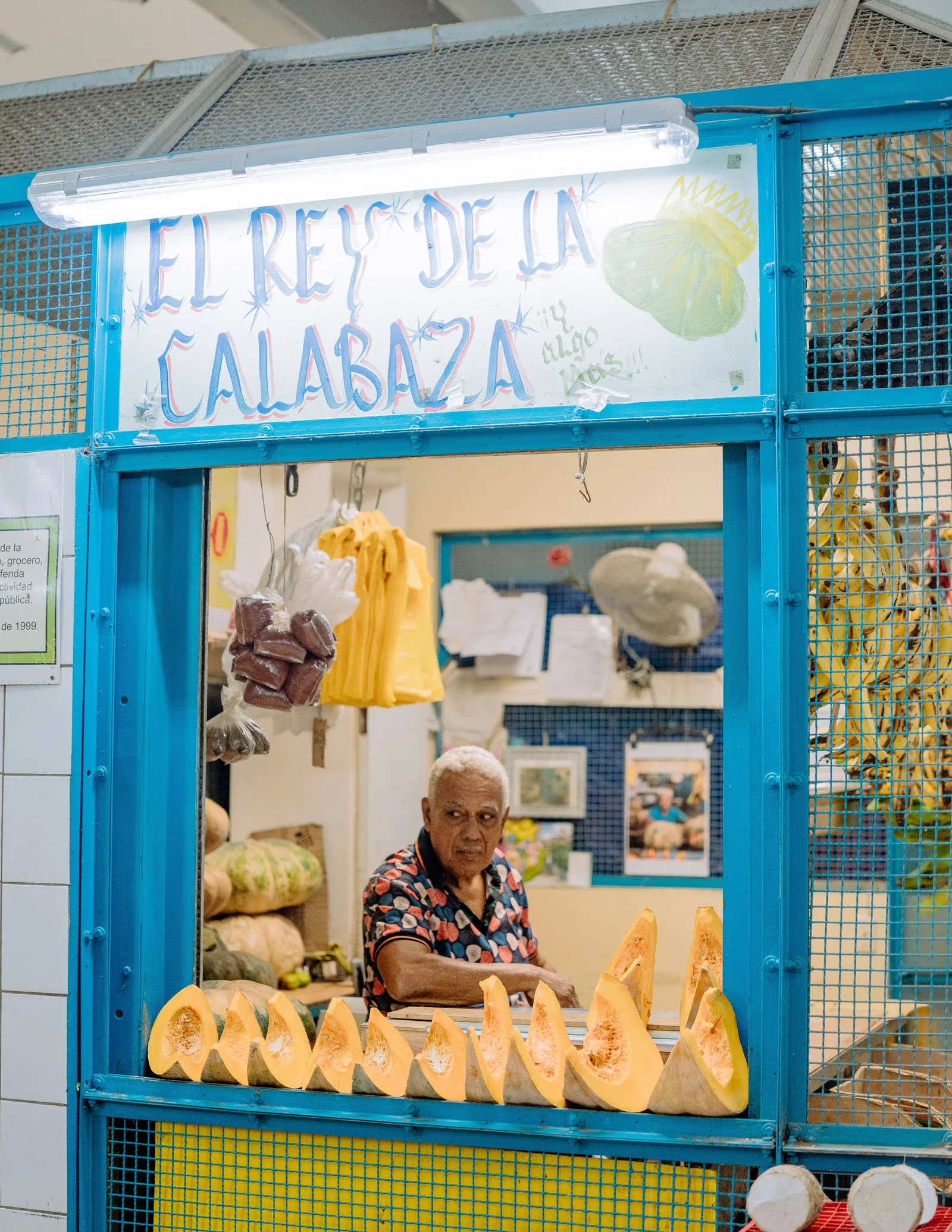
“Our adobo goes on the turkey, and all the sides have something to do with sofrito,” Huyke tells me. Puerto Rican adobo comes wet or dry, and both versions bring together Spanish, African, and Indigenous ingredients and techniques. Garlic, onion, peppers, and herbs are pounded in a wooden mortar called a pilón, linking the island’s ancestral and colonial foodways in a single tool.
The pantry behind that meal also reflects Puerto Rico’s political and economic history. Residents became U.S. citizens in 1917, and were made eligible for the draft weeks before the United States entered World War I. As many as 20,000 Puerto Ricans served; islanders have fought in every U.S. military conflict since. Military food traditions traveled home, while government subsidies and the practical demands of living on a storm-prone island reinforced reliance on shelf-stable staples. An economy once centered on sugar, coffee, and tobacco shifted toward industrial manufacturing. Today, tinned corned beef, Vienna sausages, Spam, club soda crackers, and canned vegetables remain common, and about 85 percent of Puerto Rico’s food is imported.
Huyke’s family carries that history into its holiday cooking. Her father, Hector, served in the Korean War and came home with a lasting dislike of the military’s instant mashed potatoes. He made an exception for the version his wife, Alice—a trained cooking instructor—prepared for holidays: yellow potatoes simmered slowly in cream with chicken bouillon, then whipped with butter. A garlicky take on the dish now appears on Huyke’s Sanguiving table.
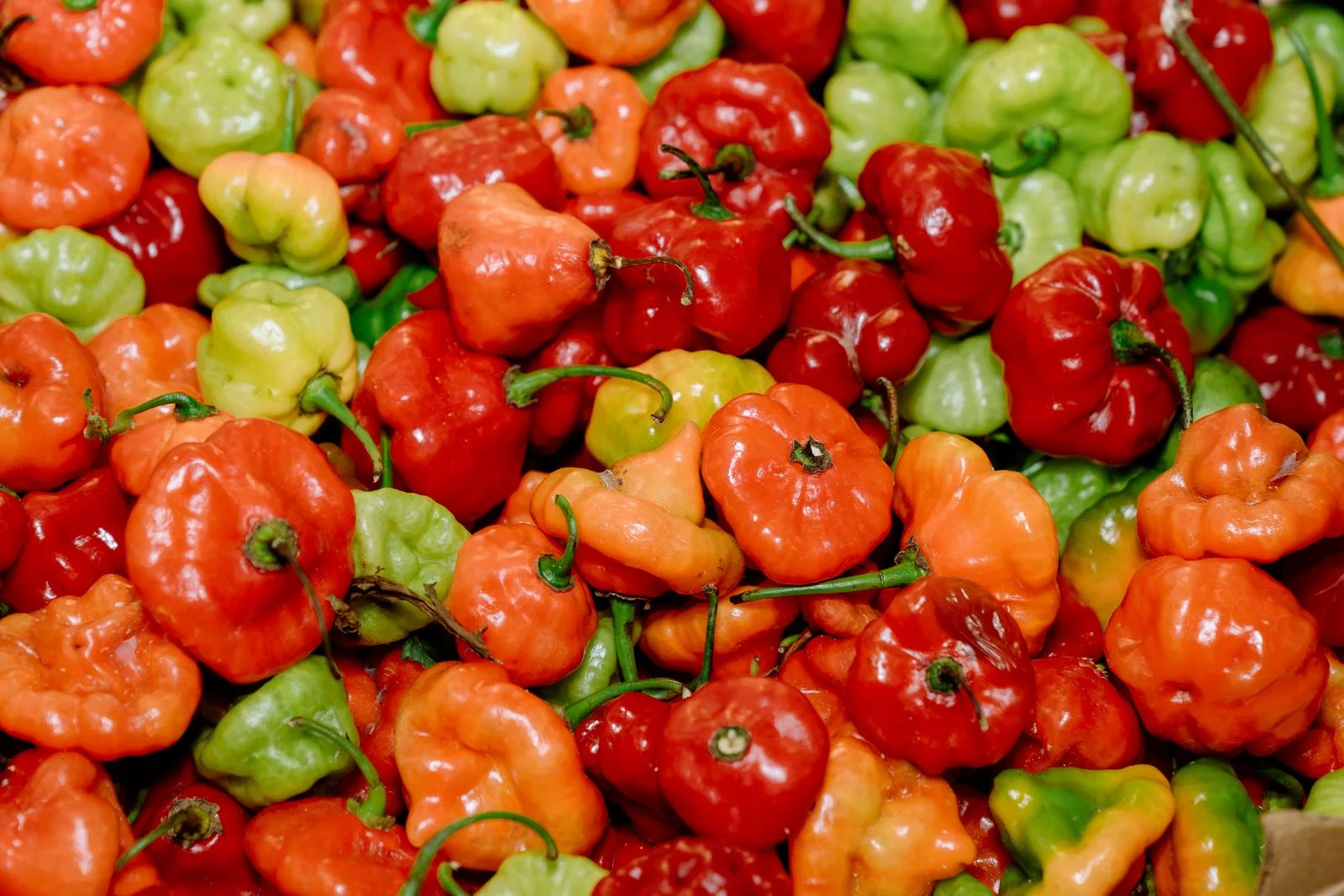
Huyke wants Puerto Rican cooking to rely less on processed food and more on fresh ingredients. Her case is both practical and cultural: fresh food tastes better, she argues, and gives the island’s culinary history more room to show through. She gravitates toward dishes made from the region’s abundance, from maize, peppers, yuca, and other Indigenous root vegetables to plantains and coconuts that arrived later.
Cooking the feast together
Huyke says the best way to explain her approach is to cook. A few weeks later, she joins me in my North Carolina kitchen. She teaches as she works, explaining why a dish takes a particular turn and why one ingredient suits it better than another. Mentoring is already part of her life: she supports younger chefs, including Natalia Vallejo, Puerto Rico’s first James Beard Award–winning chef, and often makes time for phone calls with cooks coming up behind her. I’m lucky to join that circle, even for an afternoon.
Some dishes change from year to year, but the Puerto Rican favorites stay. One is yuca stuffing, often pronounced “estuffing” on the island. Huyke’s family calls its version Agüeybaná stuffing, after the Taíno chief who led the island’s people when the Spanish invaded in 1493. She peels and grates fresh yuca, then processes it into a paste. I sauté sofrito in olive oil and add ground pork, salt pork, annatto, herbs, and aromatics. We pack the mixture into a deep dish and bake it.
Next is pastelón, a layered casserole built from fried sweet plantains and creamy queso fresco. The dish may have originated in New York City, where Puerto Rican and Italian communities lived close together, before making its way to the island. “The Puerto Rican and Italian diasporas were physically close in New York during the ’50s—they were exposed to lasagna and mozzarella,” Huyke says.
For another side, she gives gandules, or pigeon peas, a break from their usual pairing with rice. Arroz con gandules is Puerto Rico’s national dish, but Huyke makes an escabèche-style salad, tossing the peas with tomatoes, avocado, herbs, and tangy vinaigrette. She also updates the familiar canned-beet side with locally grown beets, roasted and finished with crumbled queso fresco.
Photographs by Jesse Kornbluth


