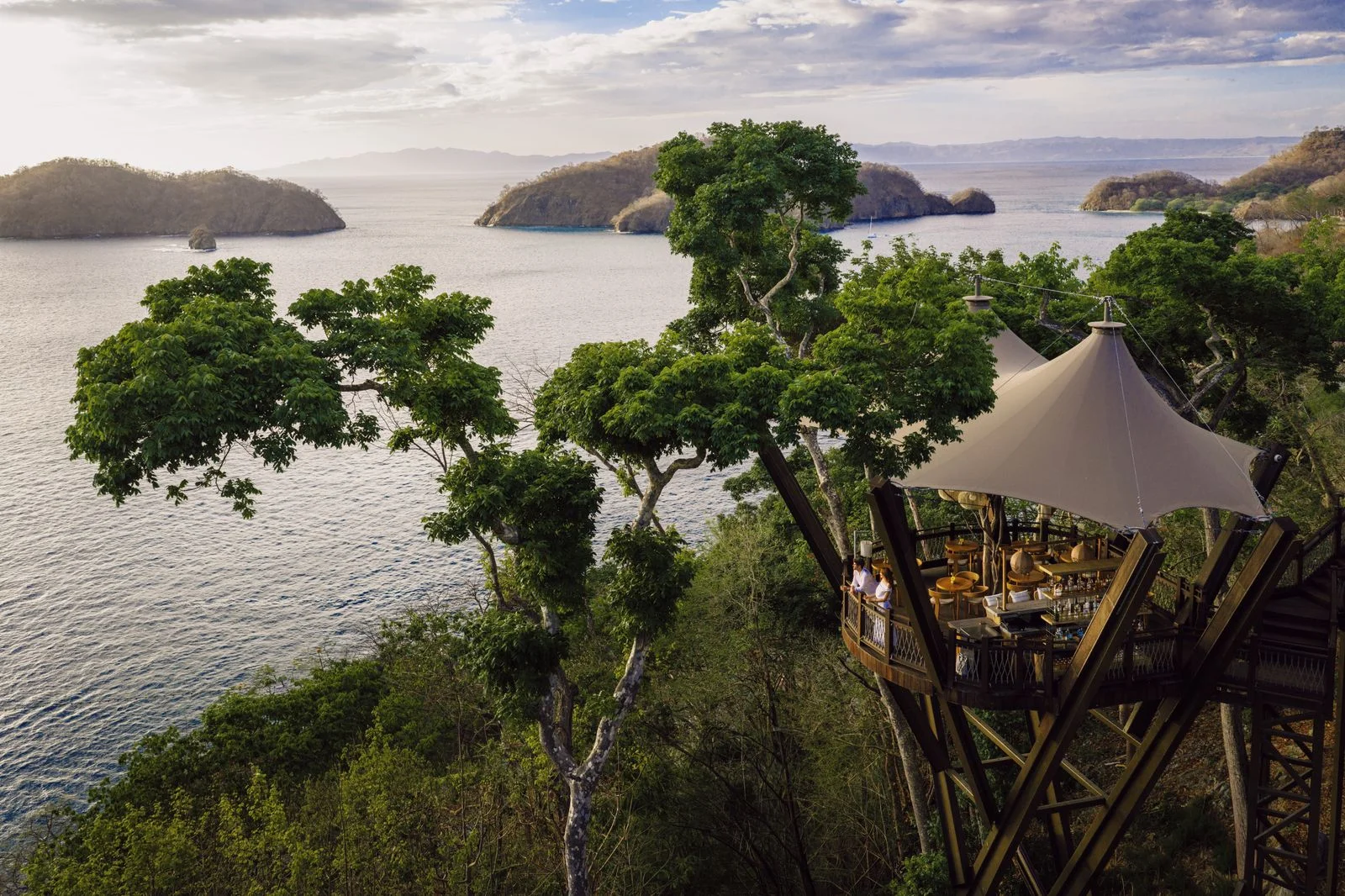
Nekajui’s most distinctive amenity may be its coffee counter. At this new Ritz-Carlton Reserve on Costa Rica’s Papagayo Peninsula, a micro-roastery turns the country’s regional variety into a daily tasting experience, giving the resort’s food program a sense of place that reaches beyond its restaurants.
The property opened in February 2025 across 1,400 acres of jungle and coastline. It’s Ritz-Carlton’s first Reserve in Central or South America, part of a collection built around secluded destinations. Wildlife including capuchins, coatis, iguanas and howler monkeys shares the grounds with 107 rooms and suites.
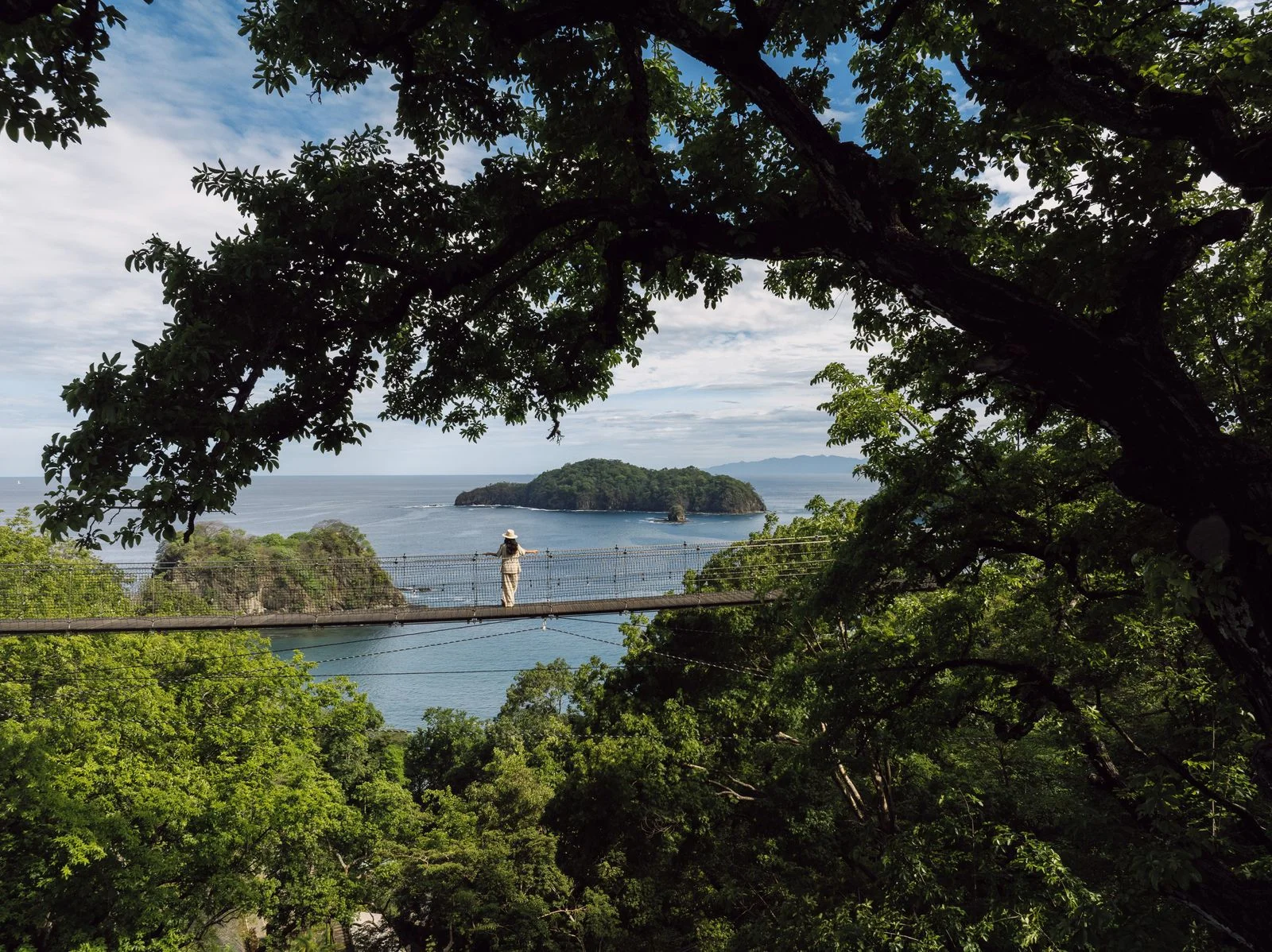
Rooms above the canopy, a beach below
Arrival sets up the property’s scale through contrast. Check-in takes place in La Casita, a modest bungalow; across the drive, a lantern-lit ceiba tree frames views over lawns, tiered pools and the bay. Rooms look out toward treetops and ocean sunsets, with Guanacaste woodwork and outdoor access shaping the interiors.
Some rooms add roomy patios and private plunge pools, while treetop tents and villas offer more space for groups. The resort’s main campus holds its rooms, restaurants and spa, but the coastline is part of the experience: a funicular carries guests down the cliffs to a warm-water beach and a cave to explore.
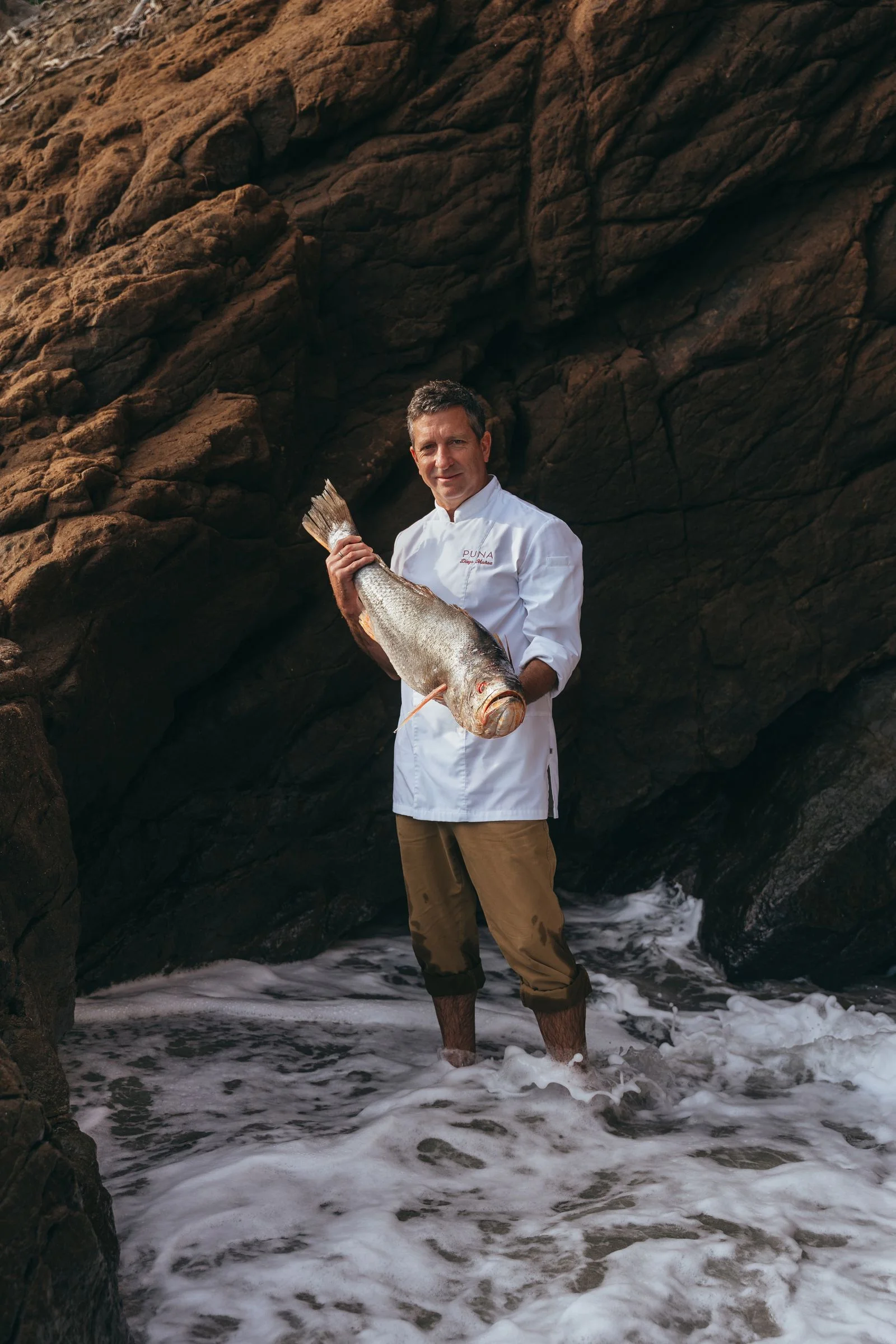
Muñoz brings a global frame to local cooking
Peruvian chef Diego Muñoz, whose résumé includes El Bulli and Mugaritz in Spain, leads the kitchens at Puna and Paruro, a six-seat chef’s counter tucked inside the main restaurant. Puna folds influences from Muñoz’s travels into Peruvian dishes such as sudado and ceviche. Paruro takes an East Asian direction, with plates including nori-cured tenderloin and sea bass curry. A deboned chicken wing stuffed with prawns appears on both menus.
The menus also reflect a practical challenge: sourcing local ingredients that remain uncommon in Costa Rican restaurants. Fresh seafood can be difficult to secure, despite the country’s extensive marine territory. The wider dining offer includes Niri Beach Club, with an Iberian focus, and Café Rincon, serving sandwiches, bowls and pastries throughout the day.
Drinks get their own point of view at Cooper’s, an invite-only cocktail room with a speakeasy atmosphere. Its menu draws on Guanacaste ingredients and local distillates, including goat cheese, cascara and mango leaf. One drink, the Turrialba, puts a goat cheese distillate and fino sherry into a martini-style build.
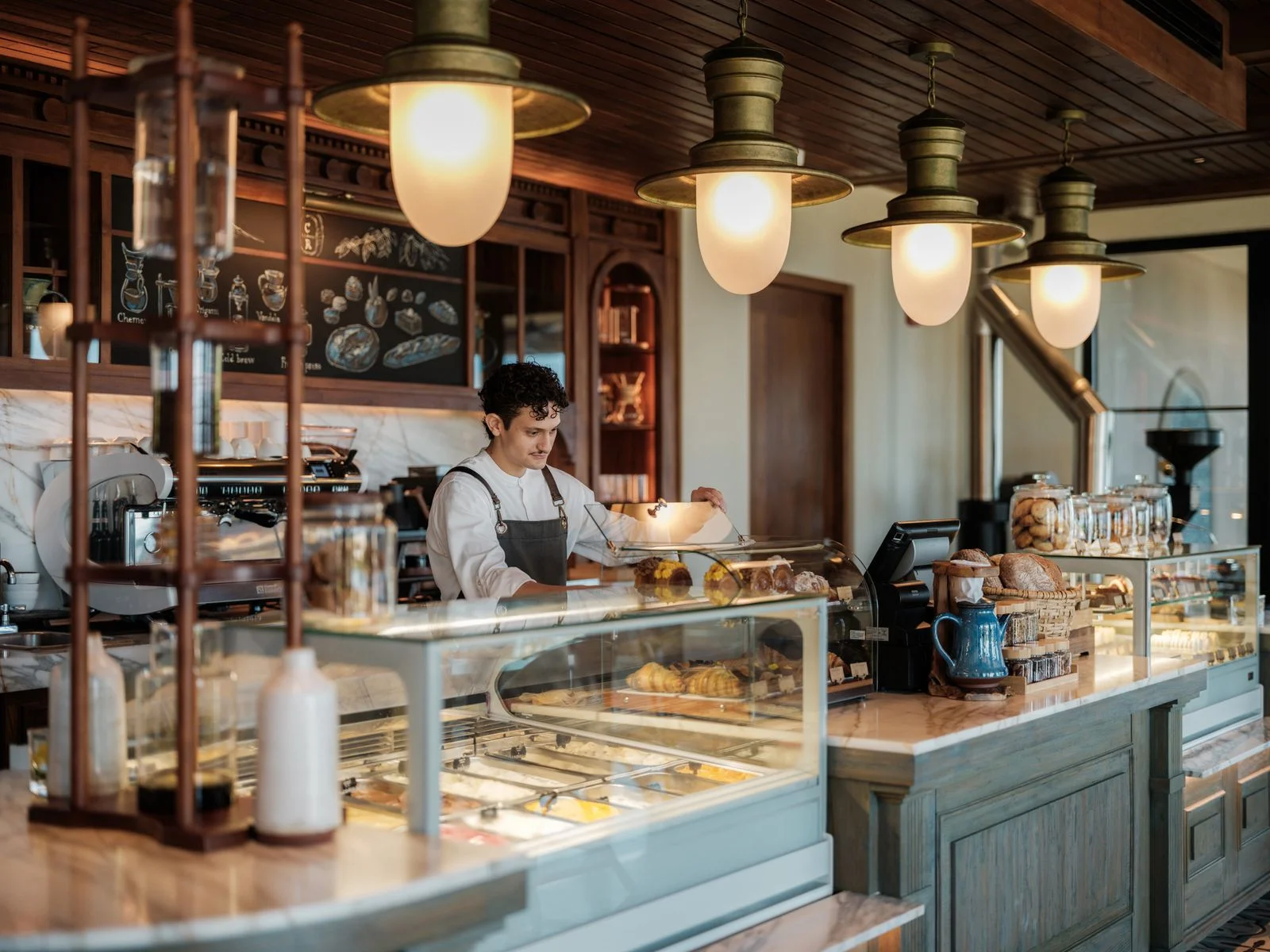
A coffee program with national reach
At Café Rincon, Fabi Rojas runs a micro-roastery whose selections rotate across Costa Rica’s seven coffee-growing regions. Her relationships with farmers around the country give the program access to a range that’s striking for a country roughly the size of West Virginia: approachable coffees from the lower elevations of the western coast, bright acidity from Valle Occidental in the north, and fruity Geishas from the southern-central Los Santos region. One Costa Rican Geisha sold for more than $300 per pound at auction.
Rojas will brew to a guest’s preference, though the vandola is the signature method. The clay brewer may look centuries old, but Costa Rican roaster and barista Minor Alfaro designed it in 2015. Its vessel helps retain aroma, while a valve at the dripper’s base allows gentle oxygenation—a technique Alfaro says can bring out sweetness.
The vandola’s handmade ceramic form makes the brewing ritual visible, but the larger point is the sourcing behind it. Nekajui gives guests a direct encounter with Costa Rica’s varied coffee regions, and a reminder that the resort’s strongest culinary detail may be the one served in a cup.
Nekajui Peninsula Papagayo, a Ritz-Carlton Reserve