Original Heir is betting that a hairbrush can be both a considered tool and a visible accessory. Founded by Isabella Di Stefano, the new brand is entering a market split between inexpensive plastic brushes and luxury models, with few options in the middle and even fewer made for travel. That gap gives the company a clear opening, though it also puts pressure on the products to justify prices that sit well above everyday drugstore brushes.
Di Stefano says many shoppers don’t know which brush suits their hair or what separates one brush from another. “Bristle material, flexibility, spacing and placement all change the way a brush interacts with your hair,” she told Fashionista by email. Her product decisions start with those mechanics, alongside a design brief shaped by practical frustrations: exposed bristles in a bag, undersized handles and travel brushes that aren’t appealing to use in public. Those complaints point to a product category that’s often treated as an afterthought, even though people use brushes repeatedly and carry them between home, work and travel.
That combination of utility and appearance is the brand’s central bet. A brush can be technically suited to a particular task and still fall short if it’s awkward to hold or unpleasant to take out in public. Original Heir is trying to address both sides at once. The harder question is whether shoppers will see enough difference in daily use to pay for the materials and design.
Travel brushes built around different needs
The first products are two folding brushes with fully enclosed bristles. Original Heir offers the Pronta Smooth for $69, combining natural boar and gem-infused nylon bristles to smooth hair and help reduce static. The $59 Pronta Untangled uses widely spaced, gem-infused TPEE bristles to loosen tangles while preserving a finished style. The distinction is practical: one brush is presented as a smoothing tool, while the other is intended to detangle with less disruption to the style already in place.
Enclosing the bristles speaks to a familiar travel problem: loose items in a bag can pick up dust and debris, and exposed bristles can snag on other belongings. A folding design also makes the brush easier to pack. That’s useful, but portability alone doesn’t explain the price. The brand is asking customers to weigh the materials and the brush’s intended effect against simpler travel options that may cost less.
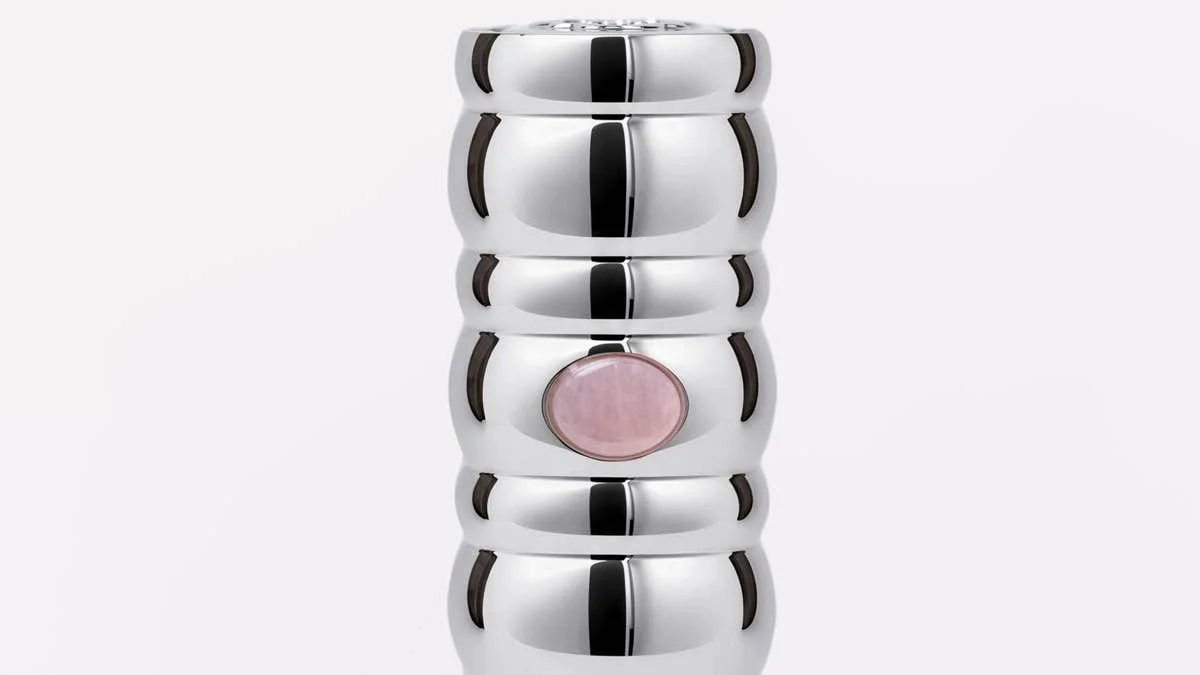
Pronta Smooth
Two full-size paddle brushes are available for pre-order ahead of a mid-November release. The $99 Bella Paddle Brush uses the smoothing bristle combination found in Pronta Smooth, set into a sculptural metal design. The $89 Doppio Paddle Brush is intended for wet or dry hair and carries over Pronta Untangled’s bristle technology. Both have elongated handles for grip, control and reach. The larger format moves the brand beyond travel convenience and into the daily routine, where comfort and performance will matter more than how easily a brush fits in luggage.
Here’s the thing: the two paddle brushes serve different purposes, but the shared design language gives the collection a recognizable look. That may help the products stand out on a vanity or in a crowded beauty aisle. It also means the brand has to make its distinctions legible to shoppers; material descriptions alone won’t tell someone which brush fits their hair or habits.
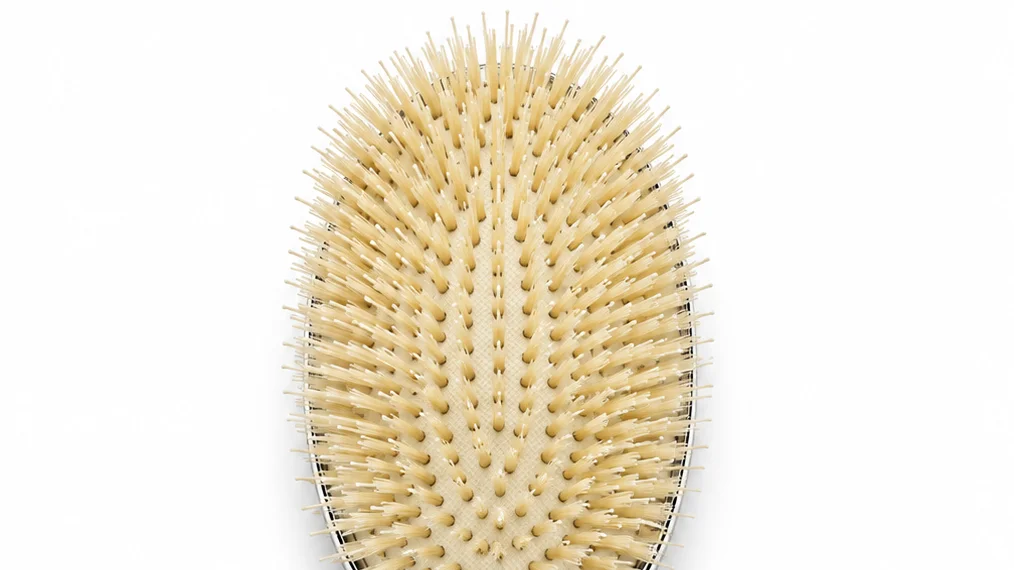
Bella Paddle Brush
Material choices meet vanity appeal
Di Stefano’s background spans creative strategy, consumer behavior and brand-building, including work with Calvin Klein, Barbie and the CFDA. For product development, she teamed with bioengineer and hair scientist Sareena Karim, whose previous work includes K18, L’Oréal and Dove. They tested materials and bristle combinations with common concerns in mind, including static, breakage and uneven oil distribution. That partnership gives the range a technical foundation, while Di Stefano’s experience in brand-building helps explain why the products are framed as objects people might want to display.
“Brushing involves friction, tension, static and mechanical forces, so the design of the brush matters,” Karim said in a statement. The aim, she said, was to study those interactions and make brushes that account for how hair behaves. This is more significant than it looks: a brush’s shape and bristle arrangement can affect how force is applied as someone works through tangles or smooths hair. Still, the available information describes the development approach, not comparative test results, so shoppers will have to judge the claimed benefits in use.
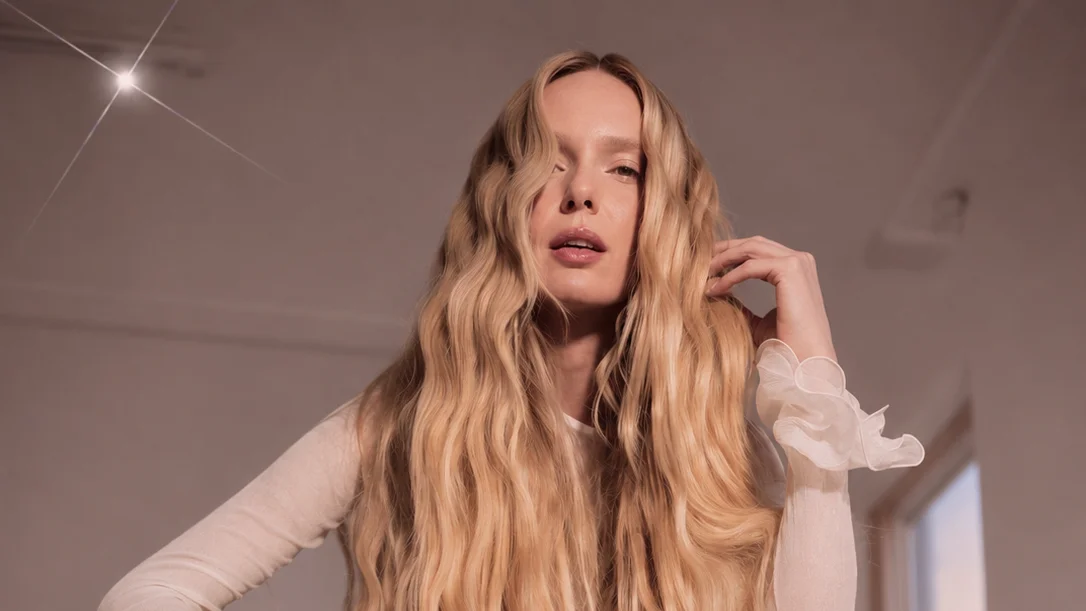
Photo: Kat Irlin/Courtesy of Original Heir
The collection also makes appearance part of the product brief. Chrome finishes, natural gemstones and sculptural forms give the brushes a place on a vanity, rather than making them feel like disposable bathroom tools. Di Stefano describes the goal as bringing glamour and play back to an everyday object while keeping its design grounded in hair science. That combination gives Original Heir a clear point of difference in a category where shoppers often have to choose between function, price and presentation.
That said, appearance can only carry a grooming tool so far. A polished finish may make a brush more appealing to leave out, but its value will depend on whether the bristles suit the user’s hair and whether the handle feels comfortable over time. The numbers here are underwhelming for anyone looking for a low-cost basic: even the travel options are priced as premium accessories. Original Heir’s case rests on the proposition that better materials, purposeful design and a more pleasant experience are worth paying for.
What the launch signals
Original Heir’s launch reflects a broader opportunity for brands to revisit ordinary personal-care tools, especially when shoppers have limited guidance about how product design affects use. If you’re working in this space, the useful lesson is that a premium pitch needs to connect visible design choices to a clear task. A handsome object can attract attention; a convincing explanation of what it does may help a shopper decide whether it belongs in their routine.
And yet. The category’s basic promise is still straightforward: a brush should work for the person using it. Original Heir has built its initial range around distinct use cases and a strong visual identity, but its longer-term appeal will depend on whether customers find those differences meaningful after purchase. The real test is everyday use.
Please note: Occasionally, we use affiliate links on our site. This in no way affects our editorial decision-making.


