Lauren Rothery’s Television treats Hollywood success as a force that can distort the self as readily as it changes a career. Verity becomes a star; Helen, his longtime friend and sometime lover, doesn’t. The gap between their fortunes gives Rothery room to question what success says about talent, beauty and merit—and whether the stories people tell about themselves can ever be separated from performance.
Verity is exceptionally handsome, and his success leaves him unsure whether audiences respond to his looks or his acting. After earning millions from a blockbuster role, he tries to correct what he sees as an imbalance: he sets up a lottery to give his salary away. The gesture doesn’t quiet his doubts. It draws more attention, making him still more famous. Rothery’s portrait of celebrity keeps that contradiction in view: even an attempt to escape the rewards of stardom can become another public performance.
Helen and Verity share a closeness that neither quite defines as a conventional romance. They assume they’ll remain part of each other’s lives, whether they are together or apart. Verity even buys the apartment building where Helen lives and moves into the unit next door. The act reads as affectionate and unsettling at once. Their shared domesticity feels less like a settled life than a role they return to, one that could come apart if either looks too closely at its construction.
A relationship built from familiar roles
Rothery’s novel moves among the characters’ inner lives, with scenes that skip around in time and linger on moments that a more conventional Hollywood story might cut. Major turning points often take place beyond the frame; readers encounter Verity and Helen after they’ve already made consequential choices. That quietness suits a relationship in which intimacy is carried by shared habits and half-said thoughts as much as by declarations.
In conversation, Rothery said she wanted readers to feel they were “in on” the relationship. Long familiarity, she explained, can make a private language between two people feel intimate while also giving them ways to avoid difficult subjects. She was drawn to the ordinary texture of how people think, move and talk when they know each other well. The result, she said, was an “un-Hollywood love story”: the book leaves out many expected climaxes and even shows the characters only after they’ve left.
For Rothery, Verity and Helen’s bond resembles the Yiddish word landsman: a connection with someone who seems to see the world as you do. They may be different, but that shared perception helps explain why neither seriously imagines replacing the other. Their friendship has a romantic quality without requiring a clean label or a final decision about what they are to each other.
The novel’s focus on performance extends beyond Verity’s profession. Rothery described the self people become around a partner as a particular version of themselves, shaped by the relationship. That version may feel separate from a complete or private self, she said, but it can still be real. A long relationship creates a shared way of being; the role can be loving and sustaining, yet occasionally feel distant from the person playing it. For Rothery, that tension is part of closeness itself: people make something together that neither could have made alone.
I wanted to write a relationship where the reader felt like they were in on it.
Success, luck and the limits of merit
Verity’s fixation on goodness gives the novel another way to examine the costs of success. He associates virtue with qualities such as innocence, ugliness and financial failure, while suspecting that his own achievements are undeserved. His lottery comes out of that unease, though Rothery said he doesn’t fully understand his motives as he acts. He seems to hope that the money will reach someone who is truly worthy. When the winner doesn’t match his private idea of deservingness, the result disappoints him.
Rothery connects that discomfort to a wider story about artistic careers: the belief that excellent work will inevitably attract attention and money. Based on her time working around film, she doesn’t find that claim convincing. She has encountered brilliant films made by people who never found broad success, and sees the same pattern in music and other arts. Luck and choice, she said, are difficult to separate; a career can depend on both, intertwined in ways that are hard to measure.
That uncertainty cuts in two directions. Verity believes he hasn’t earned what he has, while people who succeed may prefer to believe that every reward came from merit. Rothery sees a kind of freedom in acknowledging chance: artists can make the work they care about without treating commercial success as proof of its value. “If you’re making art because you have to, and you’re making what you love, then you just hope for the best,” she said.
If you’re making art because you have to, and you’re making what you love, then you just hope for the best.
Aging under the gaze of Hollywood
Age brings the characters face to face with another measure of value: appearance. Verity, approaching 50, starts to consider the possible loss of his sexual appeal. Helen has never thought of herself as beautiful by Hollywood’s standards. Rothery is interested in the different messages men and women receive as they age, especially the pressure on young women to treat being beautiful at 25 as a high point from which life can only decline.
Helen tries to approach aging through writing and humor, finding ways to make its assumptions seem absurd. Phoebe, another character, is encountering the subject from farther away: her grandparents’ deaths feel almost alien, even as she begins comparing herself with actresses as they grow older. Rothery didn’t offer a neat resolution. She said the way society responds to changes in appearance remains a heavy part of life, and the characters meet that pressure from different stages and perspectives.
Form follows the character’s point of view
Those differing perspectives shape the novel’s shifts in form. Verity’s voice can feel like direct address or a running stream of thought. Helen’s narration is steadier, as though she is writing to the reader. Phoebe, who thinks constantly about writing and the limits of different media, sometimes moves into screenplay form. Rothery said that shift lets readers watch Phoebe process an experience she can’t yet explain plainly. The form becomes part of how the character understands what has happened.
Rothery’s own experience working in film informed those choices. For about a decade, she took on entry-level set jobs to support her independent projects, learning how she wanted to tell stories and create feeling. Fiction offered a different kind of freedom. As she put it, “Whatever I want to happen can simply happen.” A book also lets a writer move across long stretches of time without the practical demands of filming each scene.
Her filmmaking background still shapes her editing. Rothery said she cuts heavily and had spent years finishing projects on her own, which helped explain why Television didn’t require an unusually long editing process after it sold. The book’s form also tests a question it poses about Verity: if readers can’t see him, will the idea of his beauty and fame make him compelling, or do his thoughts and personality matter more?
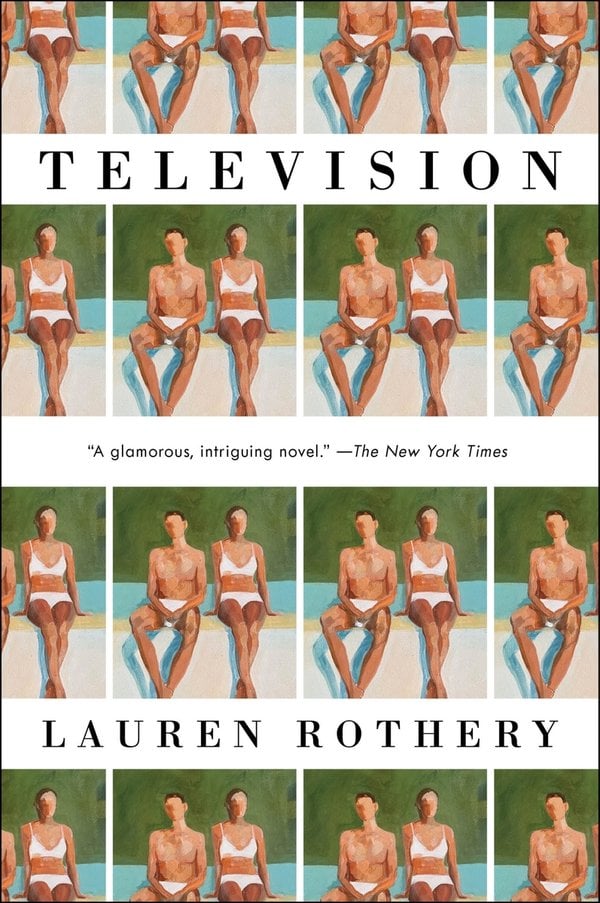
Television arrives in paperback on November 3. Its Hollywood is a place where beauty and timing can redirect a life, but where success offers no simple proof of merit. Rothery’s more lasting interest is what happens when people build versions of themselves for one another—and keep returning to those roles because, for a time, they feel like home.


