Ruby Jones is building a clothing label around a practical question: what earns a place in someone’s closet for years? Her answer combines workwear shapes, playful floral details and natural fibers, with a small-batch production model she intends to grow at a measured pace. A year after launching her namesake brand, she’s defining a core wardrobe informed by her Massachusetts roots and the production discipline she learned at Thom Browne.
That training gave Jones a close view of how a luxury collection comes together. As a womenswear designer at the New York label, she learned to prepare technical packs, work with factories and think across an entire look, from hats to socks. The experience sharpened her production skills, but it also left her with a creative adjustment to make: separating her own taste from Thom Browne’s distinctive tailoring and preppy style.
“It took a few months for me to really regain my own point of view,” Jones tells Fashionista. She recalls catching herself drawn to “a lovely gray wool” while fabric shopping, then realizing she needed to choose materials and designs for her own label. Her account captures a tension familiar to designers leaving a strong creative house: technical knowledge travels easily, while a personal design language can take longer to reclaim.

Photo: Courtesy of Ruby Jones
A fabric-first design process
Jones’ point of view draws on her upbringing near the Berkshires, where an outdoorsy childhood shaped her interest in useful, enduring clothes. She describes the brand’s staples as “timeless, but not so classic”: pieces intended to be worn again season after season, with enough character to avoid feeling like standard basics. Workwear silhouettes provide the structure; floral touches and unusual accessories add a more personal note.
Her education at Cornell University helped connect that sensibility to material knowledge. Jones studied fiber science and apparel design, learning about textiles alongside conventional fashion design. One class involved burning different fibers to observe how they reacted. That kind of hands-on study now informs a “fabric-first mentality”: Jones chooses a material, then works out what shape it should take, rather than starting with a fixed design and searching for a suitable cloth.
Casentino wool is a recurring choice. Made in Tuscany’s Casentino Valley and produced there since the Middle Ages, the cloth has a curled, textured surface. The brand describes it as insulating and breathable as well as durable. Jones uses it in fall pieces including toggle coats ($590), Western-inspired vests ($315) and “gnome” hoods ($95). The headwear brings a playful accent to a collection otherwise anchored in practical outerwear.
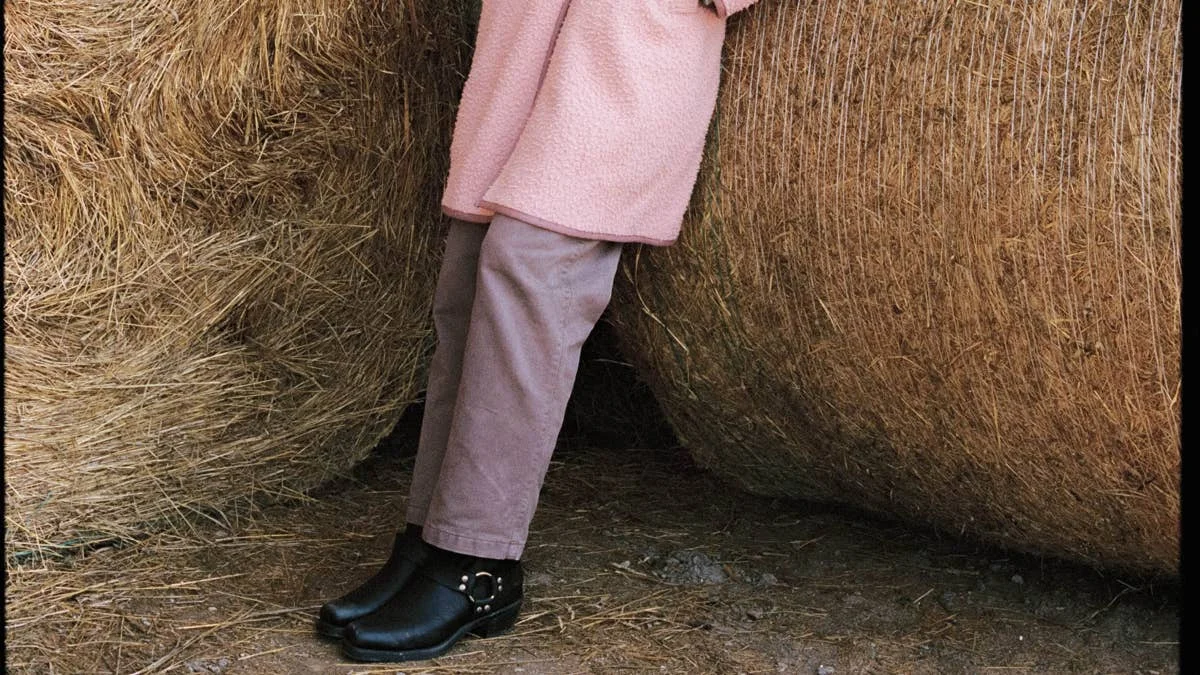
Photo: Sara S. Wallach
Organic cotton is another dependable material, especially in waffle and rib knits. Jones says she began the brand by asking herself which garments had stayed in her wardrobe the longest. Waffle tops were among the answers, and the one she wore during her interview reflected the same logic: familiar textures, durability and ease of repeat wear matter more to her than novelty for its own sake.
The latest collection extends that material focus beyond wool and cotton knits. It includes a wool gauze tiered skirt ($360) and a naturally dyed Bedford cord jacket ($395). The range suggests that Jones is treating fabric choice as a design constraint and a source of identity. Natural fibers aren’t simply a finishing detail; they shape the silhouettes and the kinds of garments the label is making.
Building a recognizable wardrobe
The brand’s first year involved trial and error, Jones says. Her current aim is to establish the pieces that define the Ruby Jones wardrobe. A button-down style called the Gatherer jacket became the label’s “number one hit” last spring. For fall, Jones has paired it with straight-leg pants ($275) made from 100% cotton. The pants come in eggplant and cocoa as well as the season’s other options, giving customers a way to revisit a proven shape through new colors.
That kind of measured extension is a useful test for a young label. A successful jacket can become a foundation for a broader set of pieces, but only if the follow-up retains the quality and appeal that made the original sell. Jones says quality is often what her customers prioritize, even though she puts a playful detail into each design. She credits her luxury-brand experience with bringing a level of construction to the garments that, in her view, some competitors lack even at higher prices.
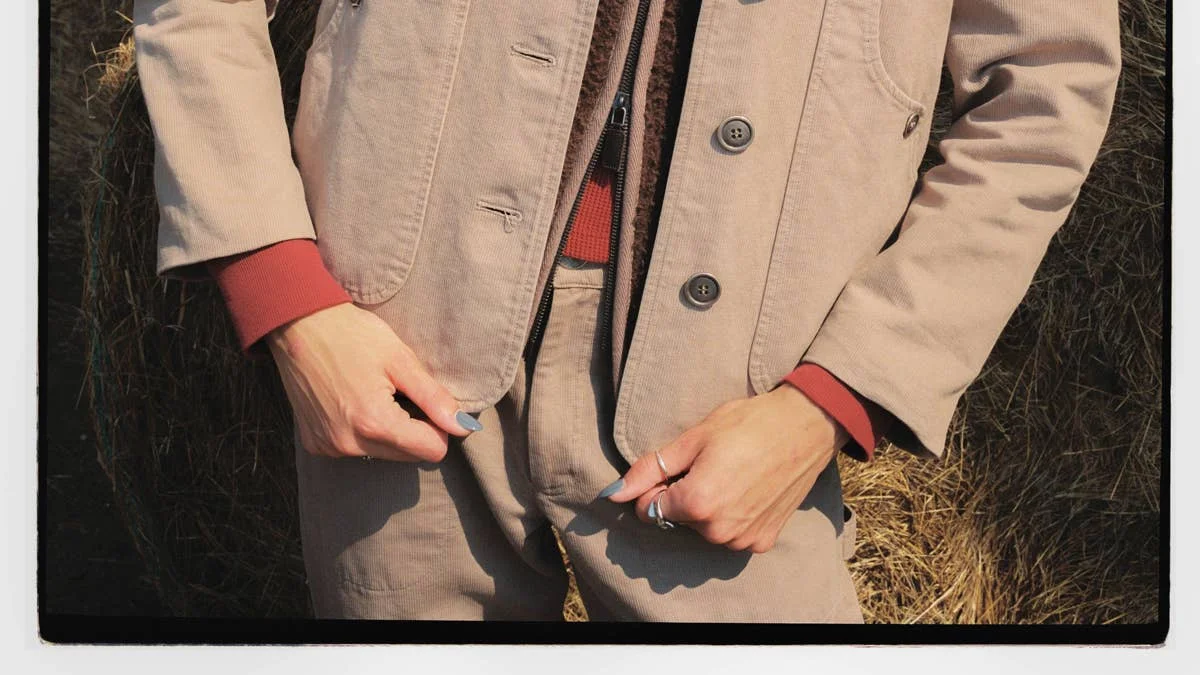
Photo: Courtesy of Ruby Jones
Jones remains closely involved in making the collections. She constructed every sample for the first one herself; that work now sits with four New York-based manufacturers. Her role hasn’t become distant, though: she still handles sample pick-ups and drop-offs in person. That hands-on routine gives her direct contact with the production process as the brand develops its relationships with local makers.
For a small business, the approach also keeps growth connected to the realities of making clothes. Jones says she wants to expand “at a very sustainable pace,” and in-person markets, craft shows, pop-ups and brand events are part of that strategy. Meeting shoppers helps her see how people respond to the pieces and keeps the work tied to actual customers. The brand is scheduled to take part in Renegade Craft’s small business fair at New York City’s Metropolitan Pavilion on Nov. 14 and 15.
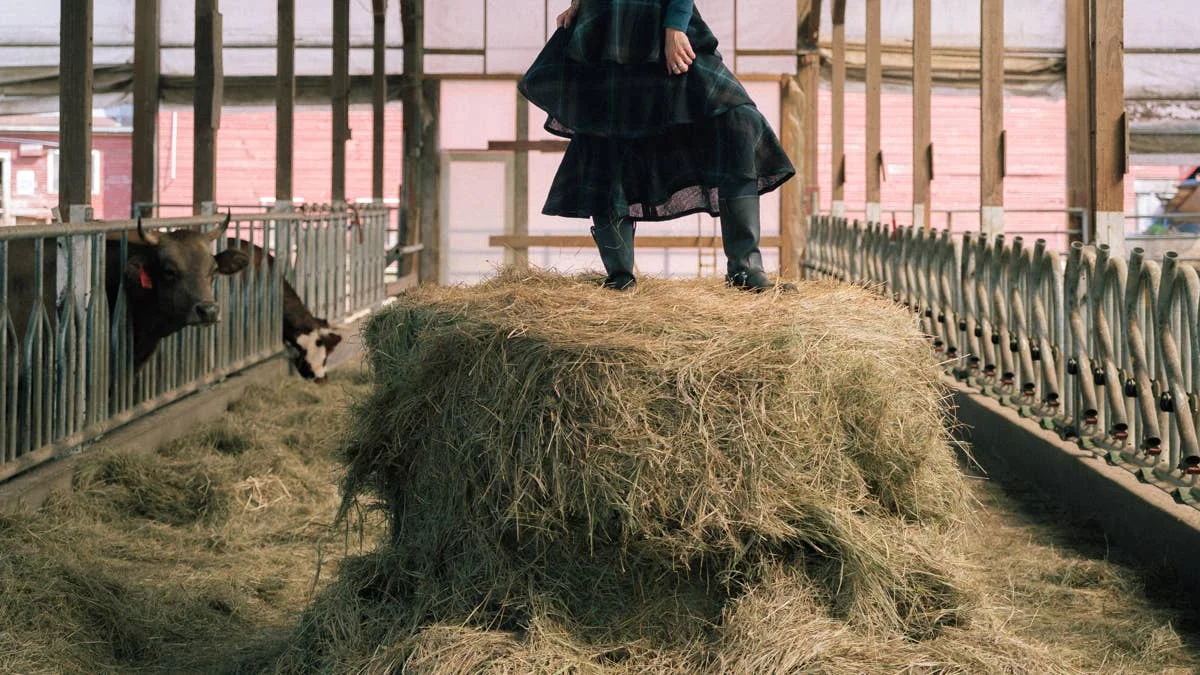
Photo: Courtesy of Ruby Jones
Growing through customer relationships
Jones has a longer-term ambition to open a brick-and-mortar flagship and formally expand into menswear and kidswear. She says the clothes are already versatile across gender and age. For now, the label is focused mainly on direct-to-consumer sales, while maintaining a couple of smaller wholesale relationships, including one with a hotel resort in the Berkshires.
That balance points to a brand still testing what its customers want and where its clothes fit. Jones’ early goal was simply to have a label. Now she describes the work as building a community, meeting customers, strengthening ties with manufacturers and improving production processes. Those priorities give the company a clearer operating identity than a growth target alone would.
For Jones, the next phase depends on making the clothes more recognizable without losing the material and construction standards that underpin them. If the Gatherer jacket can anchor a growing wardrobe, and direct customer contact can guide the next designs, the brand has a practical route to expansion: build from garments people already wear, then let the collection develop at the pace its production can support.
Please note: Occasionally, we use affiliate links on our site. This in no way affects our editorial decision-making.


