Scalp care is moving from the margins of hair routines into the center of them. Christina Kim, a licensed esthetician and scalp expert-in-residence at Korean hair-care brand Dr.Forhair, says that shift starts with a change in emphasis: a healthy scalp needs care beyond repeated cleansing.
Kim brings that approach to Dupï Studio, a New Jersey- and New York-based salon she launched in 2023. Its name means “scalp” in Korean, and its signature scalp facials draw on lymph and fascia care to release tension, stimulate circulation and restore balance. Her focus is personal, too. After having three children, Kim experienced hair loss, hormonal migraines and skin concerns that conventional treatments didn’t resolve. She now treats the scalp as a skin barrier in its own right, an approach she says reflects a longer-standing Korean focus on scalp care.
Her advice is practical, but it resists a single routine for everyone. Washing frequency depends on the person; stretching wash days as a form of “training” can backfire, in her view. And while damp lengths may air-dry, she recommends getting the scalp fully dry before bed.
Wash according to the scalp, not a schedule
Kim doesn’t prescribe one universal wash cadence. People with dry scalps or concerns such as dandruff, flaking or seborrhoeic dermatitis may do better washing every two or three days at most. For someone with an oilier scalp who exercises daily and uses products such as dry shampoo, daily washing may make more sense. Her general range is every one to three days; she advises against pushing the interval to a week.
That flexibility matters because scalp symptoms don’t all point in the same direction. Kim says she sees many clients with dehydrated scalps, which she connects to routines that focus on removing oil and product without replenishing the scalp. She also reports seeing hair thinning in younger clients, including reduced density around the temples and crown. Those observations aren’t a diagnosis, but they underline why a routine built around someone else’s hair type can miss the problem at hand.
For hair loss, Kim notes that some clients use minoxidil, topically or orally, and that she sees it among clients ranging from teenagers to older adults. She also emphasizes scalp treatments and suitable home care as parts of an overall approach. The specifics depend on the person; her advice here is not a substitute for professional care.
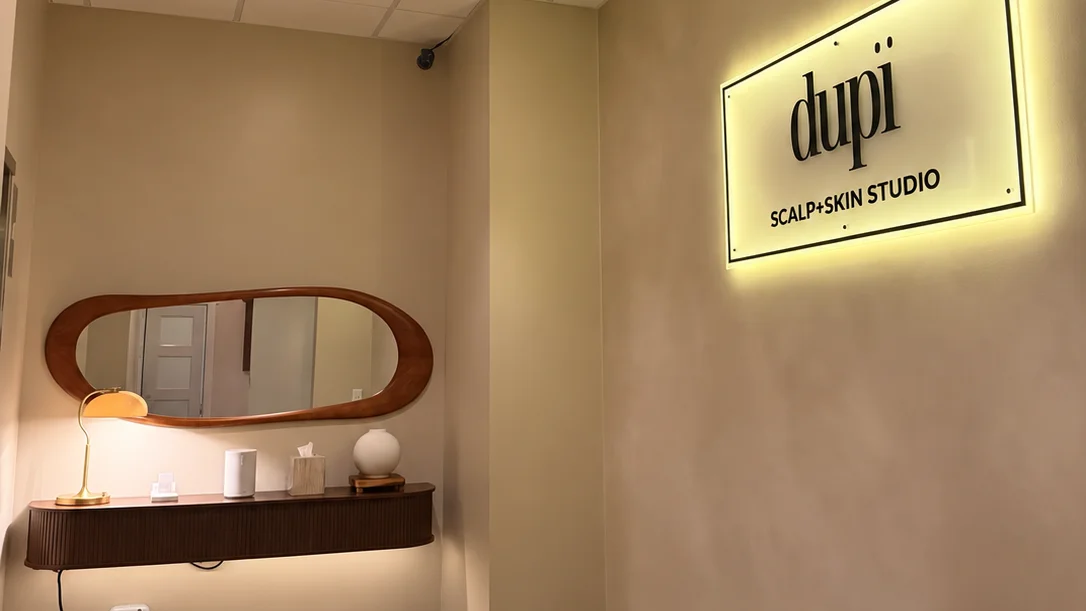
Photo: Courtesy of Dupï Studio
Build a routine that includes the scalp
Kim’s suggested home routine pairs a scalp tool with a serum or topical mist. She likes using a comb or stimulator, including a gua sha comb, and says stimulation can support blood flow and new growth. Her preferred schedule is once in the morning and once at night, though she suggests starting with one daily application if time makes twice a day unrealistic. Keeping the products near a toothbrush can serve as a reminder.
The broader point is that shampoo alone doesn’t amount to a full scalp routine. Kim describes a common pattern: cleanse the scalp, condition the lengths and ends, then stop. In her view, that can leave the scalp barrier under-supported. She argues that care should account for both cleansing and replenishment, rather than treating oil removal as the only goal.
That framing also shapes her view of “hair training,” the practice of gradually extending the time between washes in the hope that the scalp will produce less oil. Kim says the trend took off during Covid lockdowns, when many people were at home and had fewer social reasons to wash their hair. She believes leaving oil and sebum to build up can contribute to inflammation, which she links to dandruff, thinning and hair loss.
Her recommendation against hair training is a clear point of view, and her own guidance on wash frequency is more nuanced: she says needs differ by scalp and lifestyle. The consistent message is to respond to the condition of the scalp instead of forcing a long interval because a trend says it might eventually reduce oil.

Photo: Courtesy of Dr.Forhair
Dry the roots; dry shampoo can wait until wash day
Sleeping with wet hair is Kim’s hair-care rule she’s willing to break only in part. She says it’s fine to leave the mid-lengths and ends a little damp and let them air-dry, but recommends drying the scalp completely. She likes finishing with a cool shot of air to make sure the roots are dry.
Kim connects a persistently greasy feeling to scalp-barrier issues and says going to bed with wet hair may be part of the pattern for some people. Her practical takeaway is straightforward: if you’re washing at night, take the time to dry the scalp before sleeping, even if the ends remain slightly wet.
Dry shampoo gets a more forgiving assessment. Kim says she uses it as a busy working parent of three, and prefers powder formats to aerosol. Her condition is simple: if you apply dry shampoo, wash your hair that night. That makes it a short-term aid between washes, not a reason to keep extending the gap.
Scalp care enters the wellness conversation
Kim is encouraged that the scalp is becoming part of beauty and wellness routines rather than an afterthought. She points to Korea’s long history of scalp-care research and says the U.S. industry is increasingly treating the scalp as skin. For her, the value of that shift is practical: people may connect scalp concerns with other skin issues and pay closer attention to how their routine affects the barrier.
Her advice doesn’t hinge on an elaborate regimen. Match wash frequency to your scalp and habits, add a serum or mist and a tool if they suit your routine, and don’t leave the roots wet overnight. As scalp care gains attention, the useful test will be whether routines address the scalp’s condition, not just the appearance of the hair above it.
Please note: Occasionally, we use affiliate links on our site. This in no way affects our editorial decision-making.


