The Sign Painter Giving New York Restaurants a Human Touch
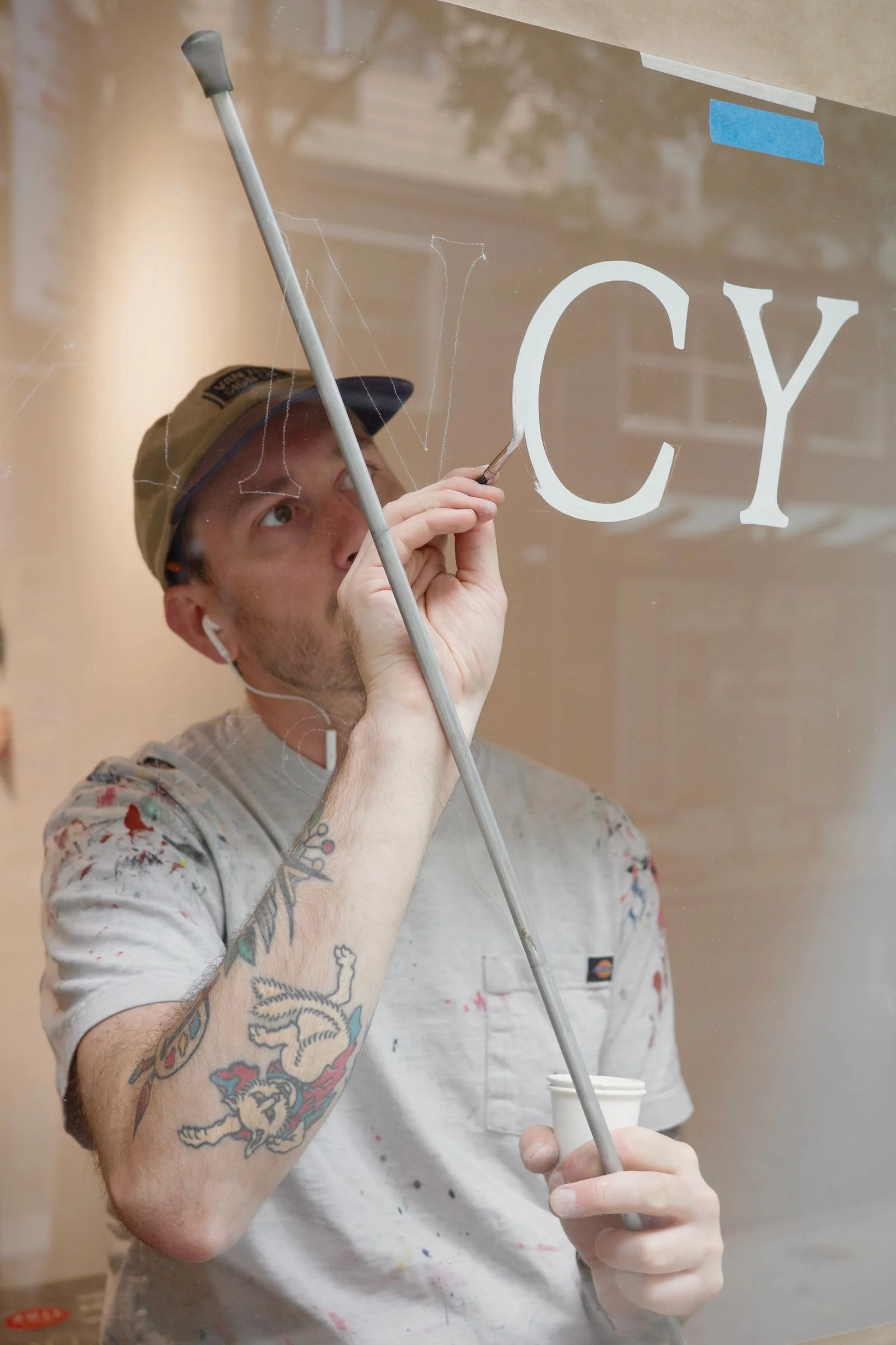
New York’s restaurant signs do more than tell you where to eat. At their best, they hint at the care inside. Brooklyn sign painter Will Van Zee has built a business around that idea, using traditional brushwork and gold leaf for places including Elbow Bread, S&P Lunch, and Levain Bakery.
In Person of Interest, we talk with people whose work has caught our attention. Here, Van Zee discusses hand-painted signs, Instagram’s role in renewing interest in the craft, and why making things by hand still carries weight in an age of AI-generated design.
Through his Brooklyn studio, Van Zee Sign Co., Van Zee paints and gilds signs for restaurants, bakeries, and shops. His work is rooted in techniques that have been around for centuries, but many customers find him through a decidedly modern channel: his Instagram Reels, where close-up videos of brushwork and gold leaf regularly draw millions of views.
That reach has a practical effect. The videos make the craft visible: the careful strokes, the fragile gold leaf, the flourishes that give each sign its character. They also turn the feed into a kind of neighborhood guide, pointing viewers toward restaurants and shops they might want to visit. In an online food world increasingly crowded with synthetic images, a hand-painted sign can suggest that a business cares about the details. It’s a reasonable inference, though a sign alone can’t tell you everything about what happens inside.
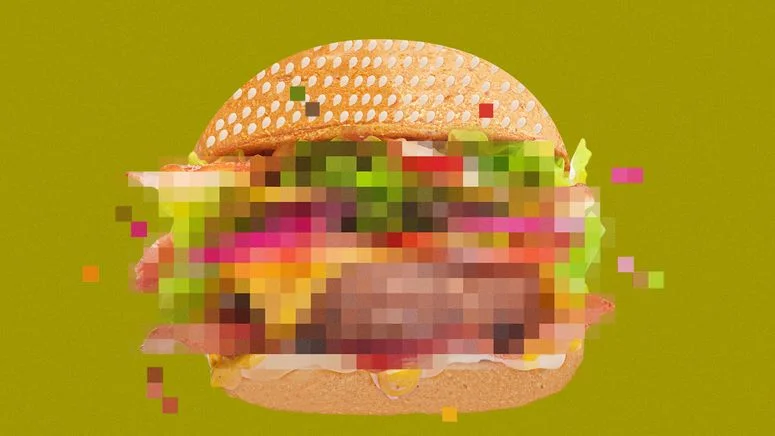
That tension is part of the appeal. As AI-generated food imagery spreads, Van Zee’s work makes a quieter case for human effort. Handmade signs aren’t perfectly uniform, and that’s the point: their marks show that someone made them.
Van Zee came to sign painting by way of product design and restaurant work. He moved to New York in 2008 to study product design and began painting signs professionally about a year after graduating. But he’d been learning to control a brush much earlier, painting fences, trim, and siding in his neighborhood as a kid. His father found him those house-painting jobs; they were hard work, but they gave him an early feel for the tools.
Restaurants were another early influence. At 16, Van Zee started as a dishwasher and porter, then moved into prep cooking and worked closely with a chef and owner. He remembers the shared effort of a busy service: finishing exhausted, but proud. Building his sign business gave him a way to stay close to restaurants and the people trying to bring them to life. In a city where people come to eat, he sees his role as a small part of those ambitions.
After roughly 13 or 14 years in the industry, projects often connect through familiar faces: a contractor, chef, owner, or designer from an earlier job may turn up on the next one. Much of Van Zee’s business comes through word of mouth, so those relationships matter. One of his favorite moments is a friends-and-family night. He usually sees a restaurant while it’s still under construction; the preview is often his first chance to try the food and experience the finished room alongside the people who built it.
Old references, present-day businesses
Van Zee describes his style as an effort to preserve the visual character of New York. He studies historic photographs and other records because he believes sign painters have a responsibility to maintain the visual language that makes the city recognizable. That doesn’t mean copying the past blindly: each sign is a partnership, and it still has to represent the business using it.
He often asks clients to look through archives of their building or neighborhood. Sometimes an old design offers a strong starting point; adapting something that worked decades ago can give it a second life. The appeal is not nostalgia for its own sake. A sign can feel tied to its place while serving a business with its own identity.
That’s where the handmade argument becomes more than an aesthetic preference. Van Zee says nearly all his work is made by hand, a process he sees as kin to cooking: a person makes something, and the imperfections are part of its character. Clients who choose a painted sign are also signaling that they value human craft, even when it costs more or takes longer. In fine dining, where customers read meaning into small details, that choice can communicate care before the first plate arrives.
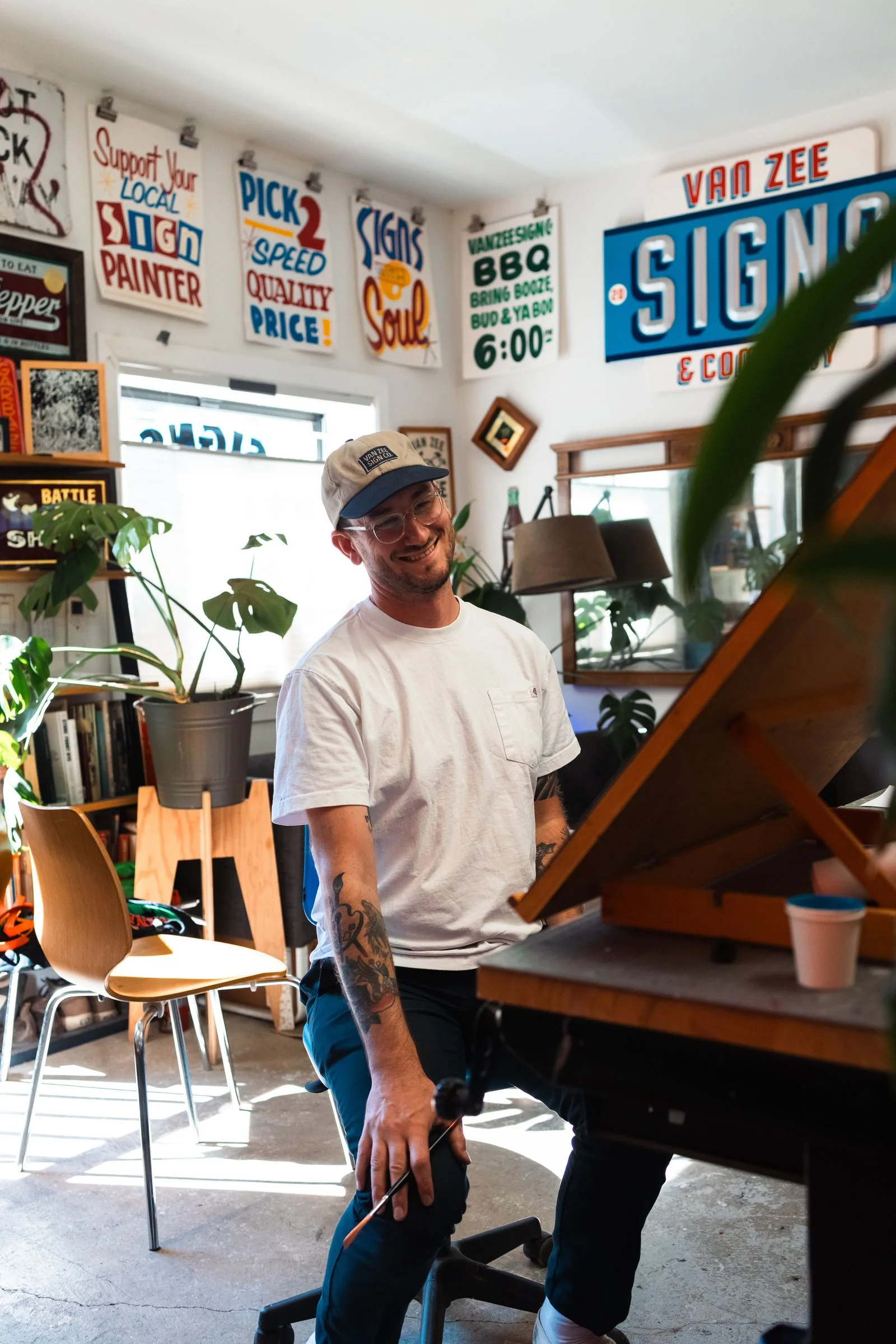
Social media has become part of the craft for this sign painter, though it wasn’t a natural fit at first. He started out without even a personal Instagram account; his wife urged him to share and document his work. That habit has since sharpened his eye as a documentarian. The business benefits, but the larger payoff is introducing people to a trade they may rarely think about—and showing how signs shape the character of streets and businesses.
Restaurant work that lasts
His restaurant portfolio includes Rezdôra, Sailor, Levain Bakery, S&P Lunch, and Baby Blues Luncheonette, where he created the logo. Sailor carries a personal resonance: it’s in his neighborhood, in a space occupied by a restaurant he visited often. Helping shape what came next made the job feel close to home.
For him, longevity is the real measure of a project. New York restaurants can be fleeting; a place still thriving ten years on has earned its place in the city. Rezdôra stands out for that reason. Its signage is restrained, but the restaurant has become beloved, and he takes pride in having helped establish its identity. The work may be a small part of a restaurant’s story. When that story lasts, the contribution matters.


