Lucy Ellmann’s portrait of Alisa Weilerstein’s cello begins with a familiar musician’s companion: a finely made instrument moved from airport to concert hall, guarded against changes in temperature and humidity, and cared for by a luthier. Then the cello slips its case and becomes something else—a witness, a rescuer and, through Bach, a voice accusing humanity of neglecting the living world.
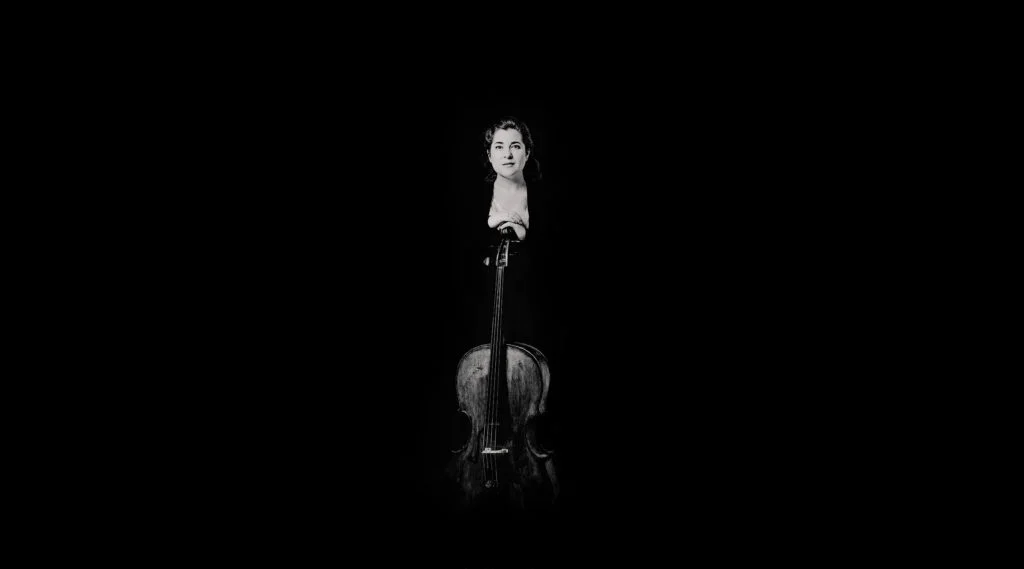
Photograph by Marco Borggreve. Courtesy of Alisa Weilerstein.
A traveling instrument, waiting to be heard
Ellmann gives the cello a quiet life in transit. Secured in a carbon-fiber case, it rides escalators, buses and planes, with loosened bows and spare strings alongside the small tools musicians rely on. The case travels with its own seat on an aircraft. At stops along the way, the instrument is tuned, cleaned and brought to a luthier for adjustments to its pegs, sound post and any cracks in the wood.
That care sets up the essay’s central shift. The cello appears patient while shut away, but Ellmann imagines that stillness as stored energy. Once released in a concert hall, it moves through concerti, sonatas, trios and quartets, taking on music by Beethoven, Brahms, Schoenberg, Elgar and Dvořák. It can sing in the high register, rasp and rattle, or turn its bow into a percussive tool. Even the orchestra’s piccolo and timpani become partners it can answer on its own terms.
The instrument’s comic independence makes its physical nature part of the story. Ellmann imagines it drawn to other cellos, their scrolls knocking together and their pegs tangled, while a violin is simply too small to make a suitable match. The cello is never just a refined object in this telling. It has weight, quirks, appetites for sound and a body that seems to have a will of its own.
Night journeys beyond the concert hall
By night, the cello escapes its case and takes that imagined agency into the wider world. It flies alongside migrating animals, startling pigeons before winning them over with the music of wind through its strings. Geese follow its lead. Its travels carry it across forests, oceans and open country, where it frees farm animals, leads wildlife away from roads and guides abandoned young animals toward food.
The flights are knowingly fantastic, but the targets are concrete: factory farms, fish farms, animal exhibits and shrinking habitats. The cello’s rescues extend from flying fish caught by sharks to beluga whales confined in tanks. It feels most at home among trees, swinging through the remaining forests and bringing food to orphaned squirrel and fox kits. Its wooden body gives this roaming hero an affinity with the places and creatures under threat.
People also enter the cello’s orbit. It intervenes in fires and carjackings, helps women escape abusive partners and puts itself between muggers and their victims. Ellmann keeps the action playful even as the imagined dangers turn serious: the cello uses its scroll or spike to stop an attacker, while taking care to avoid damage that might alter its tone.
Its rescues grow more extravagant still. The cello can pull people from avalanches and mudslides, float through water emergencies and carry injured survivors downhill. It treats wounds, wipes tears and helps blind pedestrians cross streets. In one scene, a sound-wave shield protects its delicate shape as it stops colliding trains; in another, it lifts a sinking ferry. Music becomes a physical force in a world where ordinary systems have failed.
Bach gives the cello its strongest voice
For all these adventures, the essay’s emotional center is the cello alone with Bach. Ellmann imagines the instrument drawn toward the solo repertoire, especially the cello suites, where it needs no accompaniment. Kodály’s solo sonata presents another challenge, but Bach opens a more expansive imaginative space: the cello’s small wooden frame seems to contain landscapes, animals, art, history and human feeling.
The music moves from quiet passages to cries of grief and from delicate triplets to rough, forceful scraping on the C string. Ellmann’s descriptions gather sounds and images in an accumulating rush: forests and mountains, insects and fish, crowds and riots, mud and color. The cello seems to make its own harmonics and inventions, sending them beyond the instrument’s body and out into the room, the hall or the night air.
That range matters because Bach is not presented as a beautiful refuge from the world. In the essay’s reading, the suites become an argument for connection—with nature, with one another and with people who lived before us. The cello’s imagined superheroism culminates in the act of playing music to a civilization that has grown indifferent to its responsibilities.
Ellmann’s accusation is deliberately sweeping. Forests burn, floods worsen and habitats disappear; people continue to pollute, consume and wage war. The cello cannot undo that damage, but Bach gives it a way to make the consequences felt. A modest instrument, assembled from wood and glue and set vibrating by horsehair, becomes a measure of what human beings might still protect.
What remains after us
The essay then looks past humanity’s possible extinction. Ellmann pictures sunsets, shifting winds, seasonal flowers and streams continuing without anyone to notice them. The moon will keep changing phases; planets and comets will follow their courses. Nature might persist, though the survival of species such as the hyacinth macaw remains uncertain even in this imagined future.
Human culture, by contrast, is vulnerable to disappearance. Ellmann lists paintings, textiles, buildings, books, films and music that could be lost with us. The inventory ranges from the Mona Lisa and the Bayeux Tapestry to Jane Austen, Shakespeare, Ella Fitzgerald and Billie Holiday. Bach sits near the emotional center of that catalogue because his music can seem permanent, even though it depends on people and instruments to keep it alive.
That tension shapes the essay’s final appeal. The cello’s flights through the night are fantasy; the acts of attention it represents are within reach. Make music, read, cook, swim, create things by hand and take pleasure in the living world. Ellmann leaves the reader with a plain, urgent thought: cultural inheritance and natural life both need people who choose to care for them now.
Lucy Ellmann’s most recent novel is Ducks, Newburyport. Her story “MT” appeared in our Summer issue, no. 256.


