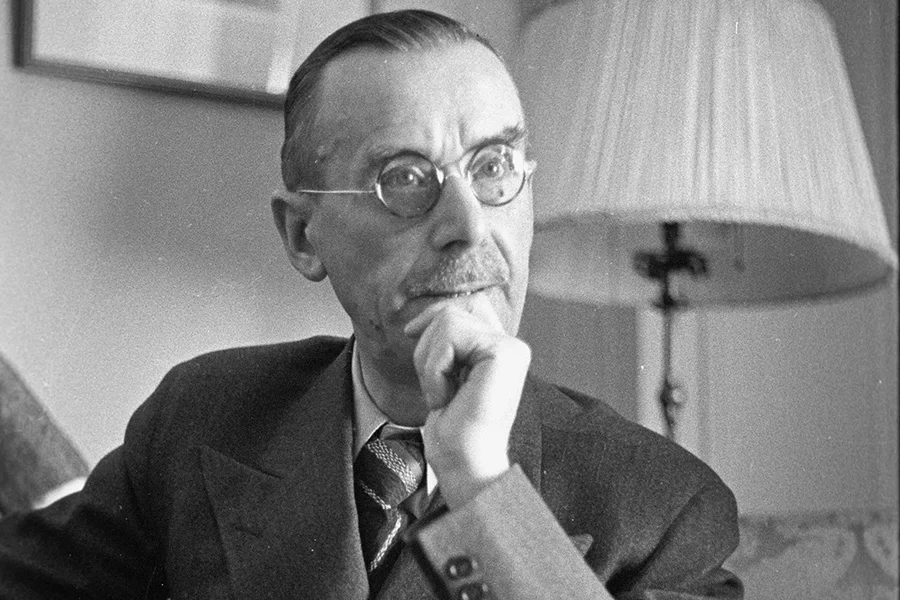
Ayad Akhtar’s Disgraced didn’t stay inside the theater. Near the end of its Broadway run at New York’s Lyceum Theater, before it won the 2013 Pulitzer Prize for Drama, I watched its arguments follow the audience into the street. My older sister and I heard theatergoers still debating the play two blocks away, on the way to the subway. That reaction made clear what Akhtar can do: put a live dispute onstage and send it back out with the audience.
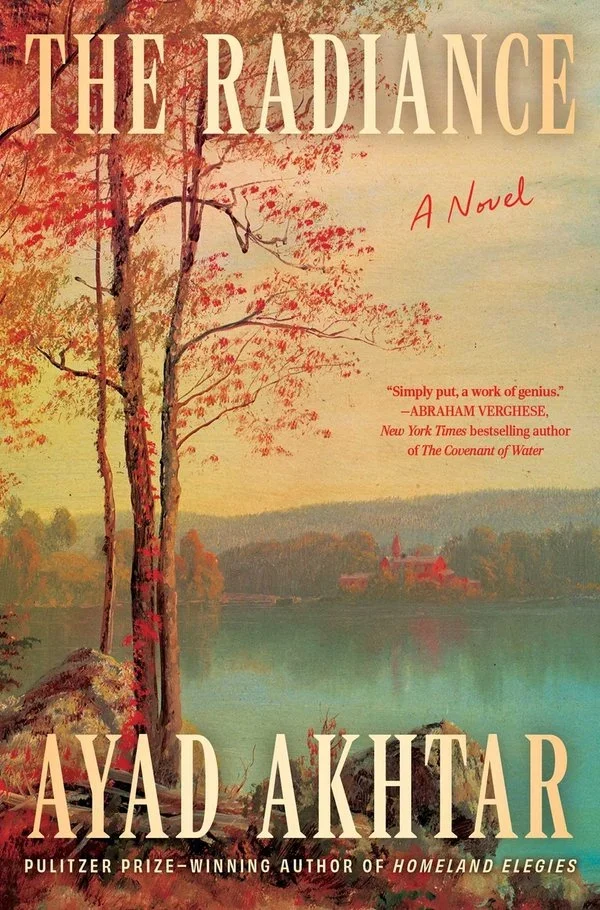
His third novel, The Radiance, uses a very different kind of force. Its protagonist, also named Ayad, is badly injured in a car crash in rural New York, where he is due to teach at a university. The accident unsettles his sense of reality. Akhtar leaves behind the tighter, plot-led structure of his plays for a novel that moves through documents, monologues, and therapy sessions, testing how consciousness takes in power, ideology, and desire. The book can feel demanding; its shifts are part of the point.
In our conversation, Akhtar discussed why some stories belong onstage and others on the page, how short-form media may be changing readers’ expectations, and what he wants from the literary canon. We also talked about Shakespeare, the soul, and whether his training as an actor still shapes his prose.
Choosing the form—and keeping readers in motion
Cherry Lou Sy: You’ve written acclaimed plays and prose. How do you know when an idea should become a play or a novel?
Ayad Akhtar: A play needs immediacy. It has to cross the distance between performer and audience without the novelist’s ability to explain something quietly to an individual reader. Onstage, nuance and context have to emerge through speech and action. Some stories are active from the start and invite an audience in more readily.
Political language also has a particular force in a theater. Listening to characters argue can give people enough distance to judge the ideas for themselves, rather than feel they’re being preached at. Rhetoric has always had dramatic power; Shakespeare demonstrates that again and again. Those demands shape which stories feel at home in a play.
I couldn’t have made The Radiance into one. It contains scenes that could play onstage, but the surrounding context is too extensive for me to know how to convey it to an audience.
“I’ve been feeling increasingly that readers are less patient, and that they’re less patient with the long crawl of a three-act structure.”
CS: The novel’s structure feels unusual. How did you decide how to tell it?
AA: I’ve sensed readers growing less willing to wait through a long three-act progression. They want to know what the ending might offer, and they want the book to show its promise early. I think about structure as a sequence of expectations: establish one, then fulfill or frustrate it, and raise another. You could call that “TikTok dramaturgy.” I mean it seriously.
Indian classical music offers a useful counterpoint: a melody’s essential flavor takes time to unfold. Social media narratives often get to the payoff quickly, with little preparation. In this novel, I wanted to revisit the same events through changing frames. A legal filing, a campus report, Lucie’s monologue, and therapy sessions each disclose and reshape the story. The reader’s question becomes less “what happens next?” than “what is this story now?” I hoped that shifting perspective would keep the book compelling through its harder stretches.
The book also follows three kinds of love from Greek philosophy. Its sections move through Storge, love of family; Agape, love of other people; and Eros, desire. Each section builds toward a peak in its own register. The structure gives readers a pattern of anticipation and payoff, even if they don’t consciously name it.
CS: The repeated versions of the story made me think of Ovid’s Metamorphoses. I also read the two Ayads—the writer and the character—as divided between Western thought and a postcolonial, spiritual inheritance. The accident forces the character to piece those parts together.
AA: That’s a beautiful reading. While writing, I thought of Carl Jung’s memoir, Memories, Dreams, Reflections. Jung recounts visiting a Native American reservation in the United States, perhaps in the 1930s, and speaking with an elder. I can’t recall the wording exactly, but Jung quotes him saying that white people speak of being “here” in the head, while his people are “here” in the heart.
“I don’t know if I have an ideal reader. I write to the part of myself that is like a kid who doesn’t want to be bored.”
Some traditions treat the heart as a source of understanding that can reunite what has been split apart. I was also thinking about Plato’s The Symposium. Aristophanes tells a story there about humans once being whole, then divided, and searching for their other halves. The split between left and right can stand for that same division and longing.
A reader who is willing to work
CS: The book asks readers to follow many references. I looked things up as I read, and found that part of the pleasure. Do you have an ideal reader in mind?
AA: Theater gives me a chance to meet the audience. During Broadway previews, I have about three weeks to see how people respond, and that experience often changes how I understand a play. I rewrite in response. A novel doesn’t offer the same process.
I don’t know that I have an ideal reader. I write for the part of me that’s still a kid who doesn’t want to be bored, and I hope anyone willing to engage can come along. Some of the language and ideas require work. I like that in other writers. Shakespeare is the writer I read most, and he always makes me work; the reward is worth it. I want to challenge myself, so I’m comfortable asking a reader to be challenged too.
CS: You trained as an actor, including with Grotowski. Does that history affect how you write?
AA: It taught me how much language can embody. Actors have to make complex ideas and emotions physical and immediate, so the audience feels their richness and contradictions instead of stopping to analyze them. That understanding became part of how I think about writing and storytelling. Shakespeare does this better than anyone.
What the canon is for
CS: In an interview with Jeffrey Goldberg at The Atlantic, you said Shakespeare stole. You also wrote the play McNeal. What did you mean?
AA: I said that about 70 percent of the words in [King] Lear come from an earlier play with a similar title and much of the same plot—a very bad play. Shakespeare had acted in it twenty years before writing his version. That’s a revealing model of how literature gets made.
CS: It puts a literal spin on “great artists steal.”
AA: The line is usually attributed to Picasso, though Stravinsky may have said it first and Picasso may have taken it from him. T. S. Eliot said it too. The source is hard to pin down.
CS: How do you use the canon as a conversation—with writers you’re thinking alongside—rather than as a claim to status?
AA: That’s a question I haven’t been asked before. Thank you.
The canon has a status function: invoking famous works can signal cultural standing, or look like an attempt to claim it. That’s less interesting to me than the question of endurance. Why do certain works stay with us for two thousand years? What patterns, themes, characters, or resonances keep them alive? Plato’s great speech in Phaedrus is one example. I have to feel that a work still has something to say before I bring it into my own.
“Continuing to think of ourselves as machines is not only going to continue to destroy our environment and destroy our world, it’s going to destroy us.”
I remember reading Saul Bellow’s Ravelstein after spending years with his books. Bellow had mattered to me when I was younger, but I felt he hesitated around metaphysical questions. Literary culture in the 1960s and 1970s made those subjects difficult to address, and they remain difficult now, though less so.
Ravelstein takes Allan Bloom, Bellow’s close friend and a lifelong student and teacher of Plato, as its model for the central character, Abe Ravelstein. Bloom could speak about metaphysics freely. Through him, Bellow found a way to give that impulse room in a novel. That example mattered to me. If I wanted to ask what reality is—and the book raises questions rather than answering them—I needed language and associations that could expand what readers were prepared to notice. Plato, Emerson, Dostoyevsky, and others helped me do that.
AI, the soul, and what makes us human
CS: In your conversation with Goldberg, you talked about AI and the soul. I read The Radiance as an attempt to describe what the character experiences as a soul.
AA: That’s exactly it. Maybe the book succeeds in what it set out to do.
CS: It took work to get there. The novel’s scope may be a hard sell when people expect a ten-second understanding of what they’re consuming. Where does it fit in a moment when AI is at what you’ve called its “pre-Cambrian explosion”?
AA: In that interview with Jeff, I said that automated thought and automated imitation of human behavior may make us more aware that people aren’t machines. That should bring back questions about what we are, what a soul might mean, and what earlier generations meant when they used the word. We can already see renewed interest in faith and new questions about experiences such as psychedelics entering public conversation.
As we recognize that we aren’t machines, we also have to question the idea that treating ourselves as machines is harmless. That way of thinking is damaging the environment and the world we live in; it can damage us too. We need another account of human life. I hope the novel contributes to a return to questions that literary fiction has largely set aside. Russian writers spoke about the soul all the time. I don’t see why we can’t.
CS: Because we’re capitalists.
AA: So there you have it!
The post THE RADIANCE Finds Narrative Juice in the Ancient Greeks’ Forms of Love appeared first on Electric Literature.