The DCU’s viewing order is short enough to follow, but its boundaries can trip up even longtime DC fans. James Gunn’s shared universe carries forward a few elements from earlier continuity, while leaving other familiar projects outside. The practical guide is to follow the six titles below in sequence—and keep The Batman, The Penguin and their related films on a separate track.

That distinction matters because DC stories have long been reshaped by reboots. The publisher turned that recurring reset into a major event with 1985’s Crisis on Infinite Earths. On screen, the clearest echo was The CW’s 2019 crossover, but film franchises have also moved between separate versions of the same characters. The 1989 Batman films, Christopher Nolan’s Dark Knight trilogy and The Batman occupy distinct continuities.
The DCU follows the film universe that began with Zack Snyder’s Man of Steel and ran through 2023’s The Flash. Gunn’s new framework is meant to let filmmakers and showrunners pursue different tones while sharing characters, settings and story threads. That makes the transition less like a clean slate: Peacemaker, first developed in the earlier continuity, still connects to the current one.
The DCU watch order
Start with the animated series, then move through the films and shows in the order below. That sequence gives the universe room to establish its world before its next heroes and monsters arrive.

 93%
 79%
Creature Commandos opens the DCU with an ensemble of oddball characters and Gunn’s blend of irreverent humor and affection for outsiders. Its position at the top makes it the clearest starting point for the shared story.
 83%
 90%
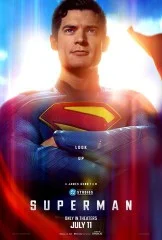
Next comes Superman (2025), Gunn’s feature introduction to a world where the hero’s decisions draw scrutiny at home and abroad. That pressure gives tech billionaire Lex Luthor an opening, while David Corenswet leads a cast that includes Rachel Brosnahan, Nicholas Hoult and Edi Gathegi.
 94%
79%
Peacemaker’s second season brings John Cena’s antihero into the current DCU, with Danielle Brooks, Freddie Stroma and Chukwudi Iwuji returning. Its connection to the previous continuity is part of the story’s texture, so it belongs after the new Superman introduction.
 52%
72%
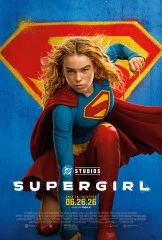
Supergirl (2026) shifts the focus to Kara Zor-El, played by Milly Alcock. An unexpected adversary draws her into an uneasy alliance, with Jason Momoa, Matthias Schoenaerts and Eve Ridley also starring; Craig Gillespie directs.
Two more stories expand the roster
 91%
67%
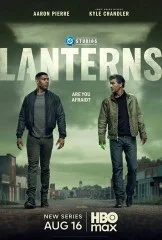
Then comes Lanterns, the HBO series starring Aaron Pierre, Kyle Chandler, Kelly Macdonald and J. Alphonse Nicholson. It adds another corner of the DCU’s cast of characters, with the pairing of Pierre and Chandler at the center.
 76%
94%
Clayface (2026), directed by James Watkins, closes the current lineup with a story about a rising Hollywood actor’s transformation into a revenge-driven monster. Tom Rhys Harries leads a cast that includes Naomi Ackie, David Dencik and Max Minghella. Its body-horror approach gives the shared universe a markedly different register.
The slate is still compact, which makes catching up manageable. For now, the key is to treat the six entries as the DCU’s connected path and leave Matt Reeves’ The Batman, its sequel and The Penguin outside it. As Lanterns and Clayface arrive, the universe’s range will become clearer through the different kinds of stories it can hold.