Zooey Deschanel’s style has stayed recognizable through changing trends: vintage-inspired clothes, signature bangs and ballet flats. Her shopping habits have stayed consistent, too. She prefers secondhand finds, saves new purchases for shoes and says personal style doesn’t require a big budget. That combination suggests a wardrobe built around repeat wear and individual taste, rather than a steady rotation of new trends.
Deschanel shared her current fashion and beauty favorites while discussing Bath & Body Works’ holiday campaign, which features seasonal products including fragrance mist, body cream, lotion, hand soap and candles. The campaign gives the interview a promotional setting, but her comments also touch on habits she says go back to her teenage years. That distinction matters: the product recommendations are current, while her thrift-first approach has a longer history.
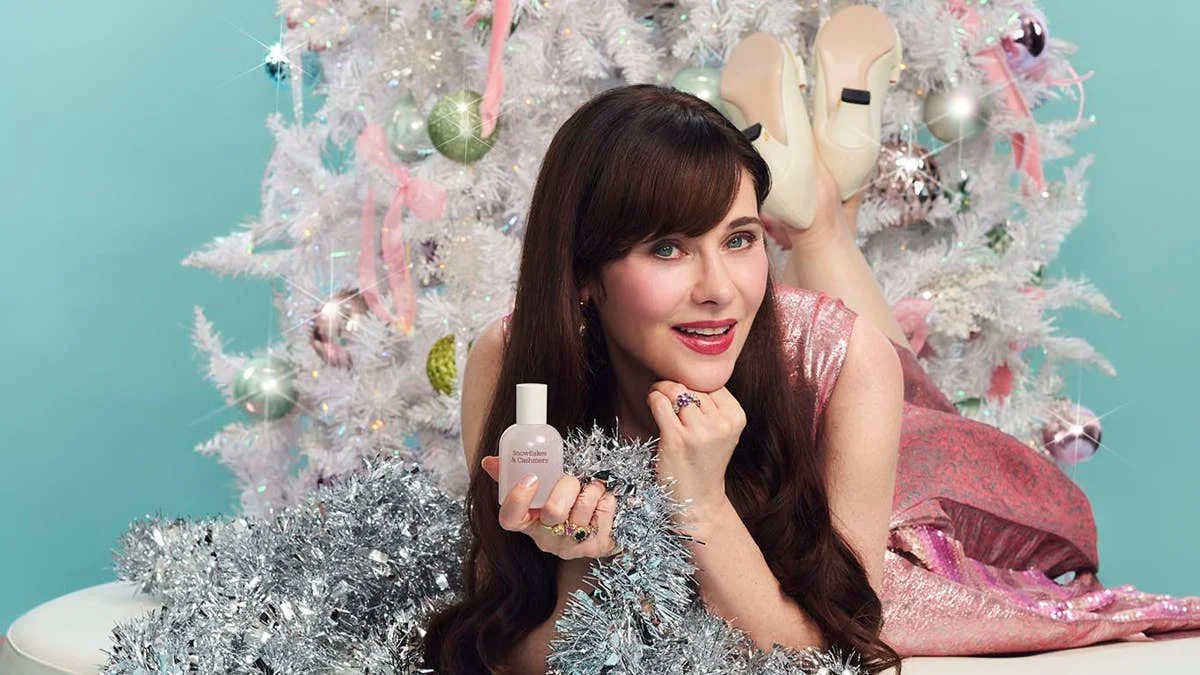
Photo: Courtesy of Bath & Body Works
Her beauty routine leans simple. Deschanel says she’s devoted to Sweed Lip Liners, describing the relationship with a favorite pencil as a long-term commitment. “I get into a relationship with a lip pencil,” she said. “It’s like I’m married to it for years,” and this one won her over this year.
That’s a small but revealing preference: she’s describing loyalty to a product that works for her, rather than a long list of constantly changing favorites. Beauty routines can become expensive when every new launch is treated as a necessary upgrade. A dependable staple offers a simpler standard: keep using it if it suits you.
Winter skin and a favorite scent
For colder weather, Deschanel reaches for Bath & Body Works’ moisturizing body wash because her skin gets dry in winter. She also likes the brand’s shapable soap in Moonlit Goddess, a scent she describes as subtle, with notes of pear and lavender. The recommendations are tied to specific preferences: extra moisture when the weather turns cold, and fragrance that doesn’t dominate.
That kind of practical filter is useful when seasonal product campaigns encourage shoppers to think in terms of a whole collection. A scent can be appealing in a description, but the question is whether it fits into someone’s everyday routine. Deschanel’s account points to comfort and subtlety as her criteria, though individual skin and fragrance preferences will vary.
On the clothing side, she’s looking for fair isle and snowflake sweaters. She notes that these styles were especially popular last year, but vintage and secondhand shops can still turn up appealing options. Comfort matters: she avoids itchy knits and looks for cotton or cashmere. The materials are part of the style decision, not an afterthought; an attractive sweater has limited value if it stays unworn in a drawer.
Secondhand first, shoes new
Deschanel says she buys most of her clothes secondhand, both for environmental reasons and for the pleasure of finding a good deal. Vintage is a particular draw, with Courrèges and Saint Laurent among the designers she likes. Pieces from the 1960s and ’70s can still look striking, she says. Her approach also shows why secondhand shopping isn’t only about price: it can make room for distinctive pieces that aren’t defined by the current season.
There’s a clear limit to that preference. Shoes are her exception to the secondhand rule. “I don’t want to wear someone else’s shoes,” she said. She was wearing Jimmy Choo ballet flats and also praised Repetto. It’s a personal boundary, and a useful reminder that a lower-impact shopping habit doesn’t have to be all or nothing.
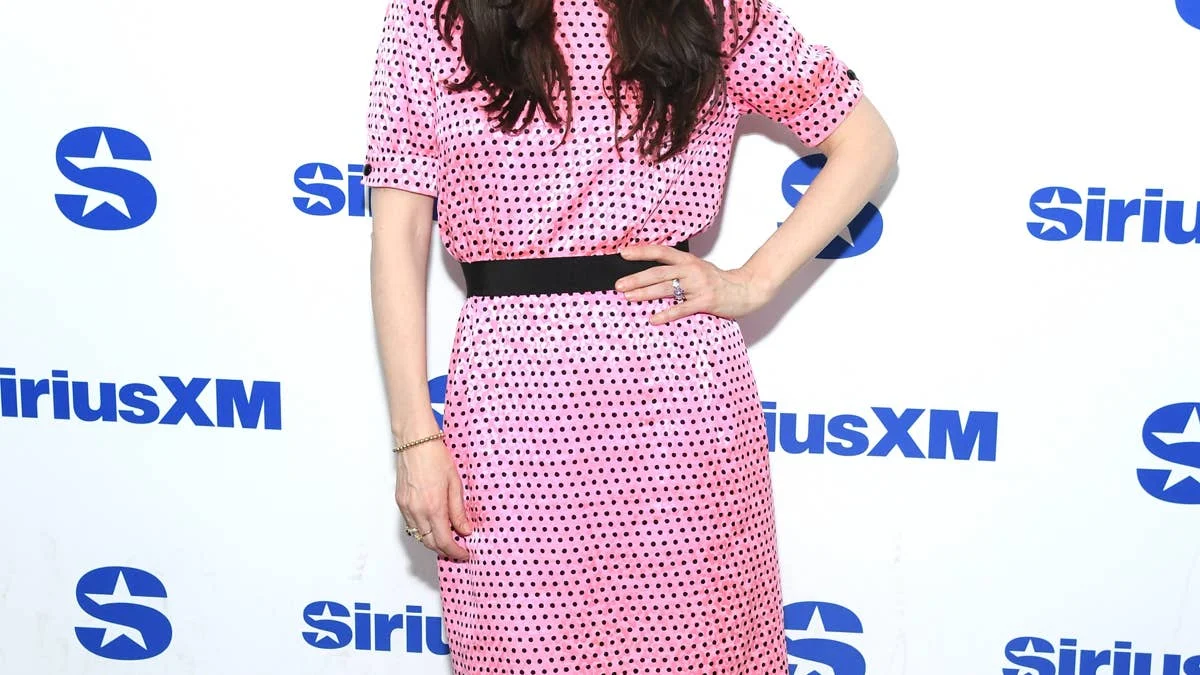
Photo: Gary Gershoff/Getty Images
The habit dates back to her teenage years. Her allowance had to cover music, movies and clothes, so she shopped at the Salvation Army and built outfits on a budget. “I just don’t think that you need to spend a lot of money to be a fashionista,” she said. The point isn’t that every secondhand find is a bargain; it’s that a limited budget can encourage more selective shopping and a stronger sense of what you actually like.
That said, a celebrity’s access and visibility can shape how easily a personal style becomes recognizable. Deschanel’s advice is most useful when read as a method, not a promise: look for pieces with character, buy what feels right, and don’t assume a high price is the source of good style. A good find. A comfortable fit. A wardrobe that gets worn.
Jess Day’s wardrobe stayed on screen
Deschanel wasn’t generally allowed to keep clothes from “New Girl.” She knew items could sell out after appearing on the show, though, so she sometimes bought them before an episode aired. Jess Day’s wardrobe included vintage finds as well as pieces from J. Crew and Kate Spade—brands Deschanel says are still around. The wardrobe blended recognizable labels with older pieces, helping the character’s outfits feel assembled rather than tied to one source.
Her experience also shows the gap between wearing a costume and owning it. A television wardrobe is selected for a character and seen by an audience; Deschanel’s personal shopping choices are shaped by her own comfort and budget. When she liked something from the show, she sometimes acted before it became harder to find. Here’s the thing: even a secondhand-minded shopper can make a new purchase when a particular item feels worth keeping.
What her approach says about personal style
Deschanel’s habits offer a practical style lesson: buy what you’ll wear, search secondhand for character and value, and make comfort part of the decision. Her vintage favorites and ballet flats have lasted through trend cycles because they’re personal choices, not just seasonal ones. This is more significant than it looks: repeating a preference can be a more coherent style strategy than chasing every new direction.
If you’re working in this space, the useful takeaway is the balance between consistency and selectivity. Deschanel’s routine leaves room for a new lip pencil, a seasonal sweater and shoes she wants to buy new, while keeping most clothing purchases secondhand. The numbers here are underwhelming in the best sense: she offers no elaborate formula, just a set of choices shaped by budget, comfort and taste. Whether that approach works for you depends on access to secondhand shops and what you enjoy wearing, but the principle is easy to understand.
Please note: Occasionally, we use affiliate links on our site. This in no way affects our editorial decision-making.


