In 1990, a gala hosted by Hispanic Designers Inc. recognized two designers whose careers had taken very different paths. Luis Estévez received the organization’s Lifetime Achievement Award; Fernando Sánchez was given its MODA award. Both had trained in couture, but their influence reached well beyond that tradition: Estévez built a following between New York and Los Angeles, while Sánchez helped make lingerie and loungewear part of fashion’s public vocabulary. That shift is more significant than it may first appear.
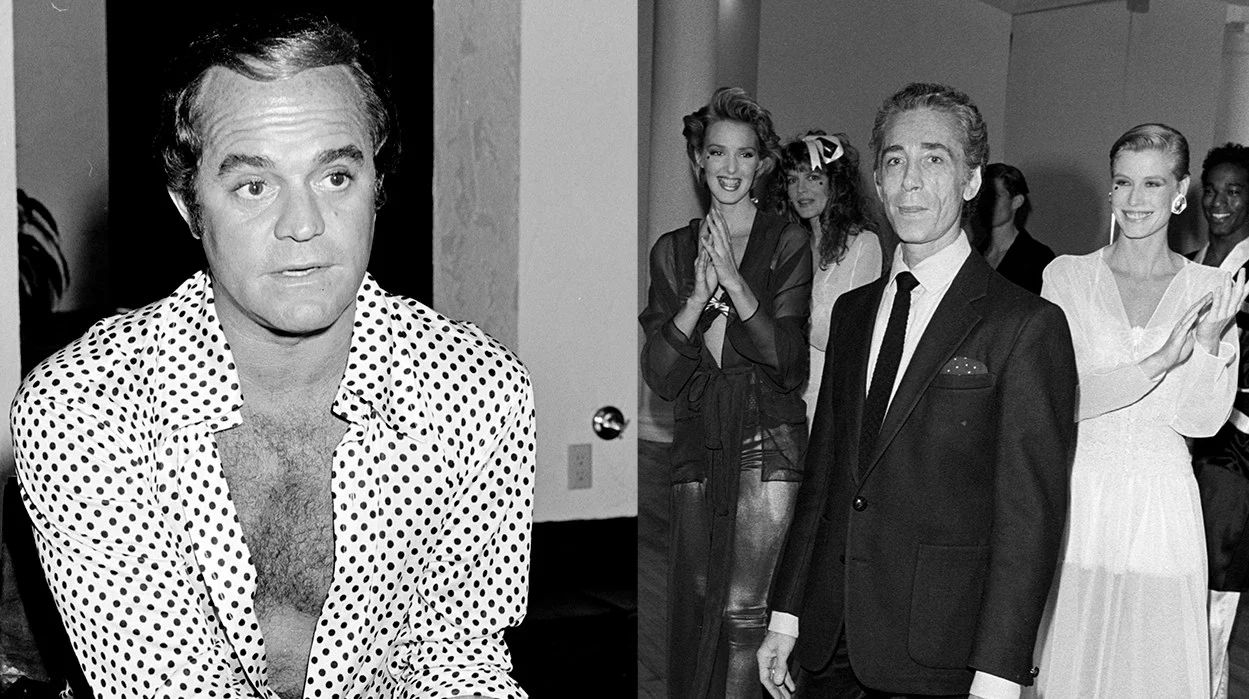
*Luis Estévez at his La Vista home in Los Angeles, 1976, and Fernando Sánchez with models at the finale of his 1986 New York fashion show. Fairchild Archive/WWD*
Luis Estévez: From Havana to Hollywood
Estévez (1930–2014) was born in Havana, Cuba, and was the grandson of sugar tycoon Santiago Estévez. He came to New York in the late 1950s after studying architecture. Fashion entered the picture through a summer job in Lord & Taylor’s display department, at a time when the store was seen as a progressive force in retail.
His career soon took him to Paris, where he worked and trained under couturier Jean Patou, known for luxury ready-to-wear, knitwear and perfume. But New York drew him back. In the mid-1960s, he launched the [Grenelle-Estévez fashion label](https://wwd.com/fashion-news/fashion-scoops/j-mendel-jonathan-cohen-spring-2027-womens-ready-to-wear-1239380371/) with Fred and Robert Greenberg and Ben Papell. He set up shop at 550 Seventh Avenue, the Garment Center address where American designers including his friend Oscar de la Renta had built their careers. Estévez understood that a fashion business needed more than a collection: its address could help define its place in the industry.
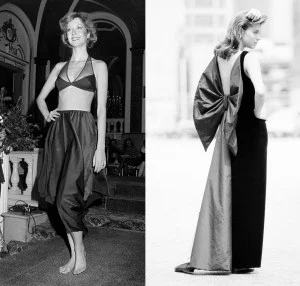
*Luis Estévez’s spring 1976 resort show in New York and 1984 holiday collection in Los Angeles. Fairchild Archive/WWD*
In 1967, even as his New York business was gaining ground, Estévez headed west. “I wanted the Havana of my youth…,” he told WWD. Los Angeles offered the sun and social life he was seeking, and his client list came to include Lana Turner, Zsa Zsa and Eva Gabor, Merle Oberon, Natalie Wood and Princess Grace of Monaco. Betsy Bloomingdale and First Lady Betty Ford wore his designs, too. Estévez credited Ford, who wore pieces straight from his collections, with raising his label’s profile.
He also designed La Vista, his family’s hilltop home in Los Angeles, where he entertained, and opened a namesake bespoke design studio and boutique in Montecito.
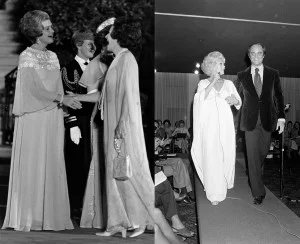
*First Lady Betty Ford wears Estévez eveningwear at the White House, 1976; Zsa Zsa Gabor joins Luis Estévez on the runway at his spring 1974 Los Angeles show. Fairchild Archive/WWD*
Estévez had a clear view of whom he was designing for. “I associate fashion with the reality of the [people](https://wwd.com/tag/people/) I know who wear fashion, and where and how they wear it,” he said in 1976. “What I am talking about here is my fashion, and my theory. I know that it’s not ‘in’ with the very hip crowd of [people](https://wwd.com/fashion-news/fashion-scoops/isaac-mizrahi-from-the-archive-1239345337/) — but I don’t give a damn.”
That confidence suited his appetite for Hollywood life, though the move to Los Angeles may not have helped his career. He kept designing couture, ready-to-wear, furs, accessories and shoes into the 1990s, when he retired. The record here doesn’t explain exactly what made the move a poor career decision; it does show that the relocation brought him a distinctive clientele and a lasting foothold on the West Coast.
Fernando Sánchez: Building a Legacy in Lingerie
Fernando Sánchez (1935–2006), born in Spain, began his couture career at the houses of Maggy Rouff, Dior and Nina Ricci. He joined Dior at the request of his friend Yves Saint Laurent. In an early WWD interview in 1966, he said he had only “dabbled” in lingerie. That modest description would age badly: lingerie became the foundation of his design legacy.
*Billy Blair and a model in Warner by Fernando Sánchez, 1975, from a 40-piece loungewear and lingerie collection. Sal Traina/Fairchild Archive*
Sánchez arrived in New York in the late 1960s and became designer for Warner bras and at-homewear under his own name—a rare arrangement that let a designer keep a personal identity attached to a major brand. He also designed furs for Revillon. In 1973, he started his namesake label, later adding licensing agreements with the moderately priced lingerie brands Lily of France and Vanity Fair.
His former assistant publicist, Tanya Wetenhall, recalled that Sánchez brought “fashion, sophistication and construction” to loungewear when it was still treated as separate from fashion. She traced his visual influences to his mother’s style, Morocco, *West Side Story*, music from *The Last Emperor*, New York and its nightlife. The precise mix is hard to reduce to a formula, but the result was a designer who treated clothes for home and intimate settings as worthy of the same thought as eveningwear.
Sánchez put it more simply: “I design from a feeling…probably because I don’t know lingerie. I really am a dress [designer](https://wwd.com/fashion-news/fashion-scoops/david-beckham-british-fall-boss-1239285521/) — unconsciously, I make dresses.” Lingerie, he said, “should be glamourous and frivolous, but must be, first of all, flattering.”
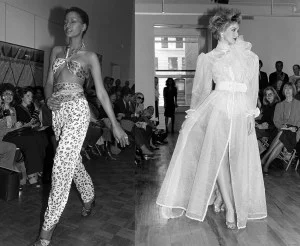
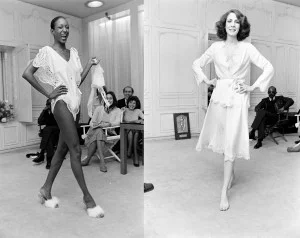
*Mounia at Fernando Sánchez’s spring 1979 show and Terri May at his spring 1984 lingerie and loungewear show. Fairchild Archive/WWD*
His collections made the case in clothes. Sánchez brought a sensual, contemporary edge to the move from loungewear to ready-to-wear, with tricolor puff coats for home and lace slipdresses that could pass as eveningwear. Color, leopard print, silver and gold gave the pieces a theatrical spark. He applied the same deliberate glamour to swimwear and plus-size lingerie, too. The underlying idea was pointed: women could take lingerie out of the boudoir and wear it with confidence. That idea still turns up in fashion.
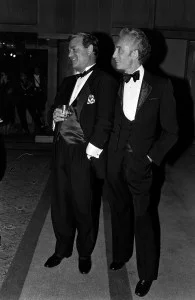
*Luis Estévez and Fernando Sánchez at an event at the Grand Hyatt Hotel in Washington, D.C., September 19, 1990. Guy DeLort/WWD/Penske Media via Getty Images*
Related links: [Birthstone jewelry gifts](https://wwd.com/shop/shop-fashion/birthstone-jewelry-trend-shop-online-1238351853/), [The RealReal “Real Style” book launch party](https://wwd.com/eye/parties/the-realreal-real-style-book-launch-party-1239383792/).Their labels have faded from view, but the recognition they earned hasn’t: Luis Estévez and Fernando Sánchez received honors from the Coty Awards and the CFDA, among others. The Hispanic Designers Inc. honored them at its 1990 gala in Washington, D.C. Their careers left a lasting imprint on American fashion.
Luis Estévez and Fernando Sánchez at the Hispanic Designers Inc. gala in Washington, D.C., 1990. Guy DeLort/Fairchild Archive; Penske Media via Getty Images.
More from WWD Video
The surrounding material isn’t included, so these videos don’t support a broader takeaway. They do offer a spread of fashion and beauty coverage, from designer and muse conversations to celebrity styling and red carpet interviews.
- [Thom Browne and Teyana Taylor: Designer and Muse](https://wwd.com/video/thom-browne-and-teyana-taylor-designer-and-muse/)
- [CEO Talks: How Gucci Westman and David Neville Are Building a Luxury Beauty Brand for the Ages](https://wwd.com/video/ceo-talks-how-gucci-westman-and-david-neville-are-building-a-luxury-beauty-brand-for-the-ages/)
- [Icebreakers with François Arnaud](https://wwd.com/video/icebreakers-francois-arnaud/)
- [Getting Ready for Marc Jacobs 2026 with Nicky Hilton](https://wwd.com/video/getting-ready-for-marc-jacobs-2026-with-nicky-hilton/)
- ['Feud: Capote Vs. The Swans' Stars Talk Costumes and Society](https://wwd.com/video/feud-capote-vs-the-swans-red-carpet-interviews/)
- [Getting Ready with Kerry Washington & Michael Kors](https://wwd.com/video/getting-ready-with-kerry-washington-michael-kors/)


