How Long to Cook a Turkey for Maximum Thanksgiving Accolades
Turkey timing is a useful estimate, but a thermometer is what keeps dinner from turning into a gamble. A whole, unstuffed bird roasted at 350°F takes about 13 minutes per pound—roughly three hours for a 12- to 14-pound turkey. Size, oven temperature, and preparation all affect the actual time.
That uncertainty matters because turkey is lean, and a whole bird combines sections with different shapes and thicknesses. The breast can dry out while the legs catch up; golden skin doesn’t prove the center is cooked. Gravy can’t fix overcooked meat. The right schedule, a few checks, and time to rest give you a better chance at juicy meat and crisp skin—and leave room to think about the side dishes.
Roasting time is a starting point
For a whole, unstuffed turkey, roast breast-side up at 350°F. It’s a straightforward method that suits first-time cooks, but the clock only gives you a window. These estimates assume the bird is fully thawed:
| Turkey weight | Approximate time at 350°F |
|---|---|
| 8–12 lb. | 1¾–3 hours |
| 12–14 lb. | 3–3¼ hours |
| 15–16 lb. | 3½–3¾ hours |
| 18–20 lb. | 4–4¼ hours |
| 21–22 lb. | 4½–4¾ hours |
Start checking for doneness about three-quarters of the way through the estimated roast, then check more often as the bird nears its target temperature. A stuffed turkey takes longer, and that extra time can leave the breast dry while the stuffing heats through. Baking dressing separately is easier to manage.
Use an instant-read thermometer in the thickest part of the breast and the innermost thigh, keeping the probe away from bone. The USDA recommends 165°F in each location. Bon Appétit food director Chris Morocco suggests taking dark meat higher—about 175°–190°F—to give its connective tissue more time to soften. That gap between breast and leg temperatures is one reason a whole turkey is hard to time precisely.
Carryover cooking adds another variable: the temperature continues to climb after the turkey leaves the oven, and the increase depends on the bird and cooking method. The Test Kitchen recommends taking the turkey out when the breast reaches 150°F, then checking periodically as it rests to make sure it reaches 165°F. Don’t count on a particular temperature rise.
Rest a whole turkey for 30–60 minutes before carving so its juices can redistribute. Set it on a board with a juice-catching groove or on a platter, and save the runoff for gravy. Foil isn’t necessary: it can trap steam and soften crisp skin.
Plan the bird before the oven is on
Whether you roast the turkey whole, spatchcock it, or cut it into parts, a little planning helps you work toward tender meat and crisp skin. Choosing a smaller bird can shorten roasting time and free the oven for sides and pies. If you don’t want days of leftovers, buy only what your group needs.
Thawing takes longer than most last-minute plans allow. Budget about 24 hours in the refrigerator for every 4–5 pounds; a 12- to 14-pound turkey needs roughly three to four days. Don’t start with a frozen bird and expect the roasting chart to save the schedule.
By Julie Harans and Editors of Bon Appétit · October 22, 2026
Photo by Alex Lau, Styling by Sue Li
A turkey that’s still partly frozen can derail the schedule and leave its giblets stuck inside. If the holiday is closing in, safe thawing options can help you catch up. Read more at Epicurious: How to Thaw a Turkey, Depending on How Much Time You Have
Give the salt time to work
Dry brining is a practical route to juicier meat and better-browned skin. Season the bird with kosher salt, salt and pepper, or a spice blend. Salt draws moisture to the surface; the seasoned liquid is then absorbed back into the meat, helping it hold moisture as it cooks while also tenderizing it and supporting crisp, browned skin.
Wet brining works too, but dry brining is easier to manage and avoids the mess of a large container of salt water. That matters in the days before Thanksgiving, when refrigerator space is already scarce.
Plan on at least 12 hours and up to three days in the refrigerator, uncovered, for a dry-brined turkey. If you’re behind schedule, you can season the bird once its exterior is pliable, then let it finish thawing in the refrigerator. The salt still needs time to penetrate those thick muscles.
Keep the oven predictable
An oven thermometer is a useful check before a long roast: the temperature on the dial may not match the heat inside, and even a modest difference can affect cooking time. Once the turkey is roasting, try not to open the door repeatedly. Each peek lets heat escape and can slow the cook.
For a faster roast, change the heat
Andy Baraghani’s dry-brined roast turkey recipe, also known as the no-fail turkey method, aims for two things at once: tender meat and deeply browned, crackly skin. The trick is to start hot, then turn the oven down.
Roast at 425°–450°F for 30–45 minutes to brown the skin, then lower the oven to 300°–350°F for another 65–85 minutes, using the recipe’s internal-temperature guidance. A tangy honey glaze adds a glossy, bronzed finish. For a 12- to 16-pound turkey, this approach can take roughly two hours. Keep an eye on the skin and adjust the heat as the recipe directs if it darkens too quickly.
The method asks for closer attention, but the time savings are meaningful. For the complete instructions, including the dry brine and glaze, follow Andy’s recipe.
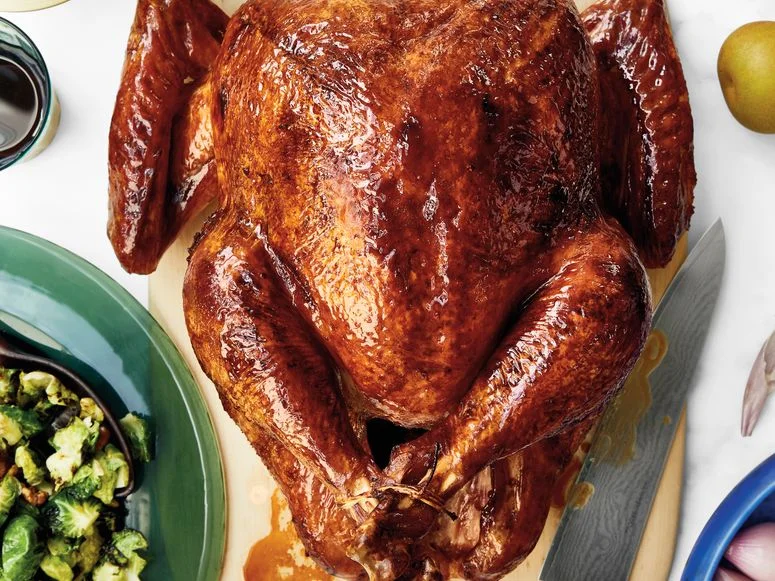
Roast the turkey in parts
Cooking a turkey in pieces gives each cut better exposure to the oven’s heat, so you can manage breast and dark meat separately. Dry brining still applies. If you’re comfortable breaking down a raw bird and have a sharp knife, you can do it yourself; otherwise, ask your butcher for five pieces: two legs, two wings, and a whole breast, with the backbone removed. Keep the backbone for turkey stock.
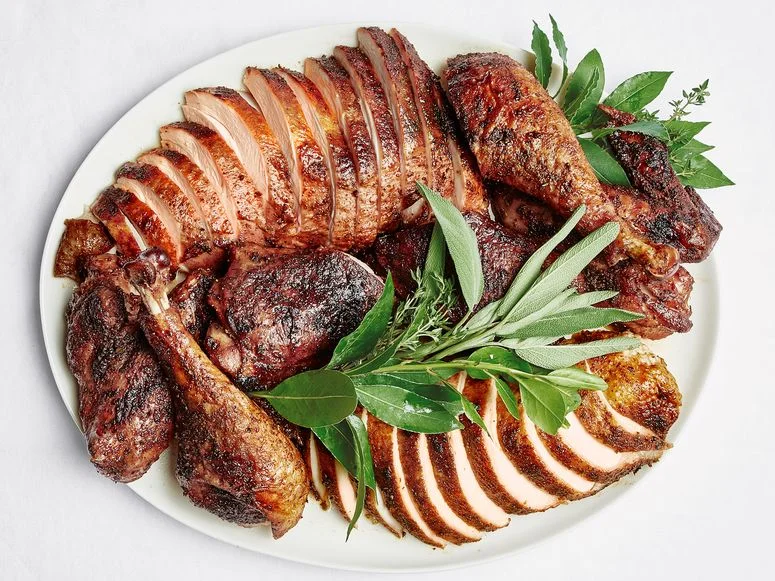
For this approach, set a wire rack inside a rimmed baking sheet. Air can circulate around the pieces to help crisp the skin, while the pan catches the flavorful drippings. In this Thanksgiving recipe, the dry-brined pieces roast at 425°F for 20–25 minutes, then at 300°F for 50–70 minutes. Check each piece separately: the breast may be ready before the legs. Follow the recipe’s doneness guidance and keep the USDA’s 165°F minimum temperature recommendation in mind.
The trade-off is presentation. A platter of carved pieces doesn’t have the same entrance as a whole bird, but better control over doneness can make for a more satisfying meal.
And if you’re planning the rest of the table, here’s a mashed potatoes recipe to go with it.
Additional reporting contributed by Zoe Denenberg.