Archaeology & History
Lost Roman Villa Uncovered After ‘Clandestine’ Excavation
The 'splendid Imperial-era villa' was located at Castel di Guido.

Vittoria Benzine
 Share This Article
A magnificent villa dating back to the height of the Roman Empire just turned up at the government-owned Castel di Guido, approximately 13 miles west of Rome—courtesy of criminals.
Today, Castel di Guido is Italy’s largest public farm, producing sunflowers, olive oil, and cattle. Two thousand years ago, though, it was home to Lorium—a beloved rest stop stationed at mile marker 12 along the famed Via Aurelia. Several members of Rome’s renowned Antonine dynasty had ties to this place: Hadrian visited often, and his successor, Antonius Pius, died at his ancestral estate here. Marcus Aurelius spent some formative stretches at Lorium, too.
That rich history may have attracted looters to the Castel di Guido. In February, Roman police told the city’s Special Superintendent Daniela Porro that illegal excavations had been detected amid the rural village. “In just a few days, Ministry of Culture officials, in collaboration with the Carabinieri, have blocked a clandestine operation, secured an archaeological area, and brought to light the remains of a splendid imperial-era villa in the Roman countryside, which housed the imperial residences of the Antonine dynasty,” Italy’s Minister of Culture Alessandro Giuli explained in press materials.
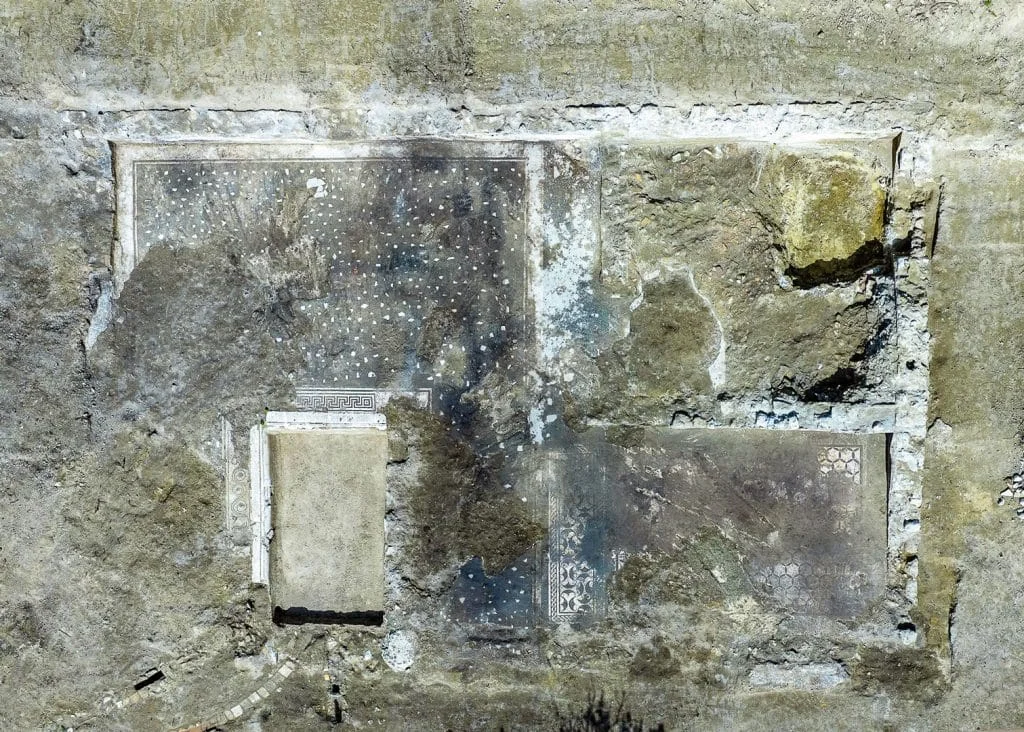
An aerial view of the villa. Photo: © Italy’s Ministry of Culture.
Finestre sull’Arte noted that by the time authorities arrived, the villa had already incurred “significant damage.” Some areas had suffered from careless use of a backhoe. Elsewhere, the crooks left ancient structures exposed and vulnerable. Haphazard dirt piles abounded.
Luckily, under Superintendency archaeologist Alessia Contino, experts still managed to surface remarkably complete rooms, replete with 1.5-meter-tall walls, intricate floral and geometric mosaics, and even painted plaster.
The bygone structure evidently centered on an impluvium—a sunken rectangular basin that sat beneath the grand central atriums characteristic of affluent Roman homes. There, ornate impluvia gathered rainwater for domestic use while cooling the home and signaling its owner’s prestige.
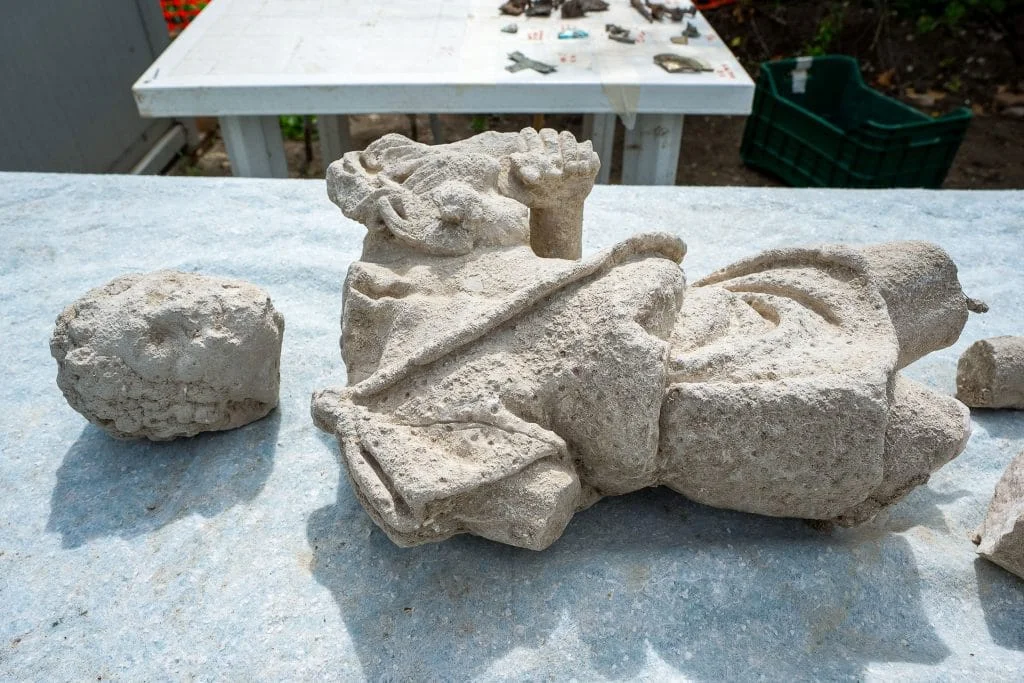
The suspected Silvanus sculpture. Photo: © Italy’s Ministry of Culture.
Four surrounding rooms still feature floors with mosaics, plus “structures associated with the villa’s productive activities,” press materials stated. What’s more, crews have recovered numerous artifacts, all of which are currently under study. The most exciting of these is a broken white marble statue depicting a bearded figure carrying either a calf or a piglet. Archaeologists suspect the sculpture honors Silvanus, the Roman god of the countryside and forests.
Altogether, these sumptuous finds indicate that this villa belonged to someone important—maybe even an aristocrat with ties to Lorium’s imperial regulars.
To commemorate the momentous, crime-fueled find, the Special Superintendency is opening the villa up to the public on June 20 for free, ticketed tours of its remains and restoration.