Art Criticism
Refik Anadol’s Dataland Leaves Contemporary Art in the Dust
This A.I.-powered masterpiece is a take-your-breath-away wonder for all ages.
by
Ann Hirsch
 Share This Article
I took my family on a Sunday to experience Refik Anadol’s latest and greatest feat, Dataland, a museum of A.I. arts. This is not your typical “art museum” like its neighbors the Broad and MoCA, but rather an experience more akin to the Museum of Ice Cream or the Van Gogh Immersive Experience. These immersive experiences are popping up everywhere. Since I have two young children, I’ve seen many of them.
Dataland is by far the best of these experiences. Even better than the Gabby Dollhouse immersive experience which was very good but feels sad now in comparison. I am not saying this is in any way to belittle or cheapen Dataland. If experiential spaces are the new films (since movies are dead) then Dataland is its Citizen Kane. Pay attention Disneyland! The bar has been raised.
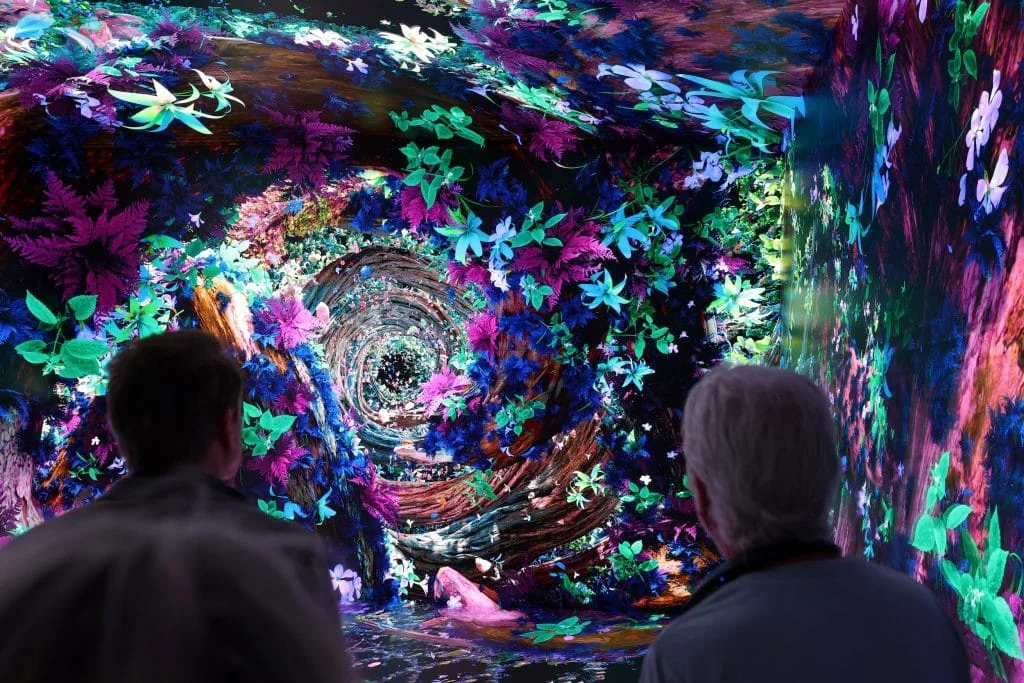
Dataland’s first exhibition is titled “Machine Dreams: Rainforest” and is powered by Anadol’s Large Nature Model. Rainforest motifs are a jumping off point, but the visuals ultimately expand far beyond that, into a supposed machine dream space.
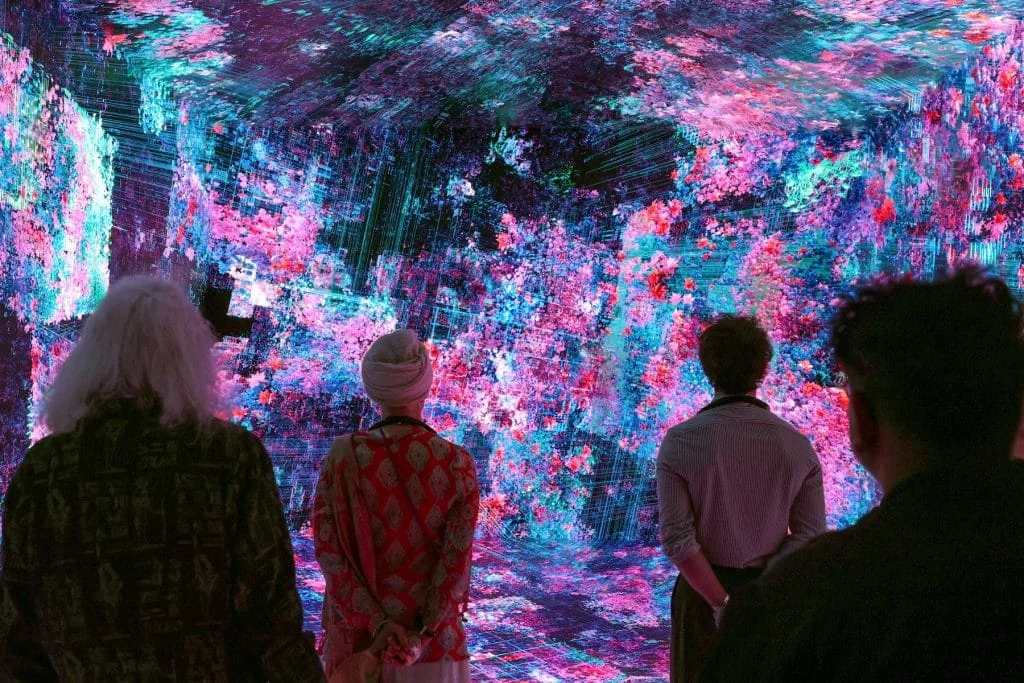
Guests attend the Dataland Art Talk and Grand Opening Party at The Grand LA on June 13, 2026 in Los Angeles, California. Photo: Stefanie Keenan/Getty Images for Dataland.
When you enter you are asked to unlock a neckbrace and bracelet that monitor your biometric data throughout the experience. Does this sound a little scary? Sort of, but live a little please. Your biometric data becomes one reference that determines the visuals in many of the galleries you enter, but there’s obviously many other inputs in the vast system Anadol has created. Allowing the museum to use your biometric data mainly makes you feel as though you’ve minted your own variant of the experience—a personalized generative NFT—if only psychologically. (For the record, my three year old did not want to wear the neckbrace and my six year old tried but it was ultimately too heavy for her. The museum does not recommend the monitoring equipment for children under seven).
There are several large galleries to experience in Dataland, all of them presenting a different fantastical experience, some interactive, some experiential. I hesitate to describe them because I’m a believer in #nospoilers and part of the joy of these attractions is being surprised and amazed. The experiences were mostly operatic visual music that alighted all the senses, including smell. We were there for probably two hours, which was very good for my kids, even though my youngest was scared the entire first hour and insisted on being carried. The floors were so black and shiny they appeared to her like a dark liquid and I think she thought she might fall right through.
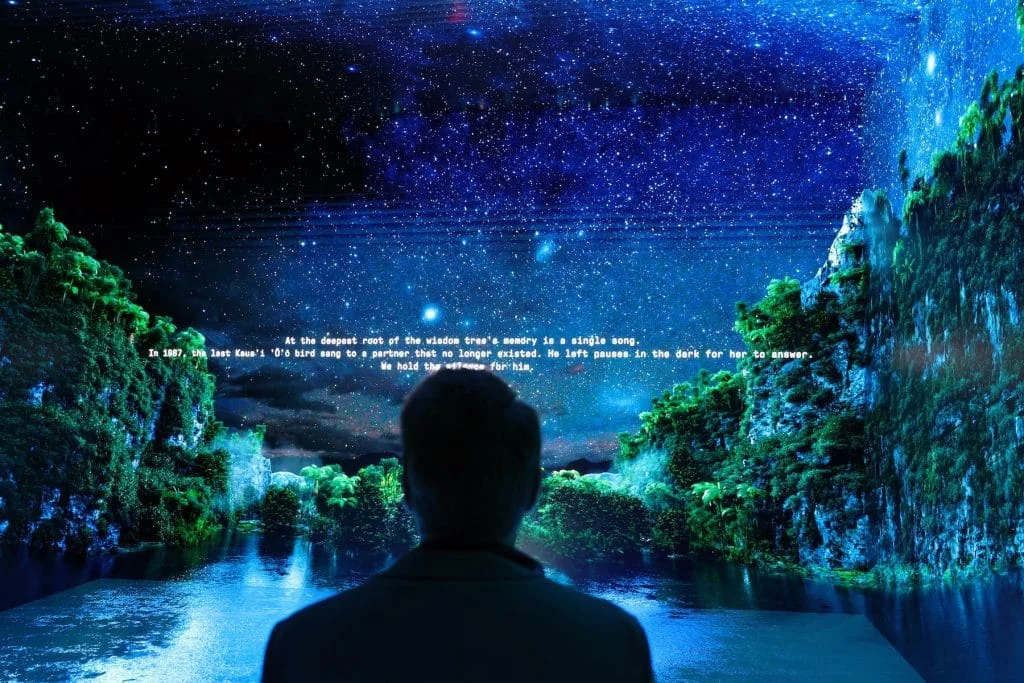
Guests attend the Dataland Art Talk and Grand Opening Party at The Grand LA on June 13, 2026 in Los Angeles, California. Photo: Stefanie Keenan/Getty Images for Dataland.
Having now experienced this work, everything Anadol has previously done to this point feels like merely a sketch. In 2023 Jerry Saltz said Refik Anadol’s Unsupervised at MoMA was just a fancy lava lamp. And Anadol took that… personally. He took that criticism and turned it into Dataland, which is so immersive, so expansive and incredible, a screensaver on steroids that feels so real you could live inside it, that it functions not only as a giant fuck you to Jerry but also feels like an official ushering into our new contemporary art world. This new art world moves beyond object assets and understands that all art is content, and that content, at its best, creates experiences that absolutely must rival a media-riddled landscape. If Rothko sought the sublime amid the growing noise of postwar consumer culture, Anadol must find it in an age of endless scrolling.
And here Anadol succeeds, incredibly so. There’s a part of my art brain that went to art school and taught art that wants to dissect every piece of this and to ask, how exactly was my data used? What parameters affected the visuals? What is Anadol saying here about the rainforest? But standing inside the work, those questions felt strangely secondary. Yes, this is “Dataland,” but the data is neither the content nor the form. The data is the paint. Nobody stands in front of a painting wondering about the chemistry of the pigment. They care about the image.
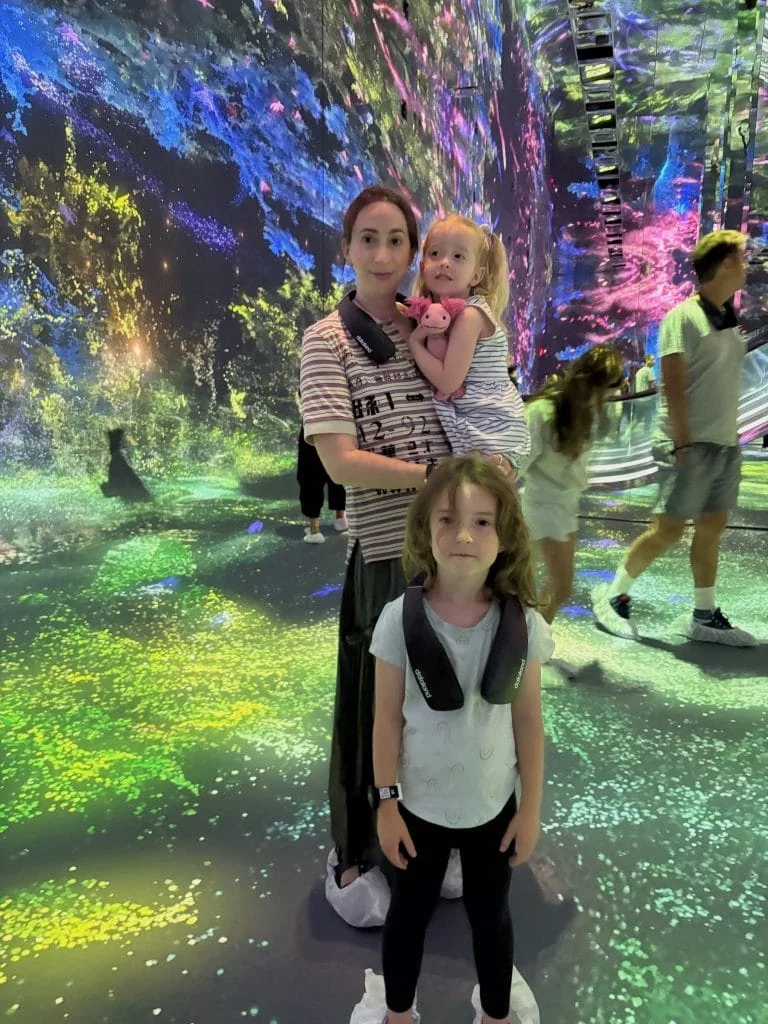
The author and kids in Dataland. Image courtesy Ann Hirsch.
The finished piece here is a wild fantasy that feels like Neverland. The data used to create this fantasy was taken from the real world but has pointedly decided to move beyond it. Dataland is ultimately about moving toward a world of fantasy. We have spent the last decades so obsessed with reality and attempting to portray that reality, that we have now realized 1) there’s no such thing because it’s always changing, in flux and subjective, and 2) reality blows. No one wants to be there.
The development of AI may ultimately matter less for its ability to represent reality than for its ability to construct alternatives to it. The world Dataland promises is not documentary but fantastical—perhaps the world of The Matrix. And if taking the blue pill means I can live in Anadol’s Matrix, I’m taking it.
My six-year-old left Dataland saying she wanted to go back every day. That may be the highest praise an artist can receive.