Art History
What Was the Art World Like the Last Time the Knicks Were in the Championship?
Some facts from art history to put it all in perspective.

Ben Davis
 Share This Article
I’m a total bandwagon fan, but here in New York, it’s hard not to be into the Knicks right now. (Sorry to San Antonio readers: The Spurs are awesome, too!)
I’m told Knicks fans are long-suffering—but just how long? For all the fellow clueless art types wandering into Knicks watch parties, here’s some cocktail party art-history for you, to give a sense of just how long the wait has been for your fellow New Yorkers. Enjoy!
Last Championship Shot: 1999
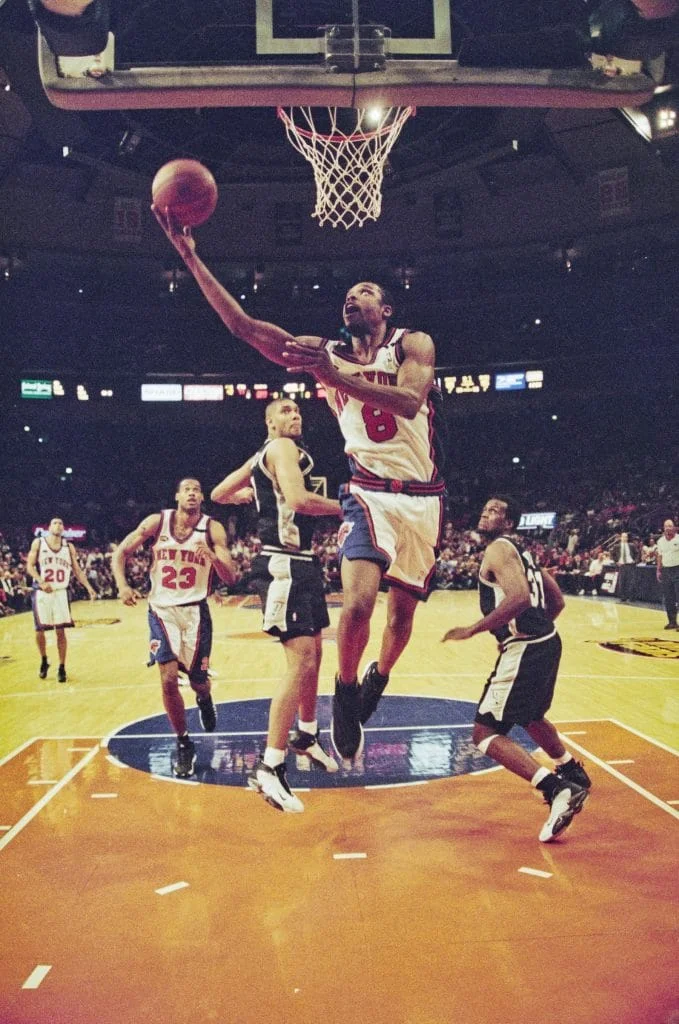
Latrell Sprewell makes a one handed lay up to the basket during Game 4 of the NBA Championship Finals basketball game against the San Antonio Spurs on 23 June 1999 at the Madison Square Garden. (Photo by Jamie Squire/Allsport/Getty Images)
Last time the Knicks got to duel it out for the big prize was pre-millennium. Then, the team rode what I am told by authorities was a “legendary Cinderella playoff” only to be defeated by the San Antonio Spurs, four games to one, in the 1999 Championships.
In cinema, Star Wars: The Phantom Menace made pod-racing a craze across the nation. In music, Britney Spears and Jennifer Lopez dropped first albums. In business, the dot-com bubble was rising to frenetic heights, off the strengths of juggernauts such as Amazon.com and Pets.com.
The words “wi-fi” and “blog” were coined, while the American Dialect Society‘s Word of the Year was the feared “Y2K.”
Over in visual art, the 48th Venice Biennale was the one to permanently assume today’s familiar format of a main centerpiece show, associated with a star curator, alongside the national pavilions. It was called “dAPERTutto,” and helmed by Harald Szeemann. Back in New York, the Whitney Biennial, meanwhile, had just ventured outside of its own staff to find the curators of its upcoming show (the 2000 edition) the first time, in a bid to be a little less clannishly New York–centered.
New York’s Armory Show fair had been founded in 1994—but the global frenzy for art fairs that would change the public profile of art was still a few years in the future. The tip-off there would be the first Art Basel Miami Beach in 2002 and the first Frieze Art Fair in 2003.
So, essentially, the last time the Knicks were vying for the Larry O’Brien Championship Trophy, most of the modern global networked art world had yet to be built.
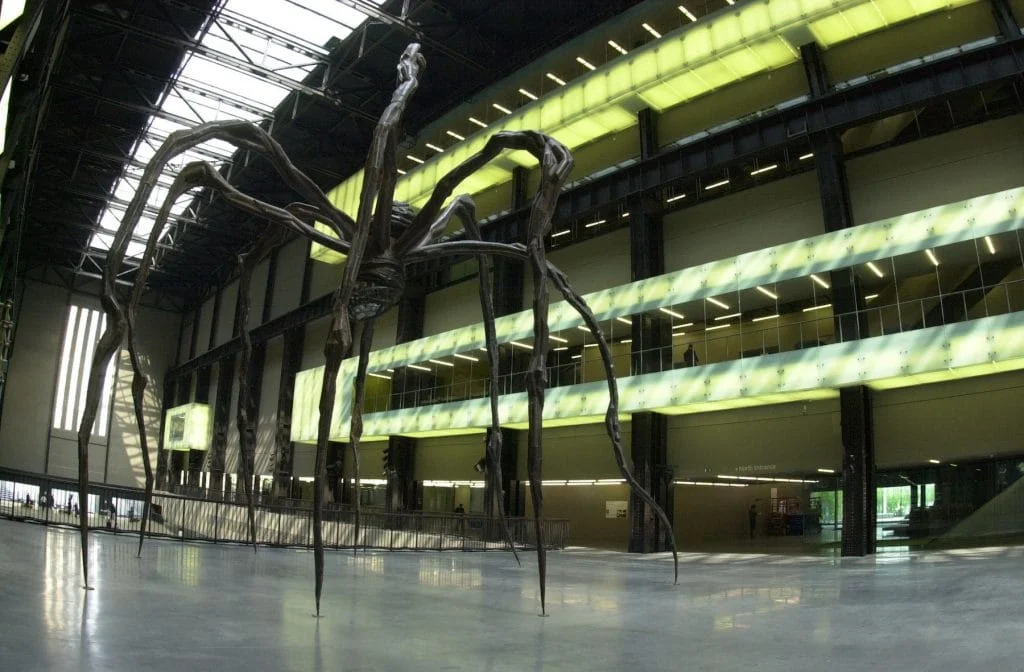
Louise Bourgeois’s Maman (1999) in the Tate Modern’s Turbine Hall, formerly the bankside Power Station in Southwark, London. (Photo by Fiona Hanson – PA Images/PA Images via Getty Images)
In London, the new, spectacle-ready Tate Modern wouldn’t debut until the following year, but it had already commissioned Louise Bourgeois’s massive spider sculpture, Maman, for its inaugural Turbine Hall show—probably 1999’s most famous single artwork.
In general, “Cool Britannia” was at the peak of its influence in culture, with the media-savvy Young British Artists setting the global art standard. Tracey Emin’s My Bed (1998) was nominated for the Turner Prize in 1999, and drew headlines.
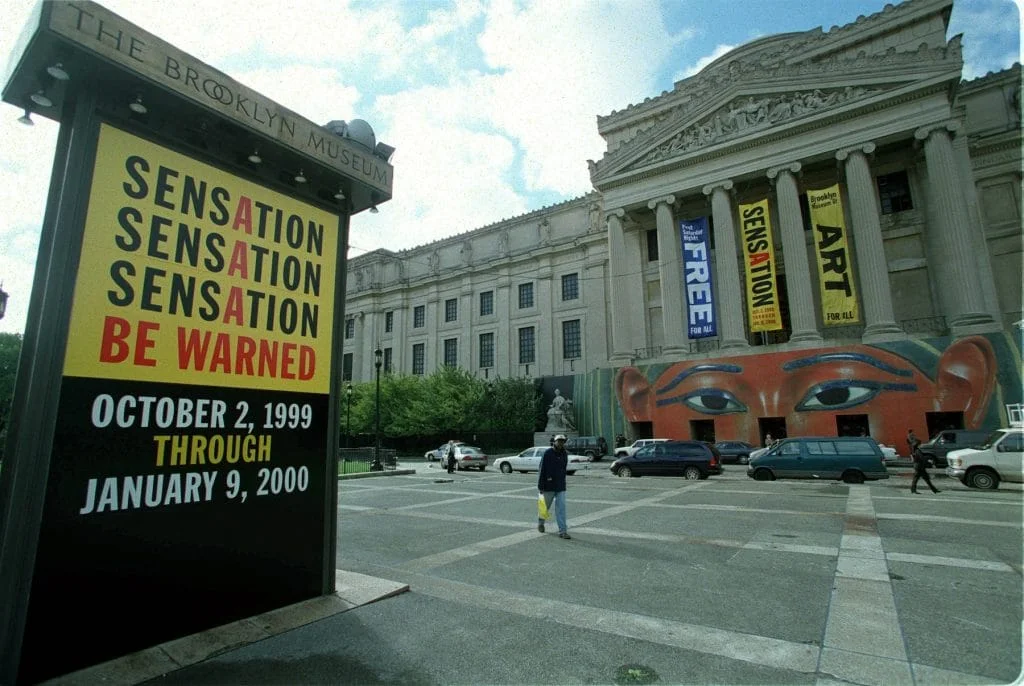
The “Sensation” exhibition at the Brooklyn Museum. (Photo By Jonathan Elderfield/Getty Images)
I mention the YBAs as relevant for the New York art history in 1999 because they were part of what was the most intense art story of the year. The massive touring show of YBA art, “Sensation,” had been drawing crowds and controversy in London and then Berlin, in the early part of the year, and landed at the Brooklyn Museum in the fall.
Then-mayor Rudy Giuliani threatened the museum’s funding, outraged over the presence of Chris Ofili’s The Holy Virgin Mary (1996), a blobby depiction of the Virgin Mary which included elephant dung. This particularly lunk-headed episode of the ’90s culture wars haunts us still today. So, some things change a lot; some things stay the same.
Last Championship Win: 1973
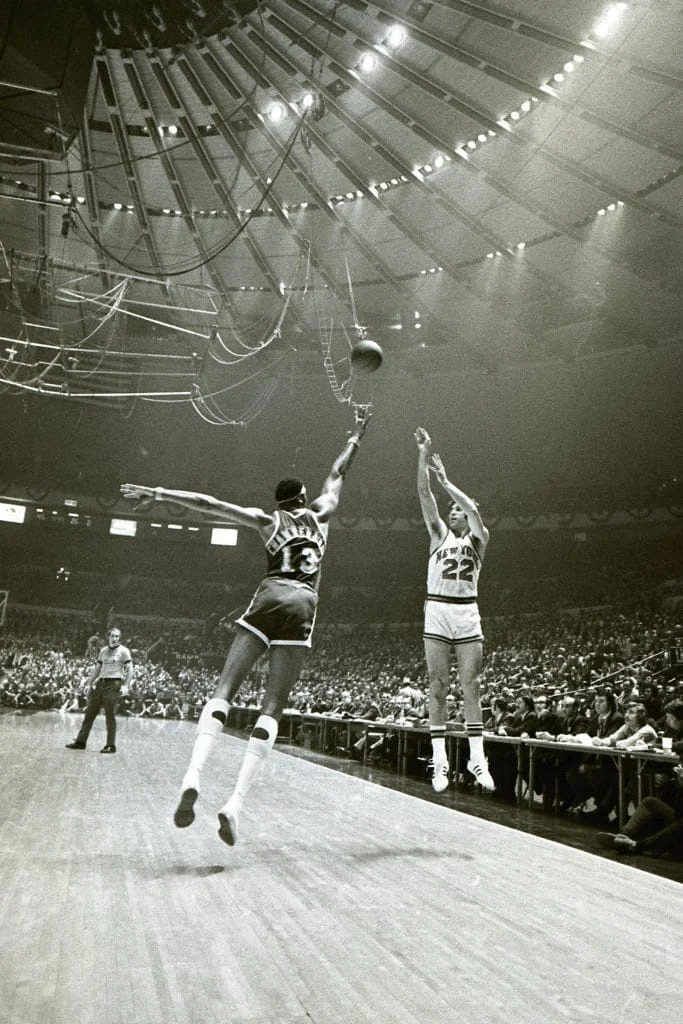
New York Knicks’ Dave DeBusschere takes a jump shot while Los Angeles Lakers’s Wilt Chamberlain tries unsuccessfully to block him during the Lakers vs. Knicks game at Madison Square Garden on May 8, 1973. (Photo by Dick Morseman/Newsday RM via Getty Images)
What about the last time the Knicks actually ate the whole sandwich? For that, you go further back, more than a half-century.
In film, The Exorcist was the big movie of the year, sometimes credited as the first film of the modern blockbuster film era (Jaws and Star Wars were still in the future). The Dark Side of the Moon was the best-selling album of the year, but the biggest song would be “Tie a Yellow Ribbon Round The Ole Oak Tree” by Tony Orlando and Dawn, weirdly. It was really, really popular!
The U.S. was in the beginning of the end of the Vietnam War (the Paris Peace Accords), in midstream of the Watergate crisis (the Senate Watergate Committee hearings), while the oil shocks would strike at the end of the year, ending the postwar boom. In New York, the Minoru Yamasaki–designed Twin Towers of the World Trade Center opened in April.
The words “bikini wax,” “detox,” and “video game” were all coined this year. “Punk” was percolating, but the movement hadn’t really gone mainstream.
In museum-and-gallery world, the early ‘70s were when land art, performance art, and post-minimalism were all in full flower. Robert Smithson died in a plane crash in July.
Feminist art was only getting its first big self-organized push, via its first real institutional show, “Women Choose Women” at the New York Cultural Center (located where the Museum of Arts and Design is now).
The artist-centric neighborhood SoHo was landmarked in 1973. Indeed, this was the year that the word “gentrification” entered mainstream currency.
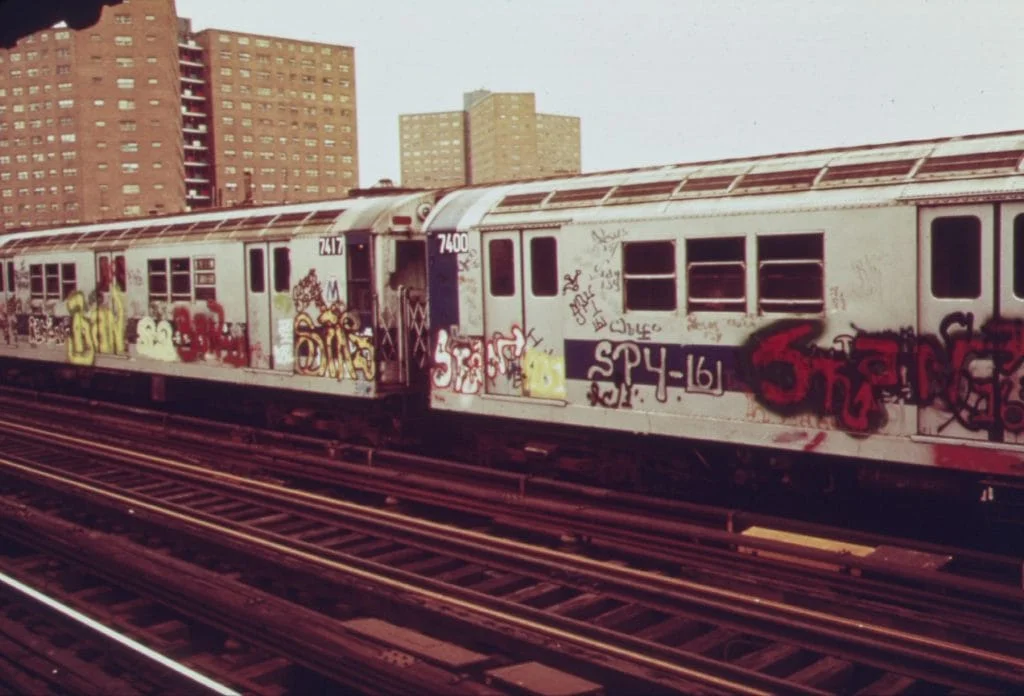
Subway car marked with extensive graffiti tags passes through a station, New York City, New York, May, 1973. (Photo via Smith Collection/Gado/Getty Images)
At the same time, the full-bore urban decay that would define the decade was setting in. Graffiti, which observers hadn’t thought of as much besides vandalism before, became a self-conscious art movement.
The 1973 Whitney Biennial was actually the first Whitney Biennial, in the sense that, it previously been the Whitney Annual. In a reaction to the increasing pluralism of art that was also considered a wild revision of modern-art standards, different mediums were shown together for the first time. The 1973 show featured 220 artists, including names-you-still-know like Helen Frankenthaler, Donald Judd, and Joan Mitchell—though now-little-known painter Dan Christensen was the most-commented-upon artist in the show.
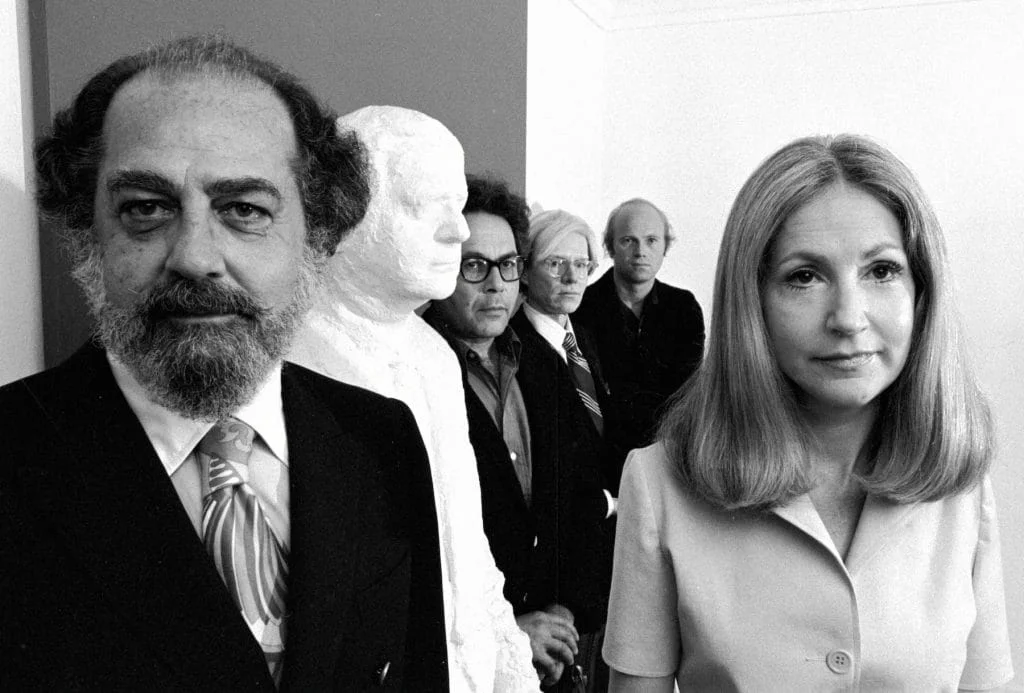
Portrait of married contemporary art collectors Robert & Ethel Scull as they pose with artists George Segal, Andy Warhol, and James Rosenquist, at the Scull’s home, November 1973. (Photo by Jack Mitchell/Getty Images)
The most notable art-market event of 1973 was, without a doubt, the Scull Sale. That successful sell-off of art owned by taxicab medallion magnate Robert Scull and his wife Ethel, which took place at Sotheby Parke Bernet auction house in October, is considered one of the key turning points in market history. It was widely marketed and featured works by artists like Jasper Johns, Cy Twombly, and Robert Rauschenberg (all of them also featured in the Whitney Biennial, incidentally).
The sale made $2.2 million overall—chump change now. But many pieces went for multiples of what they were purchased for. It essentially marked the beginning of the idea of work by living artists as a hot collectable, which then grew and grew in the many decades after, transitioning the contemporary art world from a small club to something much bigger and more professionalized. Maybe even something a little more like professional sports, full of big money, star players, and high stakes.