We Juiced 42 Pounds of Produce to Find the Best Juicers
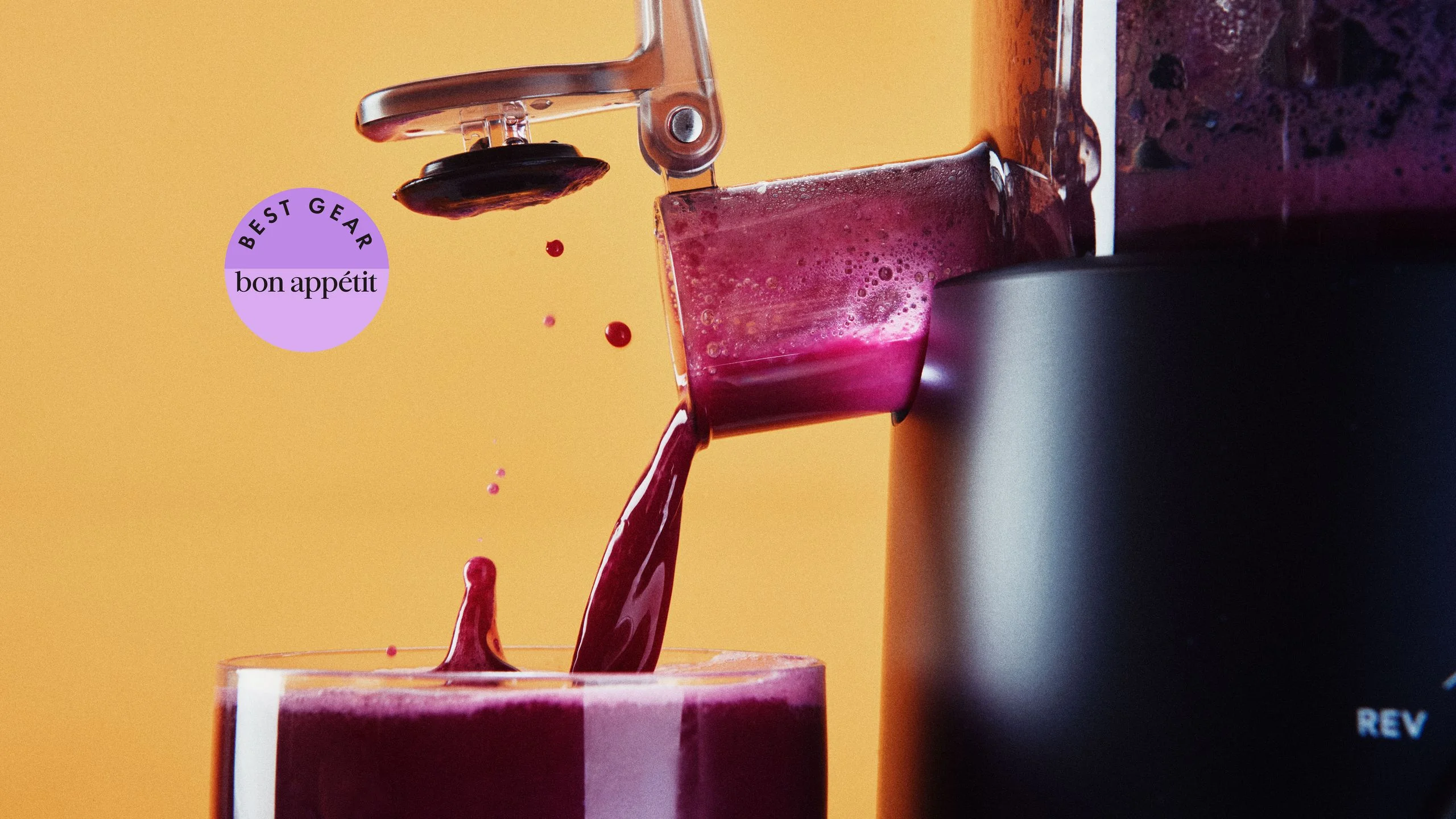
Juicers are an appliance that gets a bad rap. They’ve long had a reputation for being bulky, heavy, noisy, expensive, messy, and a beast to clean (all that sticky pulp!). And yes, some of those things may have been true in the past. But juicers have come a very long way. Today, there are a multitude of excellent models available for every space and budget, and they’re a joy to use. Many purr quietly as they turn fresh produce into smooth sips and are designed with removable parts that need just a quick rinse of water to wash away packed-on pulp and fibrous bits.
But choosing the best juicer can be tricky, because you really don’t know what you’re getting until you actually use it. That’s why we’re here to help.
Our top picks
- Best juicer overall: Nama J2 Cold Press Juicer
- Best budget juicer: Omega Wide Mouth Vertical Cold Press Juicer
- Best compact juicer: Nama J3 Cold Press Juicer
- Best large-batch juicer: Kuvings Hands-Free Slow Juicer AUTO10 Plus
We put some of the most popular juicers to the test to determine which one deserves a spot on your countertop. We made a variety of recipes using soft citrus fruits and tougher ingredients like carrots, celery, kale, and ginger to determine the quality and yield of the juice each machine produces. We also tracked how noisy each machine was and how much energy we expended to clean the juicers.
Whether you want a compact juicer dedicated to making a glass of OJ every morning or a larger model to create your own at-home juice bar, we found something to satisfy every need. Get all the juicy details below.
New in this update: We tested two Hurom juicers: the Hurom H80, which proved a worthy adversary to our top pick, the Nama J2, and remains a juicer we like even though it ultimately couldn't unseat the winner, and the Hurom H70, whose juice came out too pulpy with an odd texture, so we can't recommend it.
Best juicer overall: Nama J2 Cold Press Juicer
Pros and cons
Pros:
- Easy to set up
- Ultra-quiet
- Sleek
- Fast and powerful
- Large hopper
- Continuous load, no tamper required
- Small footprint
Cons:
- Expensive
- Hand-wash only
Specs
- Type: Masticating
- Dimensions: 9.8" W x 9.1" L x 17.7" H
- Weight: 12.1 lb.
- Colors: 3
- Continuous load? Yes
- Warranty: 15 years
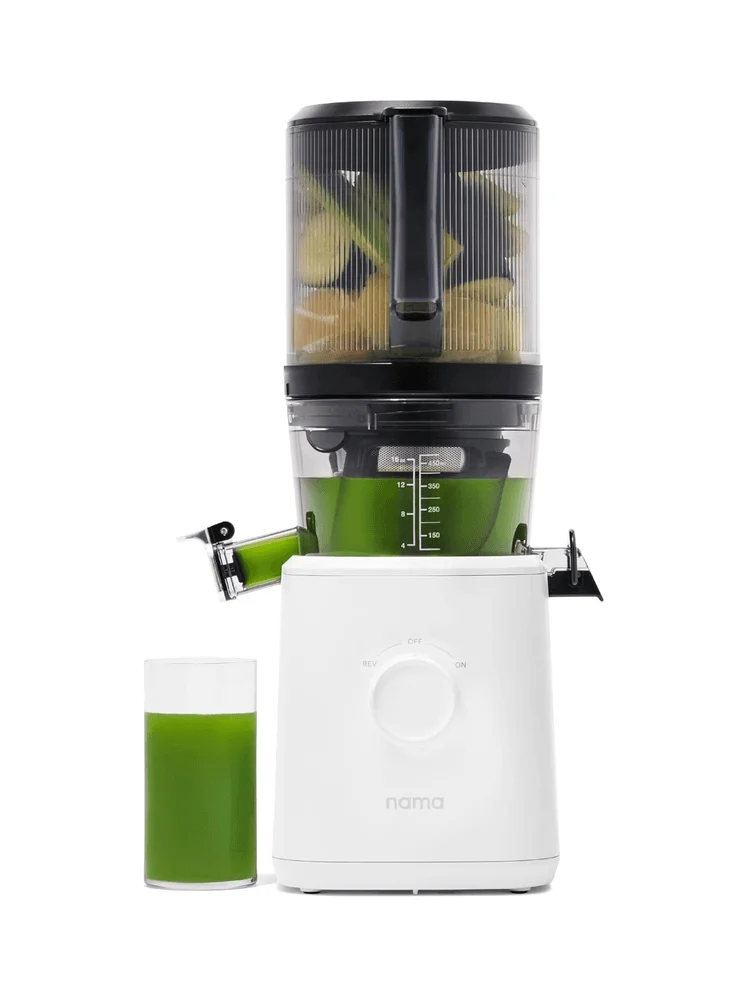
We tested several new models for this year’s list, and there were some really good ones. Still, none impressed us as much as the Nama J2 Cold Press, which is why we named it the best overall juicer for the second year in a row. It’s surprisingly quiet and easy to clean, has a large hopper for packing in produce, and yields high-quality juice that is clean and refreshing.
What we love: There’s a lot to love about this juicer. For starters, it has a giant hopper. We loaded it with large chunks of produce like green apples and carrots, which cut down on chopping time. The hopper’s generous capacity also holds a lot of ingredients, so we were able to fill it up just once and leave it alone as it made carrot juice and orange juice. The lid has a smaller hopper that lets you continuously load fruits and vegetables while the juicer is operating, or you can remove the lid (the motor automatically pauses), reload, and let it pulse.
The Nama J2 Cold Press produces an impressive amount of juice, and the quality is excellent. Our green juice and orange juice were fresh-tasting and super smooth, and despite using ingredients like oranges, kale, and celery, there were no traces of pulp or pips. The juices also had very little foam and didn’t separate into different layers after sitting for a few minutes.
Cleanup was practically effortless. The juicer’s parts (hopper, lid, chamber, spinning brush, strainer, auger, and both juice containers) come apart easily and rinse clean fast. Pulp washed away from the strainer without using the cleaning brush, and it was easy to remove from the pulp spout, thanks to the convenient flip-open hinget. Though Nama says the parts aren’t dishwasher-safe, we did put the spinning brush and strainer in the dishwasher for testing’s sake, and they came out just fine.
Perhaps our favorite feature of the Nama J2 Cold Press is that it’s ridiculously quiet. Even when the juicer was loaded up with hard, fibrous ingredients like ginger, carrots, apples, and celery (which should be layered on top of softer ingredients), the auger swiftly and silently powered through them.
What we’d leave: At $600, the Nama J2 Cold Press is expensive and probably best suited for those who are serious about juicing and want to stop throwing away money at their local juice bar. If, however, you’re new to the juicing world or just want a machine for occasional use, we recommend going with a less expensive option, like the J3. As previously mentioned, the J2’s parts technically are not dishwasher-safe and should only be hand-washed, but we found cleanup so quick that it’s really not an issue.
In the long run: "I’ve used the J2 at home since 2023, and while I’m not a 'Juice' person with a capital ‘J,’ it has gotten a lot of work making orange, carrot, apple, and ginger juice. It’s proved durable, which I’d expect given how heavy this thing is. The motor pushes as powerfully as it did several years ago, as has the self-feeding feature. It’s helpful to push a little if the hopper is filled to the brim with oranges or apples, but even if I didn’t, it would get the job done eventually.
The perpetual annoyance with the J2 (and most juicers, if I’m honest) is cleaning. Dismantling it takes a full minute and it requires quite a bit of scrubbing in quite a few nooks and crannies. And at some point the stainless steel has pressed one too many fruits and just ceases to be shiny anymore. But I’m not using this thing for aesthetics; I’m using it for juice, and on that front, it’s held up well." —Noah Kaufman, senior shopping editor
Best budget juicer: Omega Wide Mouth Vertical Cold Press Juicer
Pros and cons
Pros:
- Anti-clog reverse function helps prevent jams
- Most parts are dishwasher-safe
- Lightweight and compact
- Small footprint
- Wide 3" chute reduces prep time
- Runs fairly quietly
Cons:
- Assembly can be finicky since pieces must align precisely
- Vertical chute requires steady, hands-on feeding during larger batches
Specs
Type: Masticating
Dimensions: 8.86" W x 6.30" L x 17.33" H
Weight: 8.16 lb.
Colors: 3
Continuous load? Yes
Warranty: 1 year
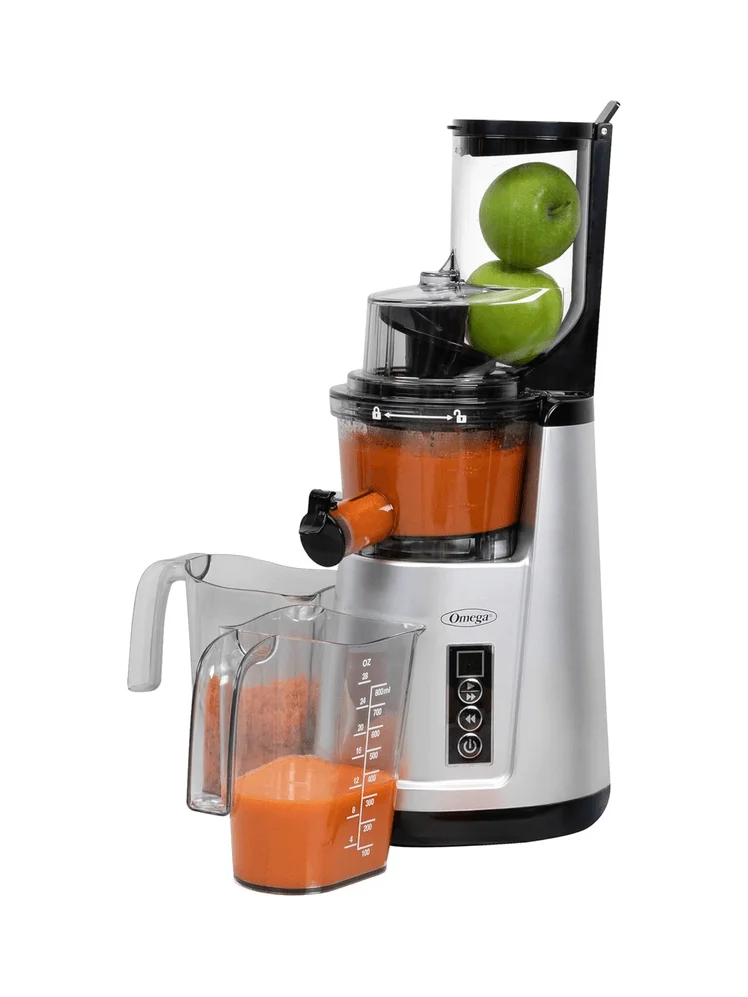
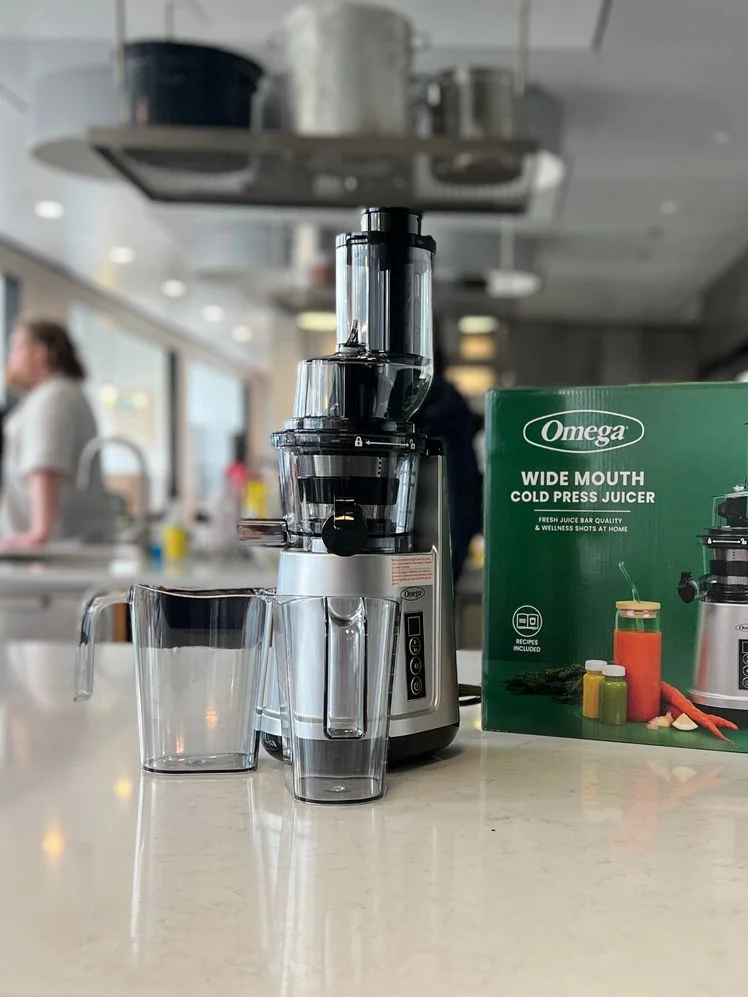
The Omega Wide Mouth is a budget-friendly option that’s compact, lightweight, and surprisingly powerful. At just over 8 pounds, it’s the lightest and most compact juicer we tested, making it easy to tuck away between uses.
What we love: If you don’t mind a bit of hands-on feeding and scrubbing, the Omega is an excellent choice for casual juicing at home. The 3-inch chute cuts down on prep time since you can fit larger pieces of produce inside, though not quite a full apple. With two speeds and a high-torque motor, it handled fruits and veggies smoothly.
We were impressed by the quality of juice the Omega produced despite its low price tag. Yes, there were some small pieces of vegetables sitting at the bottom of the green juice, but if you’re looking for a silky-smooth juice, you could easily filter those out.
One standout feature is the “anti-clog reverse” function, which automatically kicks in when the machine senses a jam, saving you from having to stop pushing down mid-juicing. We also liked that the motor pauses when you open the lid, letting you safely push produce down if it gets stuck on the side.
What we’d leave: As we already mentioned, because of the vertical chute, you’ll need to feed produce into this juicer steadily during bigger batches, which can feel a little tedious. Setup can also be slightly confusing at first, since the auger pieces have to be aligned just right. Cleanup is easier than many models—most parts are dishwasher-safe—but the juicing screen still requires scrubbing with the included brush. The pulp chute tends to clog, even with the removable stopper, and the long juice spout is tricky to clean since Omega doesn’t provide a circular brush for it. It’s a little loud compared to our top pick, but still much quieter than a centrifugal juicer.
Best compact juicer: Nama J3 Cold Press Juicer
Pros and cons
Pros:
- Compact and lightweight
- Easy to store
- Relatively hands-free juicing experience
Cons:
- Hard vegetables, like carrots, may get stuck and require hitting reverse
- Not dishwasher-safe
Specs
Type: Masticating
Dimensions: 8.9" W x 6.5" L x 15.4" H
Weight: 9.7 lb.
Colors: 3
Continuous load? Yes
Warranty: 15 years
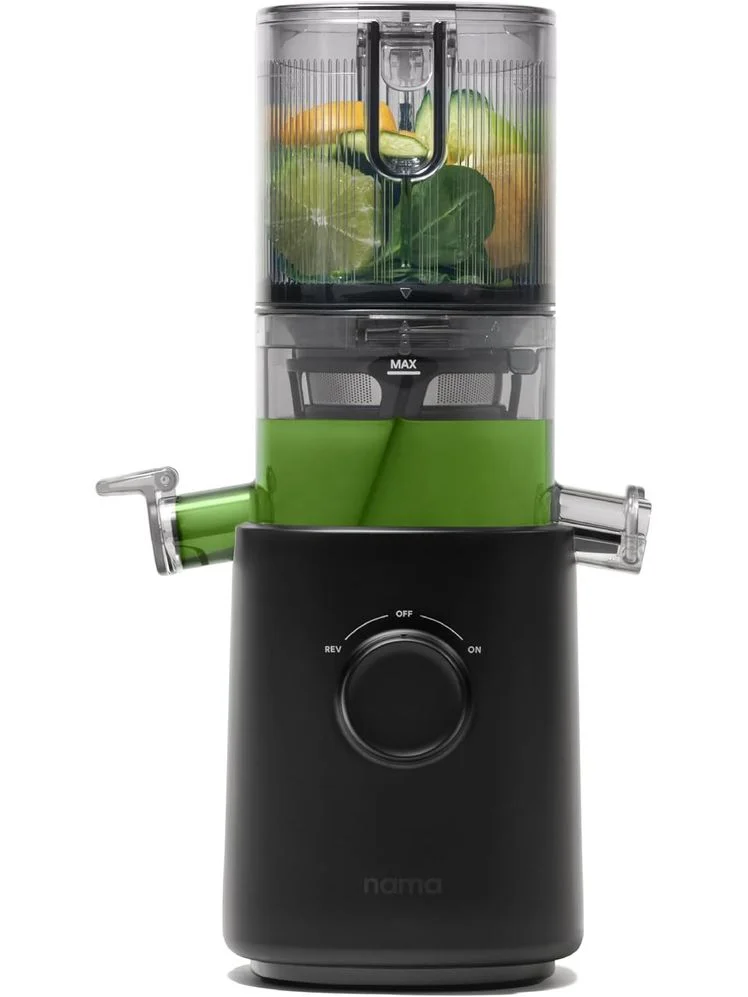
Thought you didn’t have enough counter space for a juicer? Guess again. The Nama J3 is a more compact version of our overall favorite, the J3, with a slim profile that’s perfect for small kitchens. A little more chopping is required because of the smaller hopper, but that’s not a deal-breaker for what is otherwise a fantastic machine.
What we love: The Nama J3 is a petite powerhouse that, like the J2, yields high-quality juice. Our green juice tasted clean, with just a hint of sediment and very little foam, and our orange juice was pulp-free with a bright, fresh-squeezed flavor. The machine’s smaller hopper means veggies like cucumbers, carrots, and celery must be cut into smaller chunks, and ingredients should be added a little bit at a time. The J3’s motor required some additional effort to process our carrots, but it ultimately produced a velvety juice that wasn’t warm from the extra work.
Like the J2, the J3’s parts should be washed by hand, but they’re a breeze to clean. Even though the juicer comes with a long cleaning brush for scrubbing stubborn pulp, we didn’t need it. The strainer rinsed clean with water, and the pulp chute popped open so fibers could be cleared out with no problem.
What we’d leave: The J3 did a wonderful job processing softer produce like cucumbers, lemons, and oranges, but it struggled with harder vegetables. It was the only juicer we tested that required us to hit reverse multiple times to get 1-inch-thick pieces of carrots to feed through.
Instagram content
Best large-batch juicer: Kuvings Hands-Free Slow Juicer AUTO10 Plus
Pros and cons
Pros:
- Largest hopper on the market (135 oz.)
- Hands-free juicing
- Produces up to 2 L of juice in one batch
Cons:
- Large pieces take up a lot of space in the dishwasher or sink
- Heavy
- Not dishwasher-safe
Specs
Type: Masticating
Dimensions: 10" W x 8" L x 20.25" H (with extension), 10" W x 8" L x 17.75" H (without extension)
Weight: 16.5 lb. (with extension), 16.4 lb. (without extension)
Colors: 3
Continuous load? Yes
Warranty: 15 years
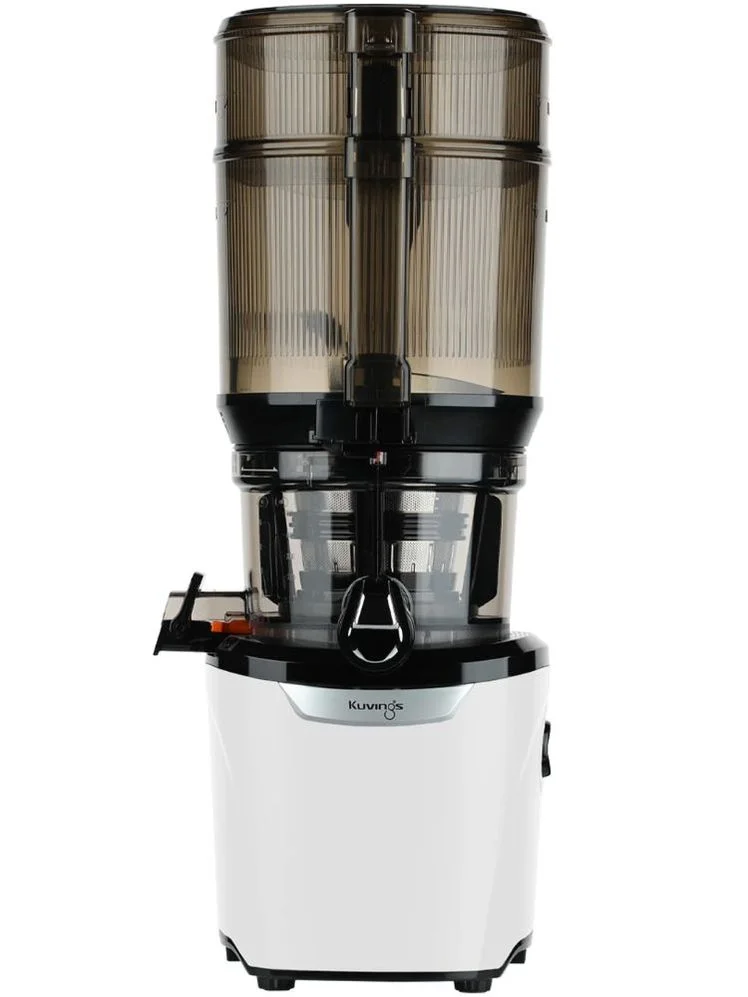
If you want to make juice at scale, nothing we tested came close to the Kuvings AUTO10 Plus. The auto-cutting hopper, the largest on the market according to Kuvings, can handle enough produce to yield up to 135 ounces of juice in one go, and the included extension cups collect up to 2 liters. For smaller batches, you can remove the extension and keep things compact.
What we love: This machine is almost entirely hands-off. We loaded the hopper with carrots, apples, and greens, hit start, and walked away (or at least we could have; we believe in safe operating around here). Kuvings had one of the best juice-to-pulp ratios in our tests, and thanks to its additional mesh strainer, the AUTO10 Plus produced the smoothest, cleanest-tasting juice of all the machines we tried.
In our green juice test, the result was visually stunning: a vibrant bright green with almost no pulp, sediment, or foam. The extra mesh strainer made the texture even finer, eliminating fibrous ginger bits or leafy fragments. The flavor was incredibly fresh—bright and lemony, pleasantly clean, and more refined than any other juicer’s output. Even kale, which often tasted murky coming out of other machines, came through as a pure, concentrated kale flavor, intense but crisp rather than sludgy.
As for cleaning, the Kuvings comes with the most thorough and thoughtful tool kit we’ve seen: three specialized brushes (one that slips under the blades, one for the mesh strainer, and a rounded brush for the chutes). The pulp chute also opens fully, making it much easier to clear out packed fibers.
What we’d leave: The trade-off for all that capacity and power is size. At nearly 17 pounds and close to two feet tall when assembled, the Kuvings is big and heavy, and it requires plenty of counter or storage space. It also takes up a lot of room in your sink during cleanup. And ultimately, that’s why we recommend the Nama as our top pick overall instead; it’s just easier to keep for most people.
That said, while it’s bulky, it isn’t any more difficult to clean than smaller machines, and the thoughtful tools make it easier than most.
How we tested juicers
Juicing can be a labor-intensive process. You have to wash and cut up fresh produce, feed it into the juicer’s hopper, then clean multiple parts, including pulpy strainers and chutes. That’s why it’s important to choose a quality machine that makes the effort worth it. To find the best juicers, we focused on the following criteria: yield, foam and sediment, ease of use, and ease of cleanup.
Yield test
We juiced one pound of carrots, then weighed the resulting juice and leftover pulp separately to judge each machine’s efficiency. A heavier juice cup and drier pulp indicated better yield. That said, we also monitored the actual quality of the juice, since pulp can inflate the volume and impact clarity and taste. Machines that let more pulp through ranked lower on our list.
Green juice test
We made green juice in each machine using the same recipe: half an unpeeled cucumber, half an unpeeled green apple, two stalks of celery, three large leaves of kale (with the stem), one thumb of ginger (with the skin), and half a lemon (without the rind). We fed each item through the chute and noted how dry the pulp came out. Then we did a yield test, measuring the juice and the foam.
Citrus juice test
We made orange juice to see how each juicer handled soft fruits. First we peeled the oranges, then ran them through the machines. We took note of the amount of pulp that remained, and whether the juice warmed during the process. This indicates that the motor may be heating the juice.
Cleaning
We disassembled and cleaned each juicer by hand, keeping track of how much scrubbing was necessary to remove juice residue and pulp. We also paid attention to any design features that made the juicer easier or more difficult to clean.
What to look for in a juicer
We judged juicers by the following criteria—high juice yield, ease of cleaning, and size and design—to determine the best machines.
High juice yield
For this review, we focused primarily on masticating and centrifugal juicers. Masticating juicers (also known as slow juicers) did a better job of getting every last drop out of fruits and veggies while also reducing waste. Masticating models slowly extract juice from the same amount of produce as centrifugal models, but leave behind pulp that’s generally drier, which indicates that every last bit of liquid has been squeezed out. In testing centrifugal juicers, we found that they produced lower-quality juice overall.
Ease of cleaning
Pulp and fibers can make their way into the tiniest parts of a juicer, making cleanup tricky and time-consuming. If you don’t want to waste an hour scrubbing residue out of the machine, look for models that come apart as completely as possible. It’s much easier to rinse out individual parts of a disassembled juicer than to use a brush to remove sticky residue from every nook and cranny.
Size and design
A small footprint is key when it comes to countertop or cabinet storage. We evaluated height, weight, size, and number of pieces to assemble and disassemble when assessing the best juicer. We considered how intuitive each was to assemble, use, and clean, and made note of extras like brushes and alternate baskets, buttons, and speeds.
Other juicers we tested and liked
Nama, Omega, and Kuvings may have squeezed out the competition for the top spots on our best juicers list, but they weren’t the only ones that wowed us. Here are some other juicers worth considering.
Hurom H80 Cold Press Slow Juicer
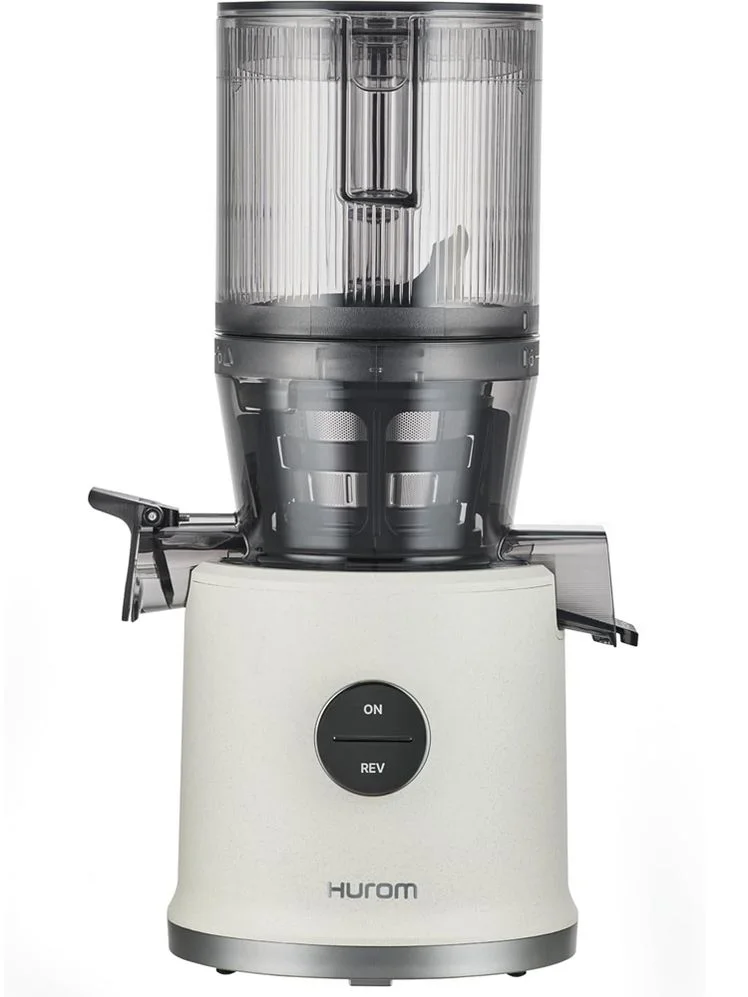
The Hurom H80 looks a lot like the Nama J2 and was almost chosen as our best overall pick. It’s quiet and breaks down tough ingredients surprisingly fast, yielding pulp-free juices with no unpleasant flavors. Our green juice was sweet and spicy, our orange juice was clean and refreshing, and our carrot juice had a sugary earthiness. The H80 also has a generous self-feeding hopper that can handle large produce portions, includes a strainer for making sorbet and ice cream, and is easy to clean. In fact, the chamber, hopper, strainers, and juice and pulp containers are all dishwasher safe.
So why wasn’t it our best overall pick? At $749, it costs nearly $150 more than the Nama J2. That’s a lot of green. We just couldn’t justify recommending the more expensive machine when the J2, which, incidentally, weighs two pounds less, does an outstanding job at a lower price.
Cuisinart Easy Clean Slow Juicer
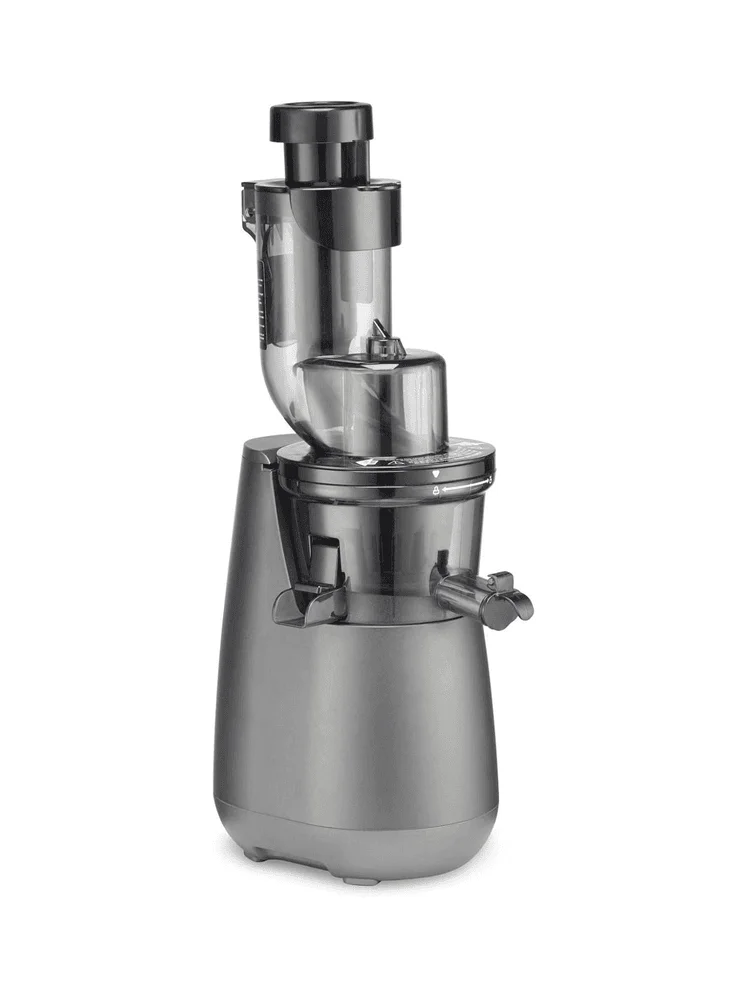
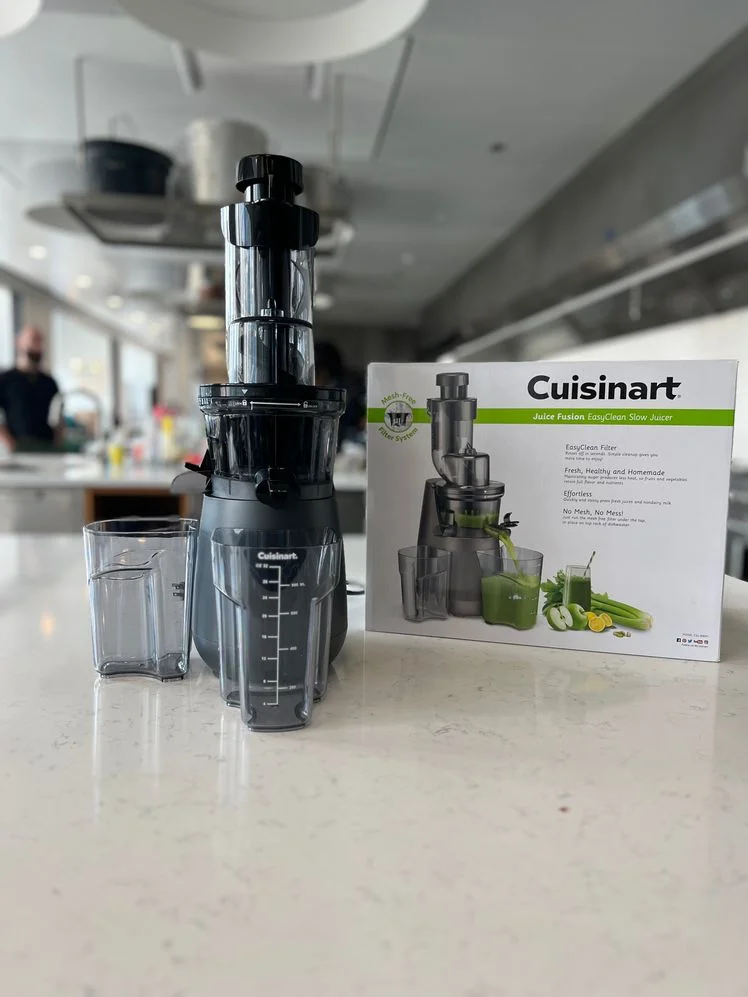
You may think that because the Cuisinart juicer is cheap and it doesn’t have a fine-mesh filter basket, it may have trouble with certain foods, but we didn’t find that to be the case. This juicer surprised us with how easily it handled leafy greens like kale and large pieces of fruit. The wide chute and tamper make it easy to use, but the juice it produced contained more pulp and sediment than other models. Yields appeared larger, though much of that came from extra fiber and foam.
Where it stood out was in cleanup. Without a fine-mesh filter, the basket is quick to rinse, though the chute’s hinged cap makes it hard to scrub fully and the base can collect drips when detaching the container. For those who value convenience and don’t mind a more textured juice, it’s a practical, budget-friendly pick.
Ninja NeverClog Cold Press Juicer
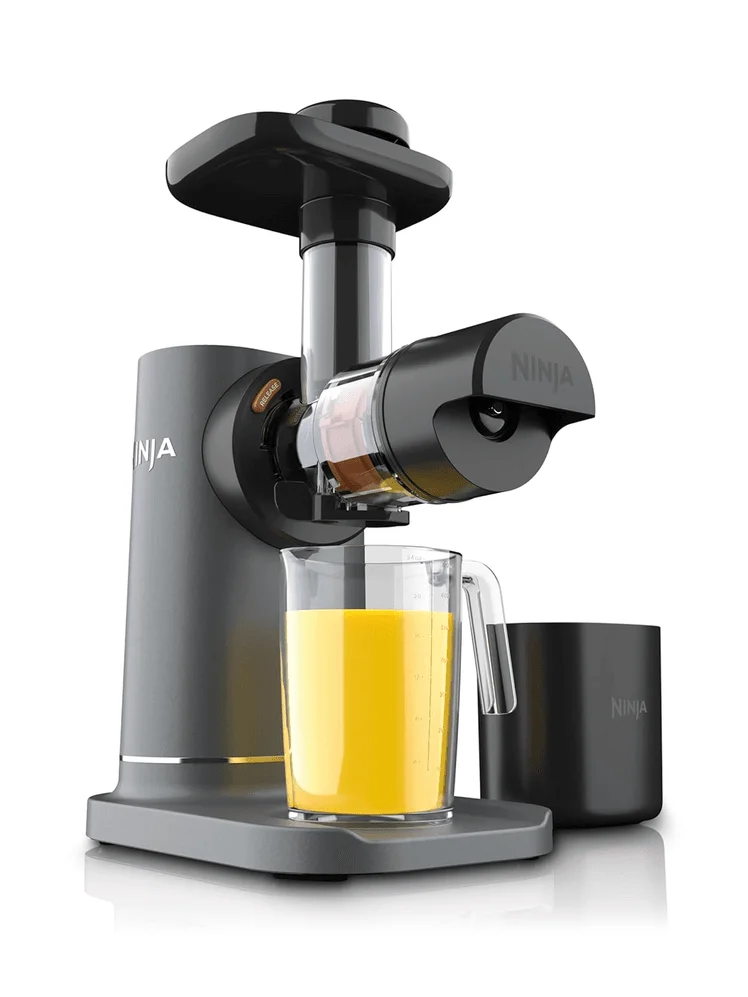
Despite the pieces feeling a bit cheap and plasticky compared to some of the fancier machines we tested, this juicer produced impressive results. “It chewed through carrots, apples, celery, and beets with ease and is impressively quiet,” says tester Francesca Krempa. True to its name, Krempa didn’t experience any clogging, even when we fed it tougher produce.
The auger runs horizontally; most run vertically. That means the Ninja takes up more space on the counter. The hopper is pretty small and short, which means you have to cut produce into smaller pieces rather than just shove things in whole. “The tamper is helpful, but you need to tamp slowly, otherwise, you’ll get a bit of backsplash,” says Krempa. She notes that “while it’s great for small batches, it’s a lot of work to make much more than a single cup.” But if you’re willing to invest the extra time, it does the job, and for the price, the Ninja is great if you’re juicing mostly for yourself.
Nutribullet Slow Juicer
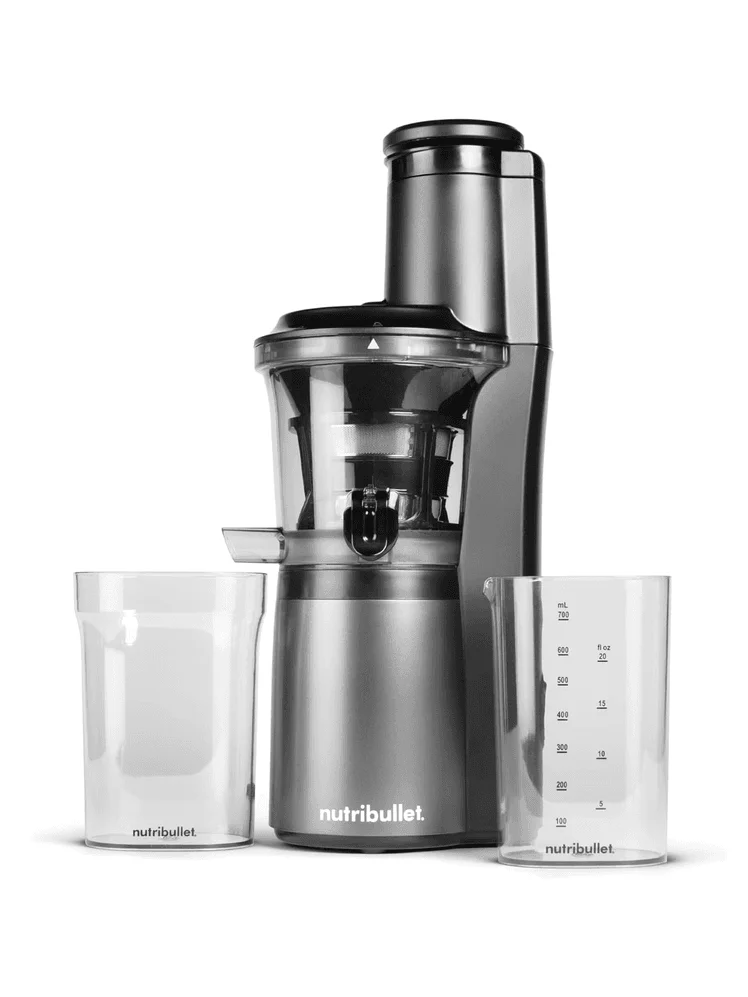
The Nutribullet Slow Juicer impressed us with how much juice it produced despite its compact size. It’s quiet, straightforward to use, and has just one speed plus a reverse function for when something gets stuck.
Compared to the Nama J2, though, it requires more hands-on prep. The hopper is narrow, so you’ll need to cut produce into fairly small pieces before feeding it through. Cleaning is also a bit tedious. “The parts are dishwasher-safe, but you really have to get in there with the little brush to scrub out pulp from the crevices,” says Krempa. She also noticed a bit of pulp and foam in the finished juice, “especially with softer fruits.” If you’re looking for that ultrasmooth juice-bar experience, you’ll probably notice the difference.
Still, if you’re just getting into juicing, the Nutribullet’s compact footprint and approachable price make it a solid option.
Omega NC900HDC Cold Press Juicer
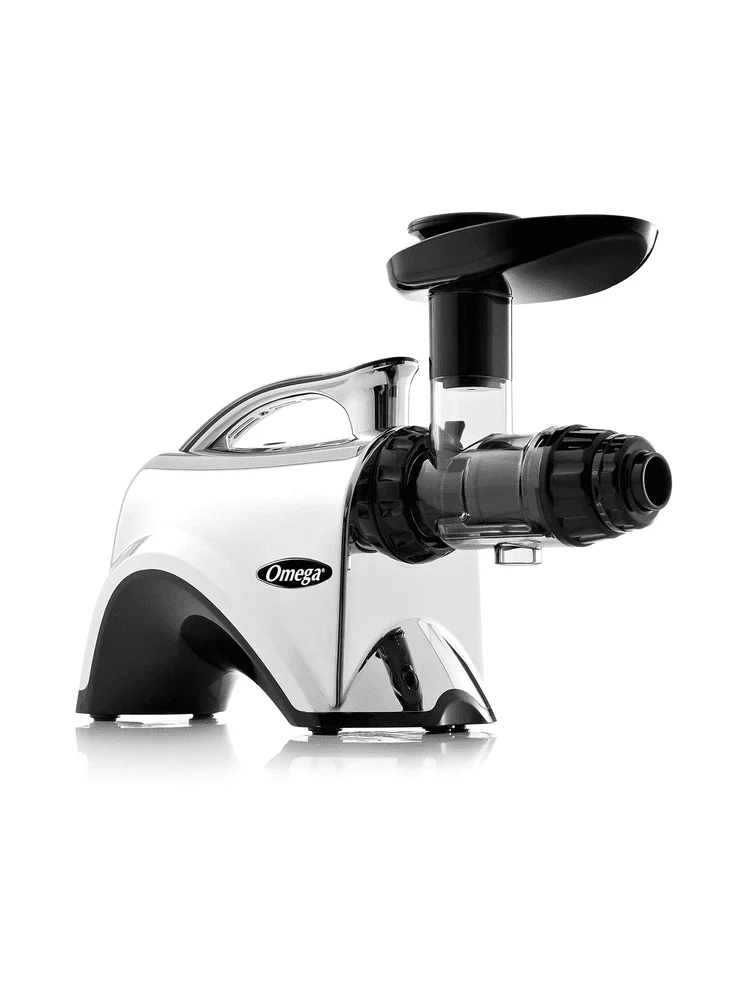
The Omega Compact Horizontal Juicer is a solid pick if you want a powerful juicer and don’t mind giving up a bit more counter space. It’s quieter and easier to clean than many juicers we tested, and it cranked out impressively high yields of leafy green juice. As a bonus, this juicer is technically a “nutrition system,” meaning it can do a lot more than juice—think nut butters, fruit purées, ground coffee, and even homemade pasta. But despite its versatility and power, the machine was pricier ($400) and bulkier than some of the top picks, which made it a little less appealing for everyday juicing; however, if you’re game to give up some counter space for this all-in-one appliance, it might be a worthy investment.
Magic Bullet Mini Juicer
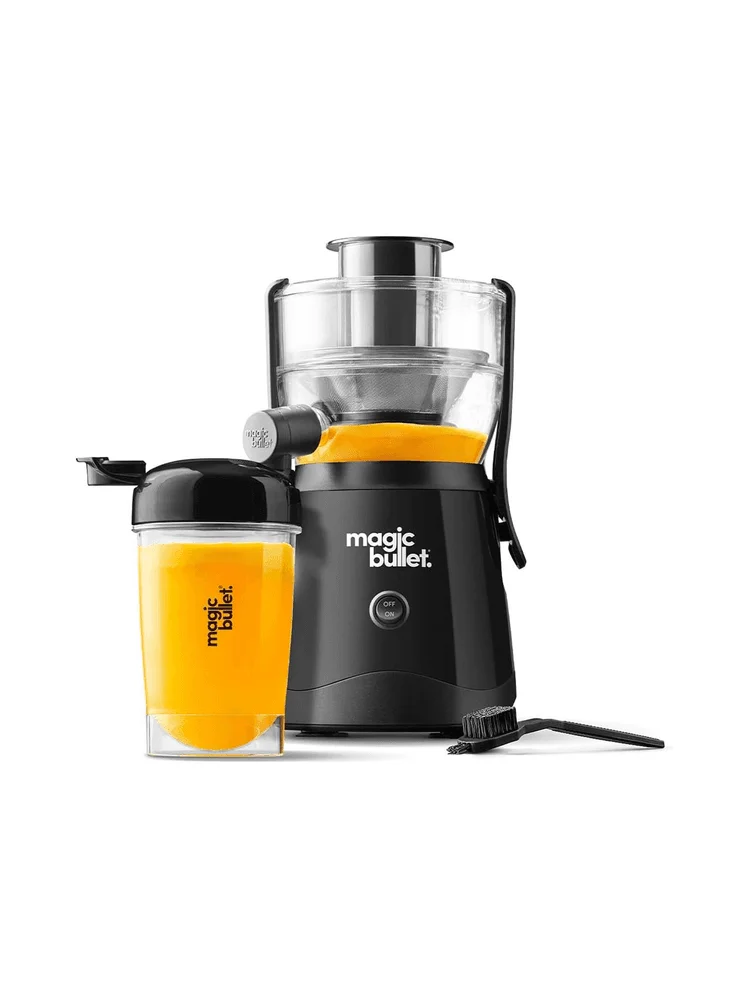
If you’re really short on space, this juicer is about as compact as it gets. The 16-ounce portable juice cup is perfect for small batches or when you want a quick single serving of juice. However, don’t expect to be able to juice a ton of fruits at once; the hopper is pretty small, so it’s not the best for big families or heavy juicers. And while it’s definitely budget-friendly, “it doesn’t offer the same high-quality juice yield as larger, pricier models,” says Krempa. But for a beginner, apartment dwellers, or college kids, it’s a solid choice.
Juicers we don’t recommend
Let’s start with the positives: The Hurom H70 yielded a lot of juice and really got the most out of the produce that we fed into it. It also has a compact size that’s similar to the Nama J3, and it’s relatively easy to clean. The problem? All of our juices were a little too thick. The green juice had some noticeable sediment, and the orange juice was pulpy with a few pips. Our carrot juice tasted slightly bitter and left a weird coating in our mouth. But it’s not just the texture that eliminated the H70 from our best list. It’s also quite pricey at $650, and many models produce better juice at a lower price tag.
This juicer has a sleek body that feels sturdy, and with its 1,000-watt motor, can handle almost anything you throw at it. If you’re juicing for more than just yourself, the 3" feed tube makes it easy to get larger fruits like apples or whole oranges into the machine without a ton of chopping. That said, it’s a centrifugal juicer, so it can get a bit loud (like, really loud) and leaves behind more foam than some masticating models. The cleanup isn’t the worst, but it’s a bit more work than some of the super-easy-to-clean models out there.
Breville makes sleek, high-quality appliances, and the Juice Fountain Cold XL is no exception. It’s beautifully designed and easy to assemble, plus it feels premium. However, if you have the $400 you’d need to get this machine, we’d recommend opting for a masticating juicer instead. This is a centrifugal model, which spins produce at high speed to extract juice. When we fed in long celery stalks, juice sprayed out the top before we could tamp them down. The “quiet” mode helps a bit, but it’s still loud. The resulting juice was overly frothy, with noticeable separation.
This model is affordable and has a small footprint, but we wouldn’t recommend it over our current budget pick that’s only about $20 more expensive. The high-RPM blades of the Breville pulverize produce so quickly that if you forget to use the tamper, juice can spurt out of the top. The foam is excessive—so much so that it looks more like a milkshake. It’s fast, but you’ll get better-quality juice from a slow juicer.
Frequently asked questions (FAQs)
What is the difference between masticating (a.k.a. slow) and centrifugal juicers?
Typically, there are two types of juicers you can buy: masticating and centrifugal.
Masticating juicers operate slowly, squeezing the juice from your produce with a more thorough, gentle process. At the core of a masticating juicer is an auger, which looks like a stocky drill bit. The auger spins slowly to crush and squeeze fresh fruit and vegetables (rather than shredding them). The juice is filtered through a screen, and the pulp is collected in a separate container. This slower speed keeps the juice cold, and research suggests this preserves more nutrients and enzymes, making them especially ideal for more fibrous fruits and veggies (think carrots, kale, leafy greens, wheatgrass, and other fibrous veggies.
Centrifugal juicers work quickly by spinning produce at high speeds to extract juice. This fast shredding process generates heat, which can slightly degrade nutrients, especially in leafy greens, and causes the juice to oxidize more quickly than juice from a masticating juicer. The juice also tends to be foamier, although some higher-end models include a froth separator for a smoother finish. These juicers are generally more affordable and popular with beginners, but they can be hard to clean, and the juice often lacks the taste and texture you’d get from a juice bar.
Do I need to peel fruits before juicing?
Good news—you don’t have to peel most fruits before juicing! Apples, oranges, limes, and pears can go straight in, skin and all (just give them a good wash). For peaches, nectarines, and other stone fruits, you’ll want to remove the pits or seeds. And if you’re particular about flavor, you can peel citrus for a smoother, less bitter juice (the essence in the rind will make it more tart), but it’s totally up to you.
How long does fresh juice last in the fridge?
Per Nama, fresh juice can last up to 72 hours in the fridge. That’s because, unlike store-bought juices, fresh or “raw” juices aren’t pasteurized (heat-treated to kill bacteria). You’ll want to drink them ASAP and get them in the fridge as quickly as possible. The masticating juicers usually win here because they create less oxidation, meaning your juice stays fresher longer. Just store it in an airtight container like a mason jar, and you’ll be good to go.
Read more shopping stories on Bon Appétit
- The Best Cheap Blenders at Every Price Point. Seriously.
- The Best Nonstick Pans of 2025, After 6 Years of Testing
- The Best Waffle Makers for Making Resort-Worthy Breakfasts at Home
Additional testing by Francesca Krempa.